🌱 String of Hearts (Ceropegia woodii)
🧾 Quick Facts
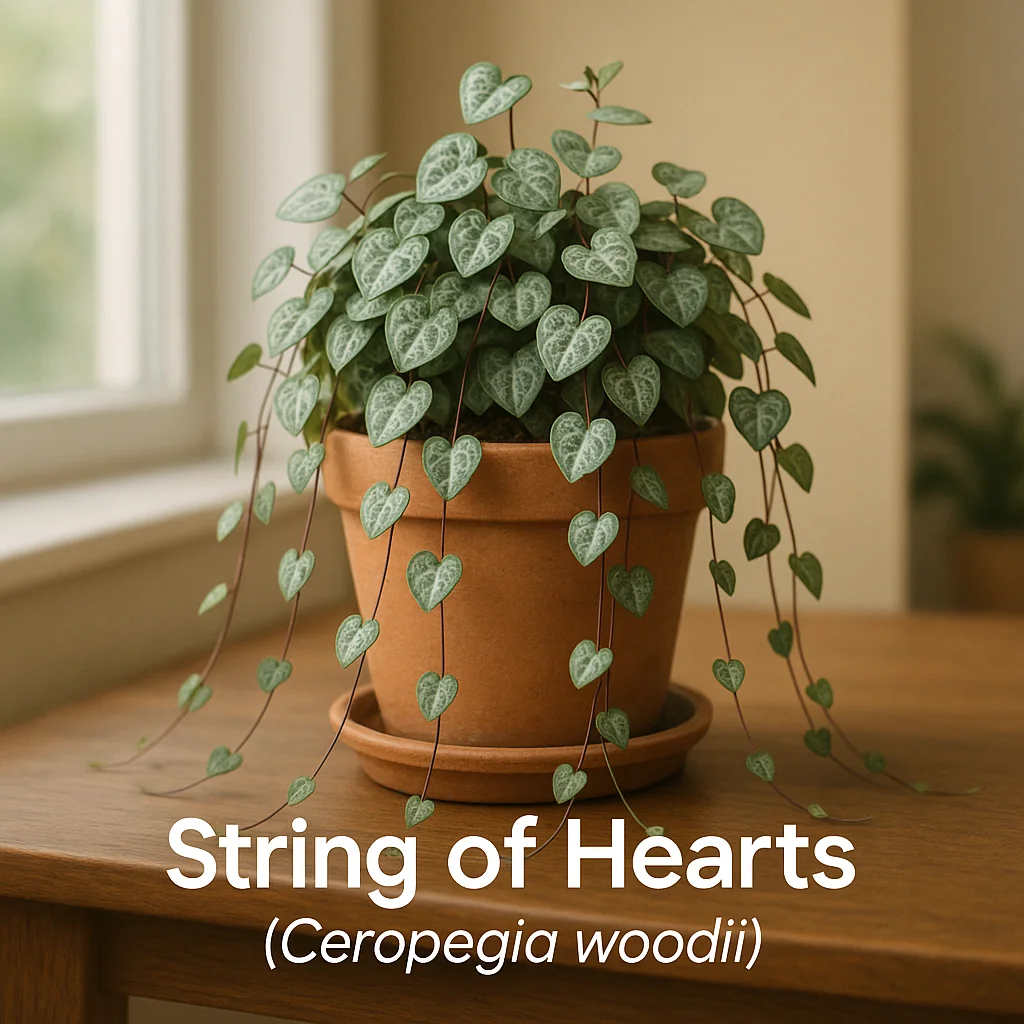
The String of Hearts, scientifically known as Ceropegia woodii, is a popular choice for indoor plant enthusiasts due to its unique trailing aesthetic and delicate heart-shaped leaves. It is well-suited for a variety of home environments and is known for its easy-care attributes.
- Common names: String of Hearts, Rosary Vine, Sweetheart Vine
- Scientific name: Ceropegia woodii
- Plant type: Succulent vine
- Growth habit: Trailing
- Typical indoor size range: Can trail up to 2-3 feet (0.6-0.9 meters)
- Growth speed: Moderate
- Lifespan: Can live many years with proper care
- Origin: South Africa, Swaziland, Zimbabwe
- Light preference: Bright indirect light; tolerates some direct sunlight
- Water needs: Low; prefers to dry out between waterings
- Temperature & humidity preference: Prefers warm temperatures; average humidity
- Pet safety: Some sources list it as potentially irritating
- Difficulty: Easy
🔍 Identification & Look-Alikes
String of Hearts is characterized by its delicate, heart-shaped leaves that hang gracefully on thin, thread-like vines. The leaves are typically dark green with a lighter green or silvery pattern on the surface and a purple underside. Light affects the variegation, with brighter light enhancing the defined patterns.
The vines are thin and flexible, allowing them to be draped over shelves or hung down from elevated planters. Flowers may appear under ideal conditions, which are small, tubular, and pale magenta, but it is mainly grown for its foliage.
Common look-alikes include other Ceropegia species and Chain of Hearts (Ceropegia linearis), which also features heart-shaped leaves but with subtle differences in texture and coloration.
- Top ID Tips:
- Heart-shaped leaves with silver patterns
- Purple underside of leaves
- Delicate, thread-like vines
- Bright light enhances variegation
- Small tubular flowers in optimal conditions
🌍 Origin & Natural Habitat
String of Hearts originates from Southern Africa, notably across South Africa, Swaziland, and Zimbabwe. In its natural habitat, it tends to thrive in rocky outcroppings and forests with dappled light. This natural proclivity for warm, semi-arid environments informs its preference for dry spells between waterings and bright, indirect light.
Understanding its natural habitat helps in indoor care by ensuring conditions mimic the plant's native environment, notably the light exposure and drying periods between waterings that it would typically experience in the wild.
☀️ Light Requirements
Ideally, place your String of Hearts in a location where it receives bright, indirect light. A spot near a sunny window with filtered light is perfect. While it can tolerate some direct sunlight, especially in the morning or late afternoon, too much direct sun might scorch the leaves.
Bright, indirect light enhances the variegation and can encourage flowering. If the plant is receiving too little light, you may notice leggy growth and less distinct leaf patterns. Conversely, excess light can cause leaf curl and scorching.
- Light Checklist:
- Bright indirect light is ideal
- Morning sun is usually safe
- Watch for leggy growth as a sign of insufficient light
- Check for scorched leaves due to excess light
- Rotate plant periodically for even growth
💧 Watering & Humidity
The String of Hearts prefers a soak-and-drain approach to watering. Water thoroughly, allowing water to drain out, and then wait for the soil to dry out before watering again. Pot size, light, and season can all influence the frequency. In winter, reduce watering as the plant's growth slows.
This plant is accustomed to average room humidity but can benefit from a gentle increase in moisture. Avoid extremes or overly wet conditions which can lead to rot.
- Watering Tips:
- Let soil dry between waterings
- Adjust based on pot size and season
- Less watering required during winter
- Signs of overwatering: leaf drop, mushy stems
- Signs of underwatering: wrinkled leaves
- Avoid leaving in standing water
🐛 Soil, Pot & Repotting
String of Hearts thrives in a well-draining, airy soil mix, typical of Cacti and Succulent mixes. Choose a pot with drainage holes to prevent waterlogging. Terracotta pots can be beneficial for adding breathability to the roots.
Repotting is generally needed every 2-3 years or when the roots are visibly congested and growth slows. When repotting, gently remove the plant, loosen any entangled roots, and place it into a slightly larger pot with fresh soil.
- Repotting Checklist:
- Use well-draining, airy soil mix
- Pot with good drainage is essential
- Terracotta pots offer breathability
- Repot every 2-3 years or when rootbound
- Upsize pot conservatively
🌡️ Temperature, Airflow & Seasonal Care
String of Hearts thrives in typical indoor temperatures ranging from 60°F to 75°F (16°C to 24°C). Avoid placing near drafts or heat sources like AC vents and radiators, which can cause stress.
During winter, growth will naturally slow, and the plant requires less water. Ensure adequate but not excessive humidity and consider slight reductions in temperature to mimic seasonal shifts.
- Seasonal Notes:
- Keep within 60°F to 75°F (16°C to 24°C)
- Avoid drafts and heat sources
- Reduced winter watering
- Regular airflow helps reduce disease
- Watch for slowed growth in cooler months
🌸 Flowers, Fruit & Growth Cycle
Though primarily grown for its foliage, the String of Hearts may produce small, tubular flowers under ideal conditions. These are not prominent and usually appear between late summer and fall. Fruiting is uncommon indoors.
The plant grows by producing new leaves along its vines, which can lead to a cascading effect when hung. Pruning is mainly for tangled ways and maintaining the shape. Snip carefully above the leaf nodes.
🧬 Propagation & Reproduction
Propagation of String of Hearts is typically straightforward through stem cuttings. Cut a section of the vine, ensuring a few nodes are included, and place it in water or directly in soil to root. It may also propagate via tubers that develop along the vines.
- Propagation Tips:
- Use vine cuttings with at least a few nodes
- Root in water or directly in soil
- Ensure proper humidity during rooting
- Tubers can develop roots separately
- Provide bright, indirect light for new cuttings
🌿 Common Problems, Pests & Prevention
Common issues with String of Hearts include yellowing leaves, which can be a sign of overwatering or poor drainage. Brown tips may indicate underwatering or low humidity. Drooping and leaf drop often result from inappropriate watering practices.
Pests like spider mites and mealybugs can affect this plant. Regularly inspect and clean leaves to prevent infestations. Promote airflow and ensure stable conditions to reduce the likelihood of pests.
- Prevention Basics:
- Inspect for pests regularly
- Clean leaves to prevent dust buildup
- Avoid waterlogged conditions
- Ensure consistent care and environment
- Promote good airflow around the plant
🐾 Pet & Home Safety Notes
While not highly toxic, String of Hearts is listed in some sources as potentially irritating if ingested by pets or children. It's best to keep the plant out of reach to avoid any accidental nibbles. Should ingestion occur, contact a professional or local poison control resources for advice.
🏡 Styling Ideas & Best Room Placement
Its trailing nature makes the String of Hearts ideal for hanging baskets or placed on high shelves where its vines can cascade. This plant does well in most rooms, thriving particularly well in bathrooms or kitchens where humidity is naturally higher, as long as the light conditions are suitable.
Pair it with other succulents or low-maintenance plants to create visual interest and texture variations.
📌 Summary
- String of Hearts has heart-shaped leaves with a unique variegation.
- Originates from Southern Africa and thrives in bright, indirect light.
- Prefers low watering frequency; allow soil to dry between waterings.
- Optimal in well-draining, airy soil with terracotta for breathability.
- Comfortable in standard indoor temperature ranges.
- Easily propagated through stem cuttings.
- Watch for pests such as spider mites and mealybugs.
- Potentially irritating; keep away from pets/children.
- Easy-care, perfect for trailing displays in bright bathrooms or kitchens.