🌱 Philodendron hederaceum ‘Brasil’
🧾 Quick Facts
The Philodendron hederaceum ‘Brasil’ is a popular houseplant known for its vibrant variegated leaves and easy-care nature. This tropical plant is a cultivar of the heartleaf philodendron and is a great choice for indoor plant enthusiasts.
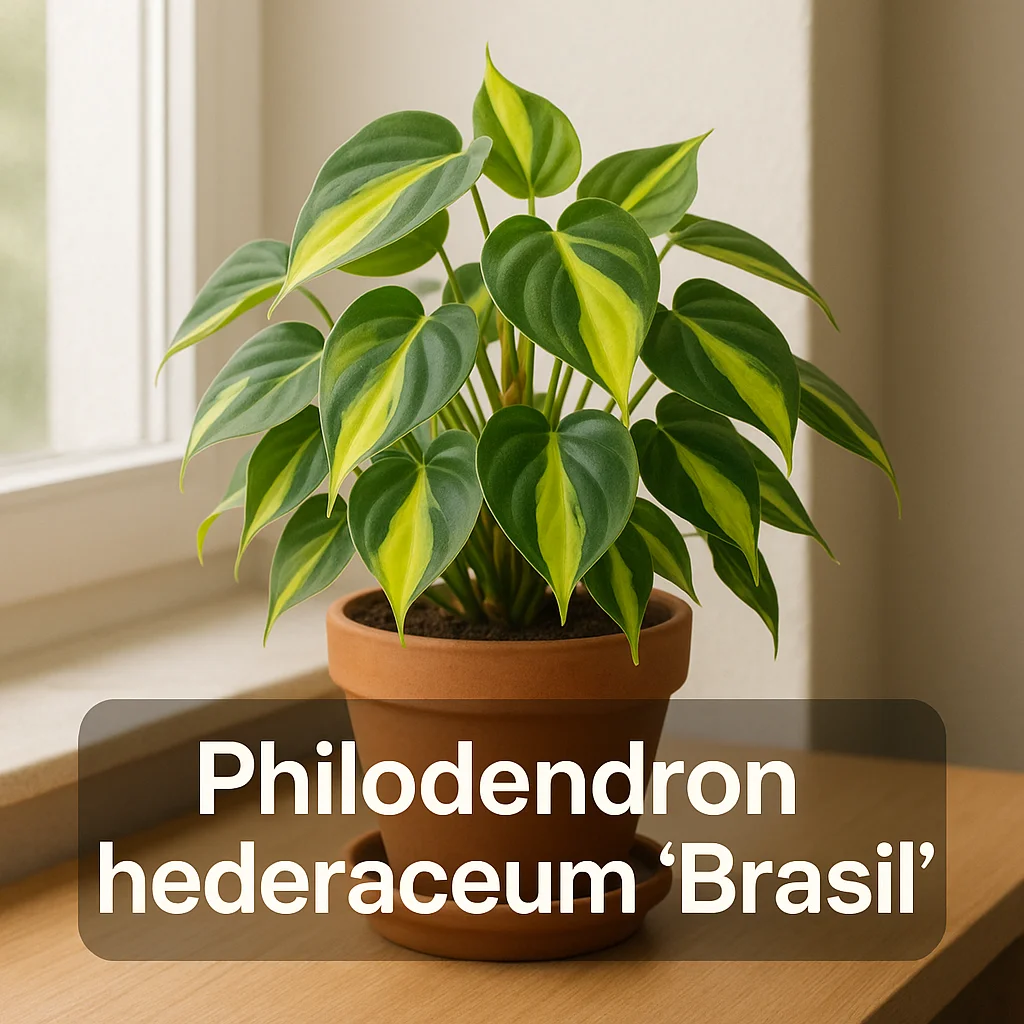
- Common names: Philodendron Brasil, Heartleaf Philodendron ‘Brasil’
- Scientific name: Philodendron hederaceum ‘Brasil’
- Plant type: Foliage
- Growth habit: Trailing
- Typical indoor size range: 1 to 3 feet long
- Growth speed: Moderate
- Lifespan: Can live many years with proper care
- Origin: South America, tropical rainforest understory
- Light preference: Bright indirect light
- Water needs: Moderate; prefers partial drying between watering
- Temperature & humidity preference: Prefers warm temperatures and high humidity
- Pet safety: May be irritating/toxic to pets
- Difficulty: Easy
🔍 Identification & Look-Alikes
Philodendron hederaceum ‘Brasil’ is recognized by its heart-shaped leaves with variegation that features a striking combination of lime green and dark green patches. The leaves are typically smooth and glossy, hanging on slender, flexible vines. The variegation pattern depends on the light received, with more vibrant colors in brighter light.
This plant is mainly grown for its foliage, as it rarely blooms indoors. Look-alikes include the Philodendron scandens and the Golden Pothos. Key differences include the leaf variegation unique to 'Brasil' and the leaf shape, which tends to be more uniform even as a young plant.
- Heart-shaped, glossy leaves
- Distinctive lime and dark green variegation
- Trailing vine growth habit
- Rare indoor flowering, primarily grown for foliage
- Lighter variegation in higher light levels
- Compared to Pothos, has smaller and more uniform leaves
- Flexible stems with aerial roots
- Depending on light, variegation may lighten or darken
🌍 Origin & Natural Habitat
Philodendron hederaceum ‘Brasil’ is native to the tropical rainforests of South America, particularly in regions such as Brazil. In the wild, it is found growing as an understory plant, often climbing up trees as an epiphyte. The habitat is characterized by high humidity and filtered light.
Understanding this habitat gives insights into its care. Mimicking these conditions with indirect light, warm temperatures, and higher humidity will promote optimal growth indoors.
☀️ Light Requirements
Philodendron ‘Brasil’ thrives in bright indirect light, where it can develop its vibrant leaf coloration. It can tolerate lower light but will show less variegation. Avoid placing it in direct sunlight as this can cause leaf burn.
The ideal placement is near a north or east-facing window with filtered light. Too little light results in slower growth and faded colors, while too much light may cause brown edges.
- Place in bright, indirect light for best variegation
- Avoid direct sunlight to prevent leaf burn
- North or east-facing windows are ideal
- Can tolerate lower light, but with less vibrant foliage
- Signs of too much light: brown leaf edges
- Signs of too little light: slow growth, less variegation
💧 Watering & Humidity
The key to watering Philodendron ‘Brasil’ is allowing the top couple of inches of soil to dry out before watering again. This plant prefers a soak-and-drain method, ensuring water runs through the drainage holes. During active growth, more frequent watering is needed, while in dormant seasons, less water suffices.
Philodendron ‘Brasil’ enjoys humidity. Increase humidity by using pebble trays or humidifiers. Signs of overwatering include yellowing leaves, whereas underwatering may result in droopy, dry leaves.
- Allow the top 1-2 inches of soil to dry before watering
- Use the soak-and-drain method
- Increase watering frequency during active growth
- Reduce watering in dormant periods
- Use pebble trays or humidifiers for higher humidity
- Check for yellowing (overwatering) or drooping (underwatering)
🐛 Soil, Pot & Repotting
Use a well-draining potting mix rich in organic matter, such as peat-based soil with added perlite or aroid mixes. Choose pots with drainage holes to prevent waterlogging. Terracotta pots are a good option for those who tend to overwater.
Repotting should be done every 1-2 years or when the roots become root-bound. Indications include slow growth and roots protruding through drainage holes. When repotting, gently transfer to a slightly larger pot to give roots space without overwhelming them.
- Well-draining and organic soil mix needed
- Pots with drainage holes are essential
- Terracotta pots prevent overwatering
- Repot every 1-2 years or when potbound
- Choose a pot 1-2 inches larger for repotting
- Avoid compacting the soil too much during repot
🌡️ Temperature, Airflow & Seasonal Care
Philodendron ‘Brasil’ does well in typical indoor temperatures ranging from 65°F to 80°F (18°C to 27°C). It is sensitive to cool drafts and rapidly changing temperatures. Keep it away from air conditioning vents and drafty windows.
During winter, growth slows, and watering needs decrease. Be mindful of cold snaps and adjust care accordingly to avoid stress.
- Maintain temperatures between 65°F and 80°F
- Avoid placing near cold drafts or heaters
- Respect winter dormancy by reducing watering
- Watch for temperature drops
- Provide consistent exposure to stable environments
🌸 Flowers, Fruit & Growth Cycle
The Philodendron ‘Brasil’ rarely flowers indoors, as it is usually grown for its foliage. Growth is characterized by trailing vines that produce new leaves regularly. Pruning can help control length and encourage bushier growth, keeping hygiene in mind to prevent disease.
- Rarely flowers indoors
- Propagates through vines producing new leaves
- Pruning encourages bushy growth
- Maintain cleanliness when pruning
🧬 Propagation & Reproduction
Philodendron ‘Brasil’ is easily propagated using stem cuttings. Cuttings should include at least one node, and you can root them in water or soil. Stem cuttings in water can be transferred to soil once roots develop.
Division is another method, although less common due to its trailing nature. Leaf propagation and seeds are not typical practices for home reproducibility.
- Use stem cuttings that include a node
- Root cuttings in water or directly in soil
- Once rooted, cuttings can be transferred to soil
- Focus on maintaining healthy parent plants
🌿 Common Problems, Pests & Prevention
Philodendron ‘Brasil’ can face issues such as yellow leaves, brown tips, and droopy or leggy growth. These are typically caused by improper watering, lighting, or humidity.
Pests like spider mites and mealybugs can be problematic. Regularly inspect leaves and maintain stable care. Quarantining new plants, cleaning leaves, and ensuring good ventilation can help prevent infestations.
- Check for yellowing leaves indicating overwatering
- Brown tips may result from low humidity or over-fertilization
- Ensure good airflow and stable environmental conditions
- Inspect and clean leaves regularly
- Quarantine new plants before introducing them
- Monitor and act promptly at the first sign of pests
🐾 Pet & Home Safety Notes
Philodendron ‘Brasil’ contains calcium oxalate crystals that may irritate pets if ingested. Place the plant out of reach of pets and children to prevent accidental ingestion. If ingestion is suspected, contact a professional or your local poison control resources for advice.
🏡 Styling Ideas & Best Room Placement
Philodendron ‘Brasil’ is versatile in home decor, thriving in bathrooms, kitchens, and living rooms where humidity is higher and indirect light is abundant. It looks stunning in hanging baskets, climbing moss poles, or placed on shelves allowing vines to cascade.
It pairs well with other tropical plants, such as ferns and peace lilies, adding a lush feel to any space.
📌 Summary
- Identified by glossy, variegated heart-shaped leaves
- Native to South American rainforests
- Requires bright, indirect light for best foliage colors
- Moderate watering; prefers soil to dry between watering
- Well-draining soil and pots with drainage holes are optimal
- Comfortable in typical indoor temperatures, avoiding drafts
- Propagation through stem cuttings is simple and effective
- Common issues include yellowing from overwatering and pest infestations
- May irritate pets; keep out of reach and monitor
- Easy-care plant suitable for various indoor settings