🌱 Lipstick Plant (Aeschynanthus radicans)
🧾 Quick Facts
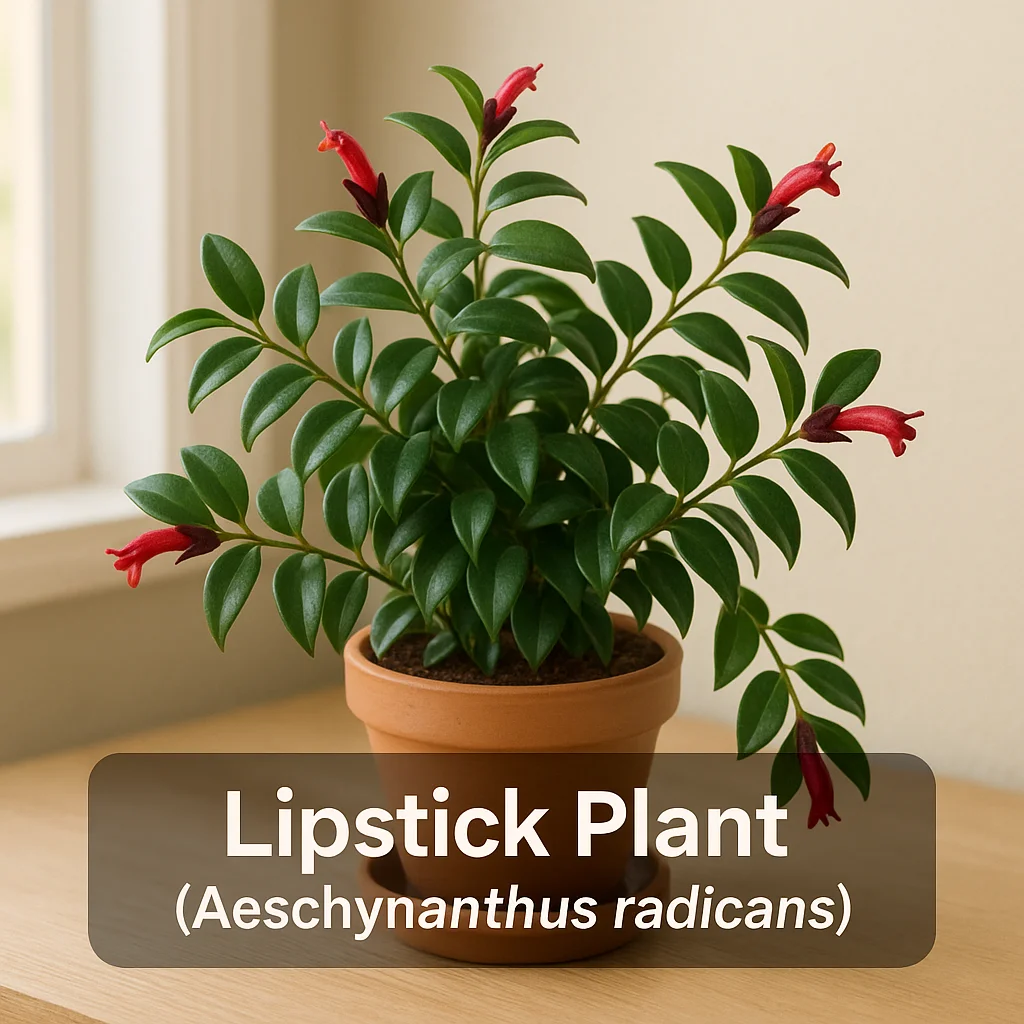
The Lipstick Plant, commonly known by its scientific name Aeschynanthus radicans, is celebrated for its vibrant, tubular flowers resembling lipstick tubes, hence the name. This tropical plant is favored for its dynamic flowering and lush, trailing vines, making it a popular choice for hanging baskets indoors.
- Common names: Lipstick Plant, Lipstick Vine
- Scientific name: Aeschynanthus radicans
- Plant type: Flowering vine
- Growth habit: Trailing
- Typical indoor size range: 12–24 inches in length
- Growth speed: Moderate
- Lifespan: Can live many years with proper care
- Origin: Southeast Asia; tropical rainforests
- Light preference: Bright indirect light
- Water needs: Moderate; prefers evenly moist soil
- Temperature & humidity preference: Warm temperatures and high humidity
- Pet safety: May be irritating to pets; place out of reach
- Difficulty: Medium
🔍 Identification & Look-Alikes
The Lipstick Plant is identifiable by its glossy, deep green leaves which are slightly leathery in texture. The leaves are arranged oppositely along the stems, which are long and trailing, making them perfect for cascading over the edges of pots or hanging baskets. The plant's vivid red or orange tubular flowers typically appear at the tips of the stems, and these blooms are a major attraction.
In terms of look-alikes, the Lipstick Plant may sometimes be confused with other trailing vines like the Firecracker Plant (Russelia equisetiformis) or other members within the Gesneriaceae family. The vivid tubular flowers are distinctive, but its relatives may not bear such bright or similar blooms.
- Leaves are glossy and deep green
- Stems are long and trailing
- Flowers are tubular, usually red or orange
- Flowering typically occurs at stem tips
- Flowers resemble lipstick tubes
- Glossy foliage with leathery texture
- Trails over pot edges gracefully
- Distinguishes from look-alikes by flower shape and color
- Stems produce opposing leaf pairs
🌍 Origin & Natural Habitat
Native to the tropical rainforests of Southeast Asia, the Lipstick Plant thrives in warm, humid environments. It typically grows as an epiphyte, attaching itself to trees and absorbing moisture from the air and rain, while benefiting from the filtered light of forest canopies. Understanding its natural habitat is crucial since it informs the plant's preferred growing conditions indoors, such as the need for humidity and indirect light.
This plant's adaptation to high humidity and indirect light in its native habitat explains its preference for similar conditions indoors. Mimicking these conditions can encourage healthy growth and flowering.
☀️ Light Requirements
The Lipstick Plant thrives in bright but indirect light, making it an ideal candidate for east-facing windows or rooms with ample natural light, filtered through sheer curtains. Direct sunlight can scorch the leaves, while too little light may reduce flowering.
The plant's growth and flower production are greatly influenced by light levels. Insufficient light can lead to leggy growth without blooms. Conversely, bright light ensures compact growth and prolific flowering. Observe the plant for signs like fading colors or leaf drop to adjust lighting as needed.
- Prefers bright, indirect light
- Avoid direct sunlight to prevent leaf scorch
- East-facing windows work well
- Use sheer curtains to filter intense light
- Signs of too little light: leggy growth, no blooms
- Signs of too much light: scorched leaves
- Adjust position based on seasonal light changes
- Rotate plant occasionally for even growth
- Monitor foliage color for light adjustments
💧 Watering & Humidity
Maintaining the right watering rhythm is key for the Lipstick Plant. Use a soak-and-drain method to water thoroughly until it drains from the pot's bottom, and allow the top inch of soil to dry out before watering again. In winter, reduce watering slightly as the plant's growth slows.
High humidity of around 50-60% is beneficial. This can be achieved by placing a humidity tray beneath the pot or using a humidifier. Overwatering can lead to root rot, while underwatering may cause leaf drop. Watch for signs of wilting or yellowing leaves to adjust your watering practices.
- Water when the top inch of soil is dry
- Use soak-and-drain method
- Reduce watering in winter
- High humidity preferred: 50-60%
- Use humidity tray or humidifier
- Signs of overwatering: drooping, yellowing leaves
- Signs of underwatering: wilting, leaf drop
- Avoid waterlogging the soil
- Observe seasonal changes to adjust watering
- Consider pot size; smaller pots dry out faster
🐛 Soil, Pot & Repotting
The Lipstick Plant thrives in an airy, well-draining soil mix. A mix containing peat, perlite, and orchid bark would suit its requirements for slight moisture retention and excellent drainage. Choose a pot with adequate drainage holes to prevent waterlogging.
Repotting is typically necessary every 2-3 years or when you notice roots circling inside the pot. Select a pot size slightly larger than the current one. During repotting, gently loosen the root ball and refresh old soil with new substrate. Avoid drastic pot size changes to prevent shock.
- Use an airy, well-draining soil mix
- Include peat, perlite, and orchid bark
- Ensure pot has drainage holes
- Repot every 2-3 years
- Signs to repot: rootbound, slowed growth
- Upsize pot slightly during repotting
- Gently loosen the root ball
- Refresh old soil with new mix
- Avoid drastic changes in pot size
- Observe plant for signs of stress during repotting
🌡️ Temperature, Airflow & Seasonal Care
The Lipstick Plant prefers temperatures between 65-75°F (18-24°C). Protect it from cold drafts, air conditioning outlets, and sudden temperature changes. In winter, its growth may slow, reducing its need for water. If conditions are too dry, consider using a humidifier or placing the plant on a humidity tray.
Maintaining gentle airflow, like that from a ceiling fan, can help prevent pests and diseases. Consistent temperature and careful monitoring of the plant’s needs during seasonal transitions ensure healthy growth.
- Optimal temperature: 65-75°F (18-24°C)
- Protect from cold drafts and AC vents
- Reduce watering in winter
- Use humidifier or tray for extra humidity
- Seasonal slowing of growth during colder months
- Maintain gentle airflow without direct drafts
- Watch for temperature fluctuations in winter
- Avoid sudden temperature changes
🌸 Flowers, Fruit & Growth Cycle
The Lipstick Plant is particularly noted for its tubular flowers that can bloom indoors, especially when the plant is given bright indirect light and warm temperatures. Typically, it flowers in spring or summer, with blooming frequency often varying based on conditions.
Pruning is rarely necessary but can help manage growth and improve plant shape. Trim any leggy stems or faded blossoms to encourage denser growth and more blooms. As a non-invasive grower, pruning can be a simple process primarily focused on cleanup.
🧬 Propagation & Reproduction
Propagation of the Lipstick Plant is commonly achieved through stem cuttings. Select healthy stems and cut segments around 4-6 inches long, ensuring that each has several leaves. Strip the bottom leaves and place the cuttings in water or soil, maintaining humidity to encourage root development, which often occurs within a few weeks.
Propagation through seeds is not common due to the plant's indoor growing environment, and division is unnecessary as this plant does not form clumps.
- Propagate through stem cuttings
- Choose healthy stems with several leaves
- Cut segments 4-6 inches long
- Place cuttings in water or soil
- Maintain humidity for root development
- Roots develop typically in a few weeks
- Seeds and division methods uncommon
- Keep propagation area warm and bright
🌿 Common Problems, Pests & Prevention
The Lipstick Plant may face issues like yellowing leaves, brown tips, or leaf drop, often due to incorrect watering or improper light conditions. Pests such as spider mites, mealybugs, and scale can occasionally affect it.
Prevention involves placing new plants in quarantine, regularly cleaning leaves to remove dust, and ensuring stable environmental conditions. Maintain gentle airflow and avoid overwatering to curtail pest infestations and fungal issues.
- Yellowing leaves: often due to overwatering
- Brown tips: humidity may be too low
- Leaf drop: check light and water conditions
- Common pests: spider mites, mealybugs, scale
- Quarantine new plants to prevent pest spread
- Clean leaves regularly to remove dust
- Ensure stable environmental conditions
- Maintain gentle airflow around the plant
- Avoid overwatering to prevent root issues
- Introduce beneficial insects if appropriate
🐾 Pet & Home Safety Notes
While the Lipstick Plant is generally considered non-toxic, some sources note it may mildly irritate pets upon ingestion. As a precaution, it's best to place the plant out of reach of curious pets and children.
If ingestion is suspected, contacting a professional or local poison control resources is advisable. Training pets or using physical barriers can help minimize accidental ingestions.
🏡 Styling Ideas & Best Room Placement
Thanks to its trailing nature, the Lipstick Plant is perfect for hanging baskets or elevated pots that allow its vines to cascade. It thrives in bright, humid environments, making it an excellent choice for bathrooms with natural light or kitchens. The vibrant blooms can add a splash of color to living rooms and offices.
Pairing the Lipstick Plant with other humidity-loving plants like ferns and peace lilies can create a lush, tropical look in any room.
📌 Summary
- Identified by glossy, deep green leaves and tubular red flowers
- Native to Southeast Asia's tropical rainforests
- Prefers bright, indirect light and warm temperatures
- Water with soak-and-drain method; enjoys high humidity
- Airy, well-draining soil mix recommended; repot every 2-3 years
- Thrives in temperatures of 65-75°F (18-24°C)
- Best propagated using stem cuttings
- Prone to spider mites and mealybugs; regular cleaning helps prevention
- Non-toxic but placed out of reach of pets/children for safety
- Perfect for hanging baskets, bathrooms, and kitchens
- Medium difficulty due to light and humidity needs
- Thrives indoors with balanced care and adjustments