🌱 Scindapsus pictus ‘Exotica’
The Scindapsus pictus ‘Exotica’, often recognized for its broad, silvery variegated leaves, is a popular choice among houseplant enthusiasts. Known for its adaptability and aesthetic presence, it’s an excellent addition to any indoor plant collection. Let’s explore the features, care requirements, and other essential details about this stunning plant.
🧾 Quick Facts
Get to know the Scindapsus pictus ‘Exotica’ with these quick facts:
- Common Names: Satin Pothos, Silver Vine
- Scientific Name: Scindapsus pictus ‘Exotica’
- Plant Type: Foliage
- Growth Habit: Trailing, Climbing
- Typical Indoor Size Range: Height up to 3 feet, spread about 1–2 feet
- Growth Speed: Moderate
- Lifespan: Can live many years with care
- Origin: Southeast Asia, mainly in tropical forests
- Light Preference: Bright indirect light
- Water Needs: Moderate; prefers to dry out partially between waterings
- Temperature & Humidity Preference: Prefers warm, humid environments
- Pet Safety: May be irritating/toxic to pets
- Difficulty: Easy to medium
🔍 Identification & Look-Alikes
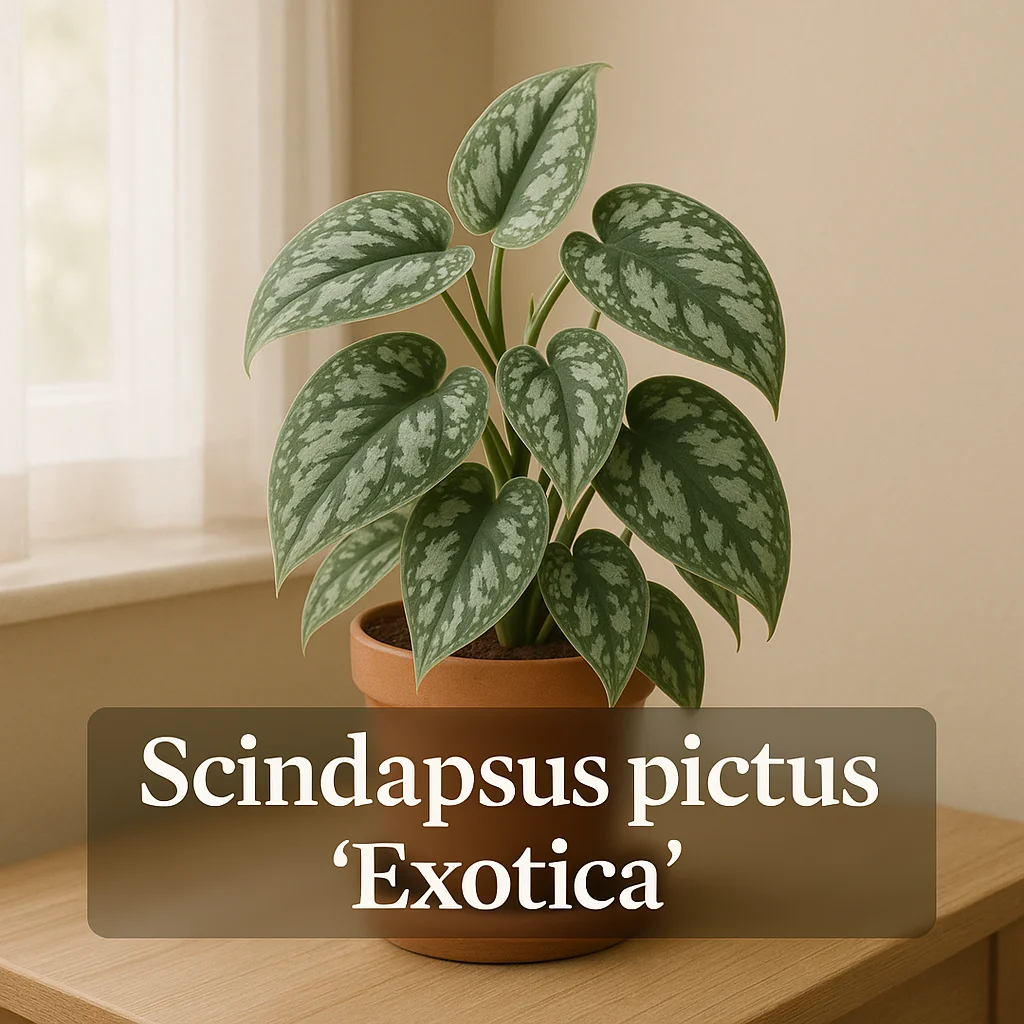
The Scindapsus pictus ‘Exotica’ is distinguished by its large, heart-shaped leaves with a unique silvery variegation pattern that almost shimmers in the light. The leaves are typically dark green with irregular silvery patches and a velvety texture, arranged alternately along a slender vine.
It is primarily grown for its foliage, as it rarely blooms indoors. Common look-alikes include the Pothos (Epipremnum aureum), but Scindapsus pictus can be identified by its softer, more muted leaf variegation and texture.
- Large, heart-shaped leaves with silvery patches
- Velvety leaf texture
- Vines that can trail or climb with support
- Leaves typically dark green with light silvery variegation
- Rarely flowers indoors
- Soft, flexible vines compared to other variegated indoor plants
🌍 Origin & Natural Habitat
Native to Southeast Asia, the Scindapsus pictus thrives in the humid, tropical forests of the region. These plants typically grow as understory plants, where they climb trees and other structures to reach light.
Understanding its natural habitat helps in recreating suitable indoor conditions, such as providing ample humidity and indirect light, mimicking the dappled sunlight of tropical forest canopies.
☀️ Light Requirements
Place your Scindapsus pictus ‘Exotica’ in an area with bright, indirect light, such as near a north or east-facing window. Direct sunlight can scorch the leaves, while low light will diminish its variegation, making the leaves appear more uniformly green.
Signs of too little light include slow growth and fading variegation, while too much direct light can cause leaf burn.
- Place in bright, indirect light
- Avoid direct sunlight
- North or east-facing windows are ideal
- Maintain variegation by providing appropriate light
- Monitor for light stress: adjust placement as needed
- Consider supplemental lighting in low-light spaces
💧 Watering & Humidity
The Scindapsus pictus ‘Exotica’ thrives in moderate humidity and prefers its soil to dry out moderately between waterings. Use a soak-and-drain watering method, allowing the top 2 inches of soil to dry out before watering again.
Humidity boosts the plant's vibrancy; consider using a humidifier or grouping plants together. Signs of overwatering include yellowing leaves, while under-watering may cause leaf curling.
- Soak and drain thoroughly during each watering
- Allow top 2 inches of soil to dry before re-watering
- Increase humidity with a humidifier if needed
- Watch for signs of overwatering: yellow leaves
- Look out for underwatering signs: leaf curling
- Maintain moderate humidity, especially in dry seasons
🐛 Soil, Pot & Repotting
Use a well-draining potting mix with good aeration. A standard indoor potting mix with added perlite is often sufficient. Choose pots with drainage holes to prevent waterlogging.
Repot every 1–2 years, or when you notice the roots are compact and filling the pot, or if water runs through too quickly. When repotting, gently transfer to a slightly larger pot to allow room for growth.
- Use a well-draining, aerated soil mix
- Add perlite for better drainage
- Ensure pots have drainage holes
- Repot every 1–2 years or when rootbound
- Increase pot size conservatively
- Handle roots gently when repotting
🌡️ Temperature, Airflow & Seasonal Care
The Scindapsus pictus ‘Exotica’ prefers temperatures between 65°F to 85°F. Avoid exposing it to cold drafts or extreme temperature changes. Ensure good airflow to prevent fungal issues, especially if placed in closed spaces.
During winter, the plant's growth might slow down; reduce watering accordingly and maintain consistent light exposure.
- Maintain a temperature range of 65°F to 85°F
- Avoid placement near cold drafts
- Ensure good airflow to prevent fungal issues
- Adjust care frequency based on seasonal changes
- Expect slower growth in winter; adjust watering
- Maintain light exposure during low-light months
🌸 Flowers, Fruit & Growth Cycle
The Scindapsus pictus ‘Exotica’ rarely blooms indoors and is cherished for its foliage rather than its flowers. Its growth pattern involves a steady production of new leaves, which unfurl from a central stem in a vine-like fashion.
Prune back any leggy growth to encourage bushier appearances and maintain hygiene by cleaning the leaves periodically.
🧬 Propagation & Reproduction
Propagation of the Scindapsus pictus ‘Exotica’ is often achieved through stem cuttings. Take a cutting with at least two nodes and place it in water or moist soil until roots develop. Divisions and offsets are less common but can be utilized if available.
- Propagate via stem cuttings for best results
- Ensure cuttings have at least two nodes
- Root in water or directly in soil
- Monitor cutting moisture to encourage rooting
- Be patient: roots develop in a few weeks
🌿 Common Problems, Pests & Prevention
Watch for yellow leaves, brown tips, drooping, and leggy growth, which could indicate underwatering, overwatering, or lighting issues. Common pests include spider mites and mealybugs. Regular cleaning and stable care can prevent most issues.
- Regularly inspect for yellow leaves and brown tips
- Discourage pests: clean leaves gently and frequently
- Maintain consistent care routine
- Implement a gentle air circulation system
- Avoid overwatering to prevent root rot
- Quarantine new plants to prevent pest spread
🐾 Pet & Home Safety Notes
The Scindapsus pictus ‘Exotica’ may be irritating to pets if ingested. Ensure it is placed out of reach of pets and children, or use barriers if necessary. If ingestion is suspected, consult a professional or local poison control resources for advice.
🏡 Styling Ideas & Best Room Placement
Scindapsus pictus ‘Exotica’ makes a graceful addition to bathrooms and kitchens where humidity tends to be higher. It can be displayed in hanging baskets to showcase its trailing nature or trained on a moss pole for vertical interest. Pair it with other tropical plants that appreciate similar light and humidity conditions for a lush effect.
📌 Summary
- Distinctive large, heart-shaped variegated leaves
- Native to Southeast Asian tropical forests
- Thrives in bright indirect light; avoid direct sunlight
- Moderate watering with well-draining soil
- Maintain room temperature and moderate humidity
- Easy propagation through stem cuttings
- Susceptible to spider mites and mealybugs; prevention key
- Out of reach of pets/children due to potential irritation
- Styling versatility: hanging baskets or trained on poles
- Easy to medium difficulty for care and maintenance