🌱 Monstera deliciosa ‘Thai Constellation’
🧾 Quick Facts
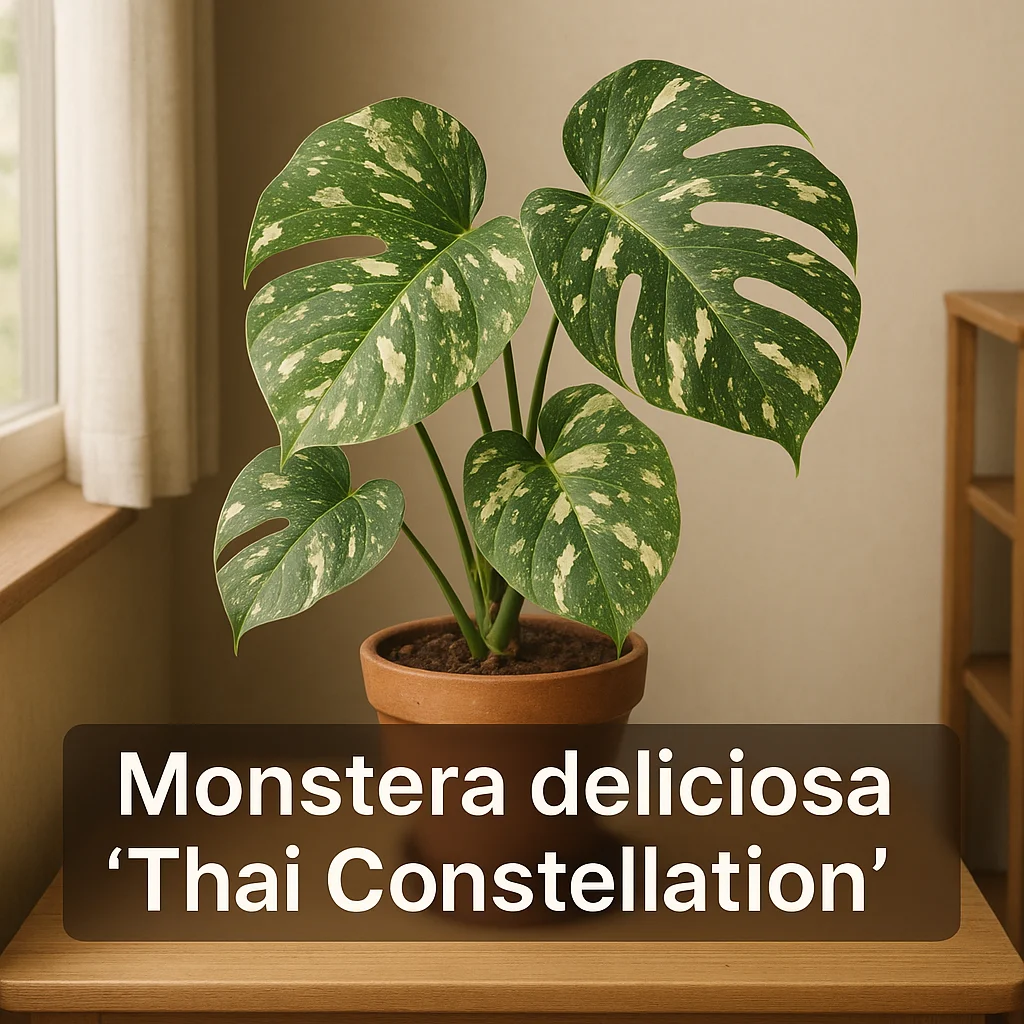
Monstera deliciosa ‘Thai Constellation’ is a captivating and sought-after variety of Monstera famous for its unique foliar patterns. It hails from the tropical forests of Central America but has become an iconic indoor plant worldwide due to its stunning variegation and relatively easy care demands.
- Common names: Thai Constellation Monstera
- Scientific name: Varies / commonly listed as Monstera deliciosa ‘Thai Constellation’
- Plant type: Foliage
- Growth habit: Climbing
- Typical indoor size: 3–8 feet tall, 3–5 feet wide
- Growth speed: Moderate
- Lifespan: Can live many years with care
- Origin: Central America; tropical forests
- Light preference: Bright indirect light
- Water needs: Moderate; prefer slight drying out between waterings
- Temperature & humidity preference: Warm and humid conditions
- Pet safety: May be irritating/toxic to pets
- Difficulty: Medium
🔍 Identification & Look-Alikes
The Monstera deliciosa ‘Thai Constellation’ is identifiable by its large, deeply lobed leaves showcasing striking cream and green variegation that resembles a starry sky. The leaves are heart-shaped when young, developing fenestrations as they mature. Unlike standard green Monsteras, this cultivar’s variegation is more stable.
The stem structure is sturdy and robust, with aerial roots often visible, suiting its climbing nature. Monstera does not typically bloom indoors and is generally grown for its foliage beauty. Common look-alikes include other variegated Monsteras and Philodendron bipinnatifidum (often confused due to similar leaf splits).
- Variegated with cream and green patterns
- Heart-shaped leaves with holes as they mature
- Sturdy stem with potential aerial roots
- Grown mainly for stunning foliage
- Look alike: Other variegated Monsteras
- Look alike: Split-leaf Philodendron (less pronounced variegation)
- Non-flowering indoors under typical conditions
- Compact but can climb with support
- Recognizable large leaf size
- Distinct fenestrated leaf structure
🌍 Origin & Natural Habitat
The Monstera deliciosa is native to the rainforests of Central America, thriving as a perennial epiphyte or semi-epiphyte in the forest understory. Growing naturally in these humid and warm environments, they often climb trees with their aerial roots and prefer diffuse sunlight filtering through the canopy.
Understanding its natural habitat helps replicate similar conditions indoors. Maintain warmth and humidity, and ensure indirect light to mimic sunlight passing through a jungle canopy. Knowledge of its native growth style supports appropriate care techniques, like providing support structures for climbing.
☀️ Light Requirements
This Monstera prefers bright, indirect light, which encourages healthy growth and vibrant variegation. Direct sunlight may cause leaf scorch, while too little light might dull the variegation and slow growth. An east or north-facing window provides ideal lighting, or you can place it further inside a room with more intense windows.
- Avoid direct sun; prefer filtered light
- Keeps variegation bright in indirect sun
- Signs of too much light: browning or burnt leaves
- Signs of too little light: dull leaves, slowed growth
- Ideal window: East or filtered south/west
- Rotate plant occasionally for even growth
- Supplement with grow lights if needed
- Adjust placement seasonally as sun intensity changes
💧 Watering & Humidity
The ‘Thai Constellation’ enjoys a soak-and-dry watering rhythm. Water thoroughly until excess drains out, then allow the top few inches of soil to dry before watering again. During active growth periods, it may need more frequent watering; however, reduce watering in winter when growth typically slows.
Humidity is key, as it enjoys levels above 60%. If your home is dry, consider options like a pebble tray, humidifier, or grouping plants together. Avoid letting the soil become soggy to prevent root rot, a frequent issue with overwatering.
- Thorough water until drainage, then let dry out
- Increase humidity in dry environments
- Overwater signs: yellowing leaves, mushy stems
- Underwater signs: wilting, crispy edges
- Higher humidity via a humidifier or tray
- Less water during colder months
- Use lukewarm water if possible
- Observe watering needs change with light
- Adjust frequency with seasonal changes
🐛 Soil, Pot & Repotting
The ideal soil for Monstera ‘Thai Constellation’ is a well-draining, rich and airy mix. Using a combination of potting soil, orchid bark, and perlite ensures both moisture retention and good aeration. Pots should have drainage holes to prevent water buildup, and usually terracotta or plastic pots suit them fine.
Repot every couple of years or when growth seems halted or roots appear on the surface or through the drainage. Upsize conservatively by a couple of inches, disturbing the roots as little as possible.
- Use airy, well-drained mix: bark/perlite/soil
- Pots with good drainage are vital
- Repot when roots are crowded or outgrow pot
- Gently repot without excessive root disturbance
- Choose slightly larger pot only
- Regularly check root ball health
- Refresh soil mix while repotting
- Pot type: plastic retains moisture longer
- Terra cotta allows breathability
- Handle plant carefully while repotting
🌡️ Temperature, Airflow & Seasonal Care
‘Thai Constellation’ thrives in average indoor temperatures ranging from 65 to 80°F (18-27°C). Avoid cold drafts, extreme temperature fluctuations, and placing near heating vents. During cooler months, the plant grows more slowly and requires less watering.
Good airflow is essential but ensure it isn’t directly in the path of strong gusts. Adjust care routines with seasonal changes, being mindful of light changes and potentially mismatched environmental factors like heating systems reducing humidity.
- Comfortable temp: 65-80°F (18-27°C)
- Avoid sudden temperature fluctuations
- Keep away from drafty areas
- Less water and feeding in winter
- Seasonal light change might require repositioning
- Monitor humidity with heating in winter
- Slowdown signals dormancy; adjust care
- Warmth promotes consistent growth
- Ensure breathing room, not too congested
🌸 Flowers, Fruit & Growth Cycle
While outdoor Monsteras may bloom and fruit, indoor ‘Thai Constellation’ is almost exclusively foliage-focused. The fascination is all in the leaf development and variegation. Under optimal conditions, they will regularly produce new leaves and require minimal pruning beyond managing size and shape.
Pruning encourages denser growth. Support poles help sustain height and prevent flopping, guiding its natural climbing tendency. Regular cleaning of leaves boosts photosynthesis efficiency.
🧬 Propagation & Reproduction
Propagation of Monstera ‘Thai Constellation’ is commonly done through stem cuttings. Take a cutting that includes at least one node, which can root in water or a moist soil mix. Division can also be used if the plant is large and has multiple stems.
Seeds are not typically used due to difficulty securing and ensuring variegation. It is essential to know that variegated plants might not always pass their patterns through cuttings.
- Propagate via stem cuttings with nodes
- Water or soil rooting possible
- Support larger plants through division
- Ensure cutting from healthy plant section
- Propagating variegation can be challenging
- Avoid propagation during plant stress/dormancy
- Secure humid environment for rooted cuttings
- Be patient for signs of new root growth
🌿 Common Problems, Pests & Prevention
Yellowing leaves might hint at overwatering, while browning edges usually indicate underwatering or low humidity. Pest issues like spider mites, mealybugs, and scale can occur, often in environments where airflow is restricted and humidity is low.
Prevention includes maintaining consistent care, avoiding waterlogged conditions, and regular leaf cleaning. Inspect the plant often and isolate it if introducing new plants to your collection.
- Yellow leaves often mean overwatering
- Browning tips often mean low humidity
- Spider mites can occur in dry air
- Mealybugs are common pests
- Regular leaf cleaning to remove dust
- Quarantine new plants to prevent pest spread
- Stable environmental conditions deter problems
- Watch for leggy growth as a light issue
- Ensure proper sanitary practices with tools
🐾 Pet & Home Safety Notes
The Monstera ‘Thai Constellation’, like many in its species, is listed as toxic to pets if ingested, causing irritation. The sap can be a mild irritant to skin. Place it out of reach or use protective barriers to minimize risk to pets and children.
If ingestion is suspected, contact a professional or local poison control resources promptly for advice and assistance.
🏡 Styling Ideas & Best Room Placement
With the Monstera ‘Thai Constellation's’ lush and impressive foliage, it makes a striking statement piece. Ideal for living rooms or offices with indirect light or a dining room corner needing an exotic touch. Humid environments like bathrooms or kitchens can benefit, provided space allows.
Train it on a moss pole for vertical growth or let it cascade from a high shelf. Pair it with smaller plants like Pothos or Peace Lilies that enjoy similar environments for a cohesive group display.
📌 Summary
- Identify by its large, fenestrated and variegated leaves
- Originates from Central America's tropical forests
- Needs bright indirect light for optimal variegation
- Water when topsoil dries, increase humidity
- Use air-permeable soil mixtures
- Prefers warm, stable temperatures and high humidity
- Propagate chiefly via stem cuttings
- Common issues: watering imbalances, low humidity
- Medium difficulty level, easily adaptable with care
- Exercise caution due to its potential toxicity to pets