🌱 Begonia amphioxus
The Begonia amphioxus is a captivating houseplant valued for its striking foliage and unique appearance. This guide provides essential care information, identification tips, and styling ideas to help you successfully grow and enjoy this plant indoors.
🧾 Quick Facts
The rare and exquisite Begonia amphioxus is a unique member of the Begonia family, often sought for its ornamental leaves and interesting patterns. Here are some quick facts to get you acquainted with this plant:
- Common Names: Begonia amphioxus, Spotted Begonia
- Scientific Name: Begonia amphioxus
- Plant Type: Foliage
- Growth Habit: Upright, bush-like
- Typical Indoor Size Range: 12-18 inches tall and wide
- Growth Speed: Moderate
- Lifespan: Can live many years with proper care
- Origin: Borneo
- Light Preference: Bright indirect light
- Water Needs: Moderate; prefers to dry slightly between watering
- Temperature & Humidity Preference: Warm temperatures; high humidity
- Pet Safety: May be irritating/toxic to pets
- Difficulty: Medium
🔍 Identification & Look-Alikes
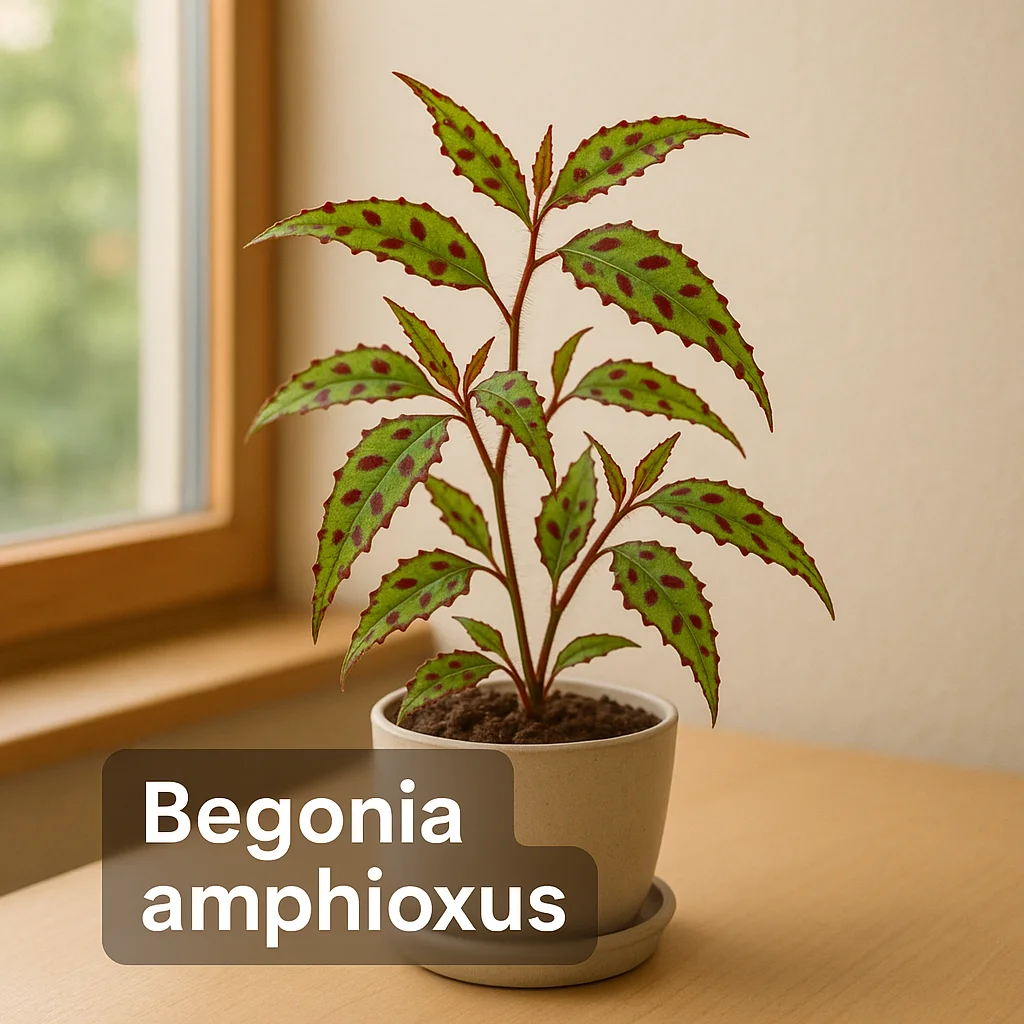
Recognizing the Begonia amphioxus involves identifying its distinct foliage and growth patterns. The leaves are elongated, lance-shaped with a mixture of green and dark red spots. The plant tends to have a compact structure, with leaves emerging directly from the base, giving it a bushy appearance. Despite its beauty, it's primarily grown for its foliage rather than flowers, as it rarely blooms indoors.
Common look-alikes include other Begonia species and the Polka Dot Plant. The unique spotting pattern and leaf shape help distinguish it from these plants.
- Spot-patterned lance-shaped leaves
- Green leaves with dark red spots
- Bushy, compact growth habit
- Leaves emerge from the base
- Primarily grown for its foliage
- Compare with other Begonias for spotting patterns
- Identify leaf narrowness compared to other variants
- Notice the lanceolate leaf shape
- Rarely seen blooms indoors
🌍 Origin & Natural Habitat
Begonia amphioxus is native to the rainforests of Borneo, an island region characterized by high humidity and warm temperatures. The plant commonly grows in the forest understory, where it receives filtered light. Understanding its native habitat helps in replicating its preferred growing conditions indoors, particularly the need for high humidity and protection from direct sunlight.
☀️ Light Requirements
Begonia amphioxus thrives in bright indirect light. In indoor settings, it's best placed near east or north-facing windows where it can receive soft morning light. Avoid exposure to direct sunlight as it can scorch the delicate leaves. Inadequate light can lead to a loss of the distinct leaf pattern, while too much light can cause browning.
- Provide bright, indirect light
- Avoid direct sunlight to prevent leaf burn
- East or north-facing windows are ideal
- Watch for fading patterns as a sign of low light
- Consider supplementing with fluorescent lights in dim rooms
- Adjust distance from windows based on season
- Leaves should remain healthy green with visible spots
💧 Watering & Humidity
Water Begonia amphioxus when the top inch of soil feels dry. Ensure the pot has good drainage and avoid letting the plant sit in water to prevent root rot. Humidity is crucial; aim for 60% or higher. You can increase humidity with a pebble tray, humidifier, or by grouping plants together.
- Allow soil to dry slightly between watering
- Use pots with drainage holes
- Avoid over-soaking; ensure water drains freely
- Look for drooping or wilting as signs of underwatering
- Yellow leaves can indicate overwatering
- Provide a humidity tray for moisture boost
- Regular misting helps maintain humidity
- Increase watering frequency in dry/hot conditions
- Decrease watering in cooler months
🐛 Soil, Pot & Repotting
Use an airy, well-draining soil mix for Begonia amphioxus. A mix of standard potting soil amended with perlite or orchid bark works well. Opt for pots with drainage holes to prevent waterlogging. Repot every 1-2 years or when the plant becomes root-bound, showing signs such as slowed growth or roots emerging from the drainage holes.
- Use a light, well-draining soil mix
- Include perlite or orchid bark to improve aeration
- Choose pots with adequate drainage
- Root-bound plants should be repotted
- Repot every 1-2 years in the growing season
- Increase pot size gradually
- Gently loosen roots during repotting
- Do not bury the stem base too deeply
- Water thoroughly post-repotting
🌡️ Temperature, Airflow & Seasonal Care
Begonia amphioxus prefers temperatures between 65-75°F. Keep the plant away from drafts, air conditioning vents, and sudden temperature swings. During winter, growth may slow down, and watering should be reduced, allowing the plant to rest naturally.
- Maintain temperatures between 65-75°F
- Avoid cold drafts and temperature fluctuations
- Keep away from direct airflow from vents
- Observe reduced growth in winter months
- Decrease watering in colder seasons
- Boost humidity with dry central heating
- Protect from chilling air near windows/doors
- Ensure consistent warmth during active growth
🌸 Flowers, Fruit & Growth Cycle
The Begonia amphioxus is mostly grown for its decorative leaves, as it rarely flowers indoors. When flowering does occur, expect small, inconspicuous white flowers. The plant grows new leaves throughout its active growing period, with pruning generally unnecessary unless removing dead or damaged leaves.
- Main attraction: foliage over flowers
- Occasional small white blooms
- Focus on healthy leaf growth
- Prune only as needed for maintenance
- Avoid harsh cuts; use clean instruments
- Encourage denser growth by removing wilted foliage
🧬 Propagation & Reproduction
Propagating Begonia amphioxus can be done through stem cuttings. To propagate, take a healthy stem cutting with several nodes, remove the lower leaves, and place it in water or soil. High humidity is crucial for successful rooting.
- Use stem cuttings for propagation
- Ensure cuttings have multiple nodes
- Root cuttings in water or moist soil
- Provide high humidity for rooting success
- Keep cuttings in bright, indirect light
- Patience is key; rooting may take several weeks
- Avoid direct sunlight exposure during rooting phase
🌿 Common Problems, Pests & Prevention
Common issues with Begonia amphioxus include yellow leaves from overwatering, brown leaf tips from low humidity, and leggy growth from insufficient light. Pests such as spider mites and mealybugs can affect the plant. Regularly inspecting the leaves and maintaining stable care minimizes these problems.
- Yellowing leaves can indicate overwatering
- Brown tips show low humidity
- Leggy growth suggests insufficient light
- Watch for spider mite or mealybug infestations
- Quarantine new plants before introducing
- Wipe leaves with damp cloth regularly
- Ensure good airflow to prevent mold
- Maintain consistent care and conditions
🐾 Pet & Home Safety Notes
Parts of Begonia amphioxus may cause irritation if ingested by pets or children. It is advisable to place the plant out of reach or use barriers to prevent access. If ingestion is suspected, contact a professional or local poison control resources for assistance.
🏡 Styling Ideas & Best Room Placement
Begonia amphioxus can add a touch of exotic beauty to bathrooms or kitchens where humidity tends to be higher. It's stunning in decorative pots on shelves or tables and pairs well with other tropical plants like ferns and orchids. Ensure the location allows the plant to receive bright, indirect light.
📌 Summary
- Begonia amphioxus features striking spotted foliage
- Native to Borneo, requires warm, humid conditions
- Thrives in bright, indirect light settings
- Water moderately; maintain high humidity
- Use well-draining soil; repot when root-bound
- Prefers temperatures 65-75°F with stable conditions
- Propagate through stem cuttings
- Key issues: overwatering, low humidity, pests
- Medium care level; handle with safety awareness
- Perfect in humid environments with indirect light