🌱 Sempervivum tectorum (Hens and Chicks)
🧾 Quick Facts
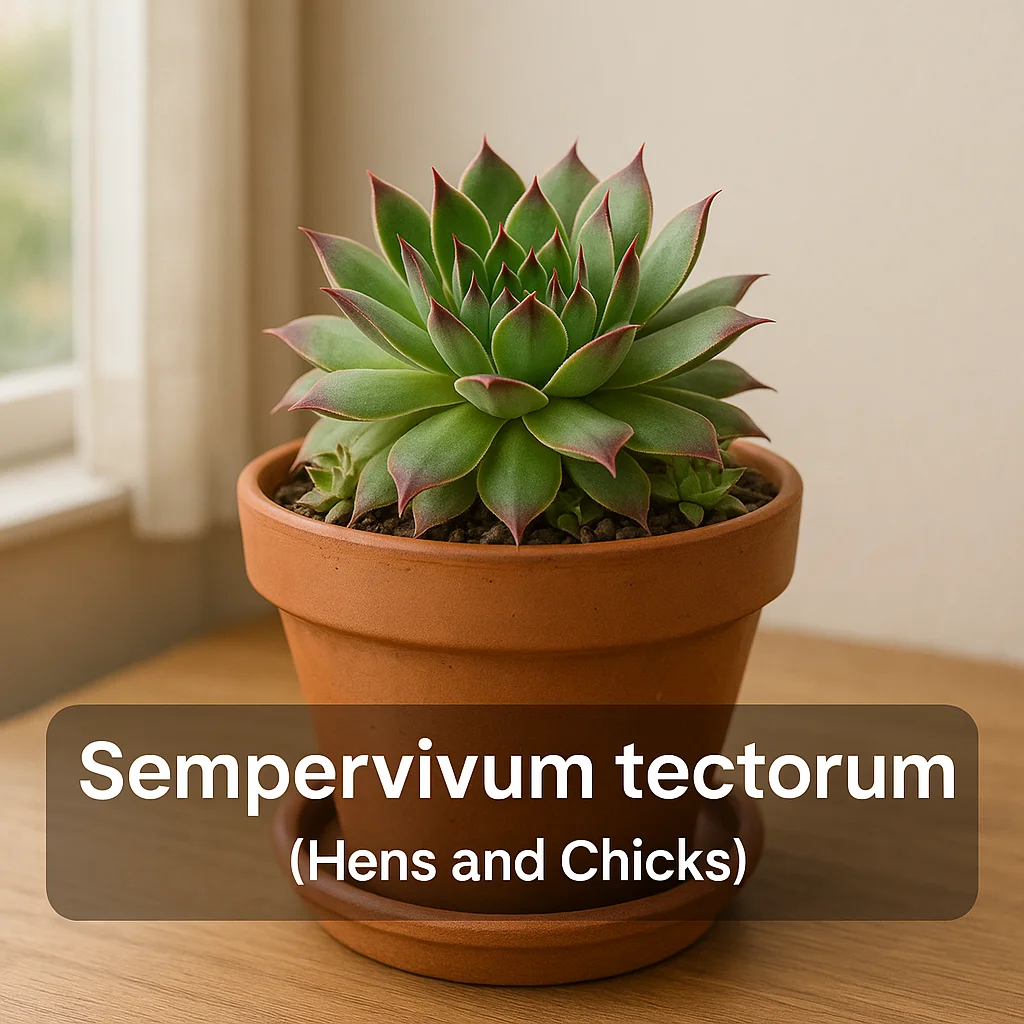
Sempervivum tectorum, commonly known as Hens and Chicks, is a popular succulent often chosen for its ease of care and charming appearance. The plant is known for its rosette shape and ability to multiply rapidly, forming clusters that resemble a mother hen surrounded by chicks.
- Common names: Hens and Chicks, Houseleek
- Scientific name: Sempervivum tectorum
- Plant type: Succulent
- Growth habit: Rosette
- Typical indoor size range: 2–6 inches tall, spreading to 12 inches
- Growth speed: Moderate
- Lifespan: Can live many years with proper care
- Origin: South and Central Europe; mountain regions
- Light preference: Bright indirect light; tolerates some direct sun
- Water needs: Low; prefers to dry out between waterings
- Temperature & humidity preference: Prefers cool to moderate temperatures; low humidity
- Pet safety: Generally considered pet-friendly, but ingestion can cause mild discomfort
- Difficulty: Easy
🔍 Identification & Look-Alikes
Hens and Chicks can be identified by their fleshy, pointed leaves that form dense rosettes. The leaves are typically green but can exhibit red or purple hues depending on light exposure and stress conditions. Each rosette is a single plant, and they produce offsets known as "chicks" that grow around the base.
This plant is often grown for its foliage, although it can produce star-shaped flowers on tall stalks in summer. Look-alikes include other Sempervivum species and certain Echeveria, though Echeveria tend to have more vibrant colors and smoother leaf surfaces.
- Rosette formation with dense leaf arrangement
- Fleshy, pointed, and slightly pubescent leaves
- Green with possible red/purple tones under stress or bright light
- Offsets form clusters around the main rosette
- Potential to produce flowers on tall stalks
- Commonly mistaken for Echeveria, which have thicker, smoother leaves
🌍 Origin & Natural Habitat
Sempervivum tectorum is native to the mountain regions of South and Central Europe. It thrives in rocky areas with well-drained soil, tolerating temperature variations from harsh sunlight to colder alpine climates. Understanding its natural ability to endure dry spells underlines the importance of allowing the soil to dry out between waterings and ensuring bright light exposure.
In such challenging environments, these succulents have adapted to survive with minimal water, making them well-suited for indoor life, particularly in areas receiving abundant sunlight.
☀️ Light Requirements
Hens and Chicks prefer bright light and can tolerate some direct sunlight. Placing them near a south or west-facing window typically offers the right balance of light intensity. In low light conditions, the plant may become leggy or lose its vibrant coloration.
Light intensity can impact the plant's aesthetic appeal, with brighter light enhancing red or purple tones. However, excessive direct sunlight can cause leaf burn, indicated by browning tips.
- Place near bright, sunny windows for best growth
- Avoid prolonged direct sunlight exposure, especially in hot climates
- Supplement low light with artificial grow lights if necessary
- Look for signs of stretching as an indication of insufficient light
- Brighter light encourages more vibrant colors
- Monitor for leaf burn if near a window with intense direct sun
💧 Watering & Humidity
Sempervivum tectorum prefers a soak-and-dry approach to watering. Allow the soil to dry out completely between waterings, especially during cooler months when growth slows. Overwatering can lead to root rot, while underwatering may cause the leaves to wither and show signs reminiscent of dehydration.
Low humidity levels are generally favorable for Hens and Chicks, making misting unnecessary. However, good airflow can prevent fungal issues.
- Allow soil to dry between waterings
- Water less frequently in the winter
- Ensure excess water drains away promptly
- Use a pot with drainage for best results
- Look for overly pliable, thin leaves as underwatering signs
- Prevent overwatering by feeling moisture content in soil
🐛 Soil, Pot & Repotting
A well-draining soil mix is crucial for Hens and Chicks, often achieved with a succulent or cactus potting mix. Adding perlite or sand can improve drainage further. Choose pots with drainage holes to prevent waterlogging.
Repot when overcrowded or when growth slows, typically every 2 to 3 years. Gently remove the plant, clearing away old soil, trimming damaged roots, and repotting in a slightly larger container.
- Opt for a cactus/succulent potting mix
- Ensure pots have adequate drainage
- Consider terracotta pots for improved soil aeration
- Repot when overcrowded or roots appear from drainage holes
- Repot conservatively; avoid large pots to reduce moisture retention
- Check root health during repotting for any signs of rot
🌡️ Temperature, Airflow & Seasonal Care
Sempervivum tectorum prefers a temperature range between 60–75°F (15–24°C). They can tolerate cooler temperatures, particularly during the dormant winter period, as long as they remain above freezing.
Ensure the plant is not near cold drafts or heat sources. Winter typically demands reduced watering as growth slows, and a slight drop in temperature can encourage dormancy.
- Maintain temperatures in the moderate range indoors
- Lower temperatures can support dormancy but avoid frost
- Shield from cold drafts and direct heat sources
- Reduce watering frequency in winter months
- Ensure adequate airflow to prevent fungal issues
🌸 Flowers, Fruit & Growth Cycle
Hens and Chicks occasionally flower indoors, typically during the summer months. The blooms are star-shaped, appearing on stalks that rise from the center of the rosette. It's important to note that once a rosette flowers, it will die, but by this time, it often produces many offsets to continue the plant cycle.
The growth cycle involves the creation of offsets, contributing to their "chicks" nickname. Minimal pruning is necessary, but dead flower stalks and leaves can be removed to maintain appearance and health.
🧬 Propagation & Reproduction
Propagation of Sempervivum tectorum is straightforward, primarily through offsets (chicks). Simply remove the chicks from the mother plant and plant them in a suitable soil mix. Ensure they have enough contact with the soil to establish roots.
Propagation through seeds is possible but less common due to the slow growth rate of seed-grown plants.
- Separate offsets from the mother plant for propagation
- Ensure offsets are well-rooted before removing
- Directly place offsets in soil for quick rooting
- Seeds can be sown but require time and patience
- Propagation is an excellent way to expand your collection
🌿 Common Problems, Pests & Prevention
Common issues for Hens and Chicks include yellowing leaves due to overwatering or browning tips from direct sunlight. The plant is generally pest-resistant, but mealybugs, aphids, and spider mites can occasionally appear.
Regular inspection, good airflow, and avoiding excess water can prevent most problems. If pests are detected, remove them manually or treat them with appropriate, safe options.
- Inspect plants regularly for pest activity
- Avoid overwatering to prevent yellow leaves
- Maintain good airflow for healthier growth
- Control sunlight exposure to avoid leaf burn
- Manual removal of pests can often suffice
- Stable care minimizes stress and pest attraction
🐾 Pet & Home Safety Notes
While Sempervivum tectorum is generally considered non-toxic to pets and humans, ingestion can sometimes cause mild stomach discomfort. It's a good practice to place the plant out of reach of curious pets and children.
If ingestion is suspected, contact a veterinarian or local poison control resources for guidance.
🏡 Styling Ideas & Best Room Placement
With their low-maintenance requirements, Hens and Chicks fit beautifully in various home settings. They make great additions to sunny kitchen windowsills, bright office spaces, or dry, sunny areas where moisture-tolerant plants might not thrive as well.
Pair them with other succulents or cacti for an aesthetically pleasing arrangement, and consider placing them in rock gardens or shallow dish arrangements to showcase their unique growth habit.
📌 Summary
- ID Highlights: Rosette-forming succulent with fleshy, pointed leaves
- Origin: Mountainous regions of Europe
- Light: Bright indirect, tolerates some direct sun
- Watering: Allow soil to dry between waterings
- Soil/Repotting: Well-draining mix; repot when crowded
- Temperature: Prefers moderate temperatures; avoid frost
- Propagation: Mainly through offsets
- Common Issues: Overwatering, pests like mealybugs
- Difficulty: Generally easy to care for
- Key Cautions: Mildly irritating if ingested, so place safely