🌱 Kalanchoe tomentosa (Panda Plant)
🧾 Quick Facts
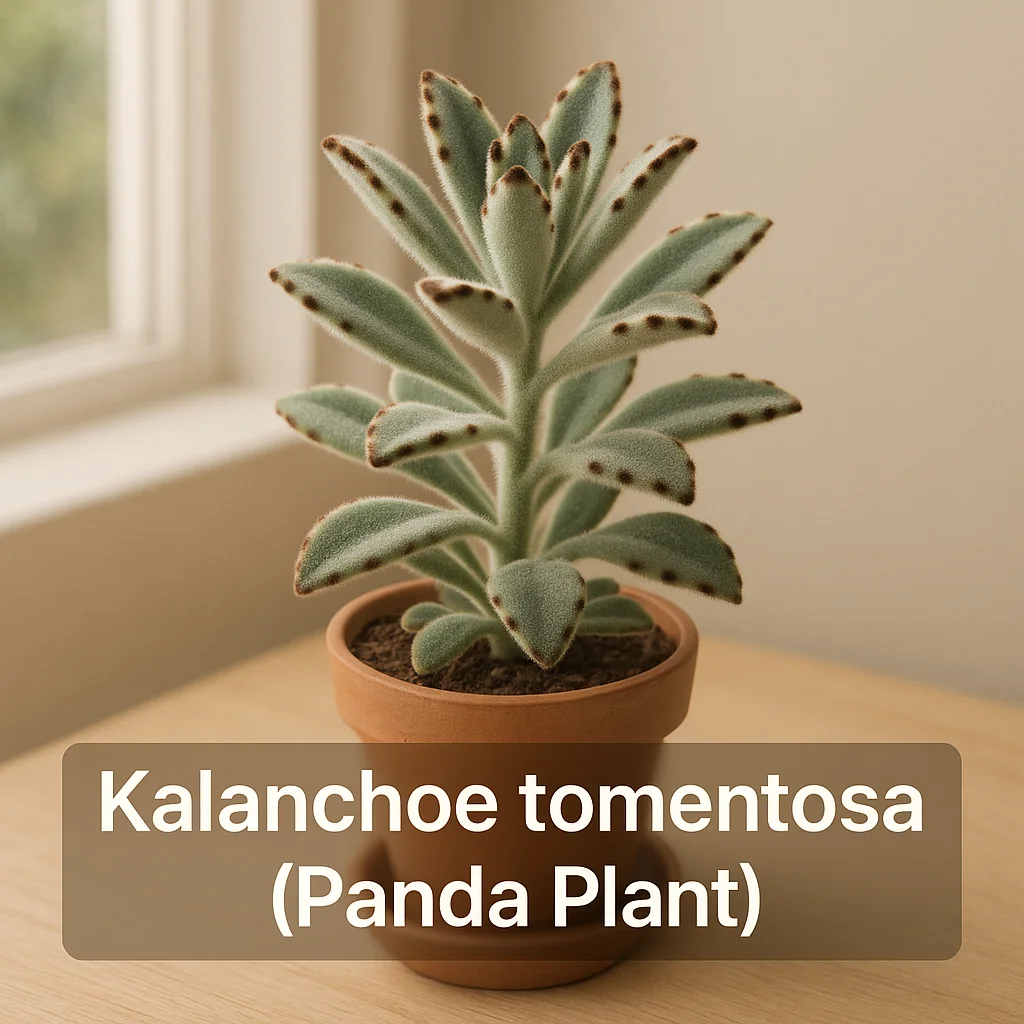
The Kalanchoe tomentosa, commonly known as the Panda Plant, is a favorite among plant enthusiasts for its unique appearance and ease of care. Known for its fuzzy leaves edged with brown, this succulent is both decorative and relatively low-maintenance, making it a great addition to any indoor plant collection.
- Common Names: Panda Plant, Chocolate Soldier
- Scientific Name: Kalanchoe tomentosa
- Plant Type: Succulent
- Growth Habit: Upright, shrub-like
- Typical Indoor Size: 12-18 inches in height and spread
- Growth Speed: Slow
- Lifespan: Can live many years with care
- Origin: Madagascar; arid environments
- Light Preference: Bright indirect light
- Water Needs: Low; prefers to dry out between waterings
- Temperature & Humidity Preference: Warm temperatures; low humidity
- Pet Safety: May be irritating/toxic to pets
- Difficulty: Easy
🔍 Identification & Look-Alikes
The Kalanchoe tomentosa is easily recognized by its thick, fleshy leaves covered with soft, silvery hairs, which give the plant a fuzzy appearance. The leaves are often edged with blotches of brown, creating a striking contrast. Stems are woody and can become quite thick as the plant matures. Though rarely blooming indoors, its small, tubular flowers may occasionally appear.
Common look-alikes include other Kalanchoe species and fuzz-leaved succulents, which can be differentiated by variations in leaf structure and coloration.
- Thick, fuzzy leaves with brown edges
- Upright, woody stems
- Silvery leaf hairs
- Occasional small, tubular flowers
- Leaves often form small rosettes
- Compact and bushy overall silhouette
- May develop a slight red tint in bright light
- Distinguished from similar plants by leaf texture and edge color
🌍 Origin & Natural Habitat
Native to Madagascar, Kalanchoe tomentosa thrives in arid environments with plenty of sunlight. It typically grows in sandy, well-drained soils and can be found in rocky outcrops and dry landscapes. The seasonal climate of Madagascar features a distinct dry season, which aligns with the Panda Plant's preference for less frequent watering.
Understanding its natural habitat helps inform indoor care by emphasizing the importance of well-draining soil, adequate light, and allowing the plant to dry between waterings.
☀️ Light Requirements
The Panda Plant thrives in bright, indirect light but can tolerate some direct sunlight. Place it near a south or east-facing window, where it can receive filtered light throughout the day. Bright light enhances the coloration and health of the plant, while insufficient light may cause leggy growth and dull leaf color.
If the plant receives too little light, you may notice slower growth, and the leaves may lose their distinctive brown edges. Conversely, too much direct sun can scorch the leaves.
- Place near bright, indirect light sources
- South or east-facing windows are ideal
- Avoid prolonged direct midday sun
- Notable for resistance to low light but thrives in bright conditions
- Monitor for leggy growth as a sign of low light
- Scorched leaves indicate excessive direct sun
- Consider supplemental lighting in low-light rooms
💧 Watering & Humidity
Kalanchoe tomentosa has low water needs and prefers a soak-and-dry approach. Water thoroughly, then allow the soil to completely dry out before the next watering. Pot size, season, and light conditions all influence how frequently you'll need to water. In smaller pots or during active growth periods, water more frequently, but always ensure the topsoil has dried out first.
This plant is well-suited to low humidity environments typical of indoor conditions and does not require additional humidity. Overwatering is a more common issue than underwatering, evidenced by yellowing leaves and mushy stems.
- Use a thorough soak-and-dry watering method
- Allow soil to dry completely between waterings
- Adjust watering frequency to pot size and light conditions
- Yellow leaves signify potential overwatering
- Low humidity is suitable; avoid increasing it
- Watch for shriveled leaves as sign of underwatering
- Use pots with drainage holes to prevent rot
🐛 Soil, Pot & Repotting
An airy, well-draining soil mix is essential for the Panda Plant. Use a cactus or succulent mix or amend regular potting soil with sand or perlite to enhance drainage. Choose pots with adequate drainage holes to prevent water from pooling at the base.
Repotting is necessary when the plant becomes rootbound or exhibits slowed growth. Generally, repot every 2-3 years, opting for a slightly larger pot each time. Be gentle to avoid damaging the roots, and refresh the soil to keep it nutrient-rich.
- Use well-draining, sandy or gritty soil mixes
- Pots should have ample drainage holes
- Repot when rootbound or growth slows significantly
- Avoid excessive upsizing to manage soil moisture
- Be cautious with roots during repotting
- Refresh soil every 2-3 years
🌡️ Temperature, Airflow & Seasonal Care
The Panda Plant prefers warm indoor temperatures around 60-75°F (15-24°C) and does not tolerate frost. Avoid placing it near cold drafts, heater vents, or sudden shifts in temperature, which could stress the plant.
In winter, the plant's growth slows, requiring less water and a brighter location if natural light diminishes. It does not enter dormancy but appreciates stable conditions year-round with good air circulation.
- Ideal temperatures: 60-75°F (15-24°C)
- Avoid exposure to frosty conditions
- Moderate air circulation is beneficial
- Reduce watering in winter
- Avoid sudden temperature shifts and drafts
- Does not require dormancy care
🌸 Flowers, Fruit & Growth Cycle
While Kalanchoe tomentosa can bloom indoors, flowers are rare and typically occur under optimal conditions, appearing as small, tubular blooms in late spring or early summer. The plant is mainly grown for its foliage.
New growth appears as small rosettes of leaves at the stem tips. Pruning is generally unnecessary but can be done to maintain shape or remove dead stems. Use clean, sharp tools to avoid introducing disease.
🧬 Propagation & Reproduction
Propagation of the Panda Plant is commonly done through leaf cuttings or offsets. Leaf cuttings involve cutting healthy leaves and allowing them to callous over before planting in well-draining soil. Offsets can be carefully separated from the parent plant and potted individually.
While seeds are an option, propagation through cuttings is faster and more reliable for home growers.
- Use leaf cuttings or offsets for propagation
- Allow leaf cuttings to callous before planting
- Plant cuttings in well-draining cactus mix
- Offsets can be gently detached and repotted
- Seed propagation is possible but less common
- Perfect for producing new plants for personal collection
🌿 Common Problems, Pests & Prevention
The Panda Plant is generally robust but may suffer from common issues like yellowing leaves due to overwatering or brown leaf tips from underwatering or low humidity. It can be susceptible to pests such as spider mites, mealybugs, and scale insects.
Preventive measures include isolating new plants, regularly cleaning leaves, providing stable care, and ensuring good airflow. If pests are identified, gently wipe the leaves and monitor for recurrence.
- Avoid overwatering to prevent root rot
- Check for pests routinely
- Isolate new plants as a quarantine measure
- Ensure good air circulation
- Stability in care reduces stress-related issues
- Regularly clean leaves to deter pests
- Maintain consistent light and water conditions
🐾 Pet & Home Safety Notes
Though beautiful, the Panda Plant may be irritating or toxic if ingested by pets or children. To prevent accidental ingestion, consider placing it out of reach, using plant barriers, or training pets to avoid plants.
If ingestion is suspected, contact a professional or local poison control resources immediately for advice.
🏡 Styling Ideas & Best Room Placement
The Kalanchoe tomentosa is versatile in home decor, making a charming addition to sunny windowsills, desks, or bookshelves. Due to its love for bright light, a placement near a bright window is optimal.
Pair with other succulents or contrasting green foliage plants for a dynamic display. Use decorative pots or containers to enhance its aesthetic appeal.
📌 Summary
- Identification: Fuzzy leaves with brown edges
- Origin: Madagascar, arid habitats
- Light: Bright indirect light preferred
- Watering: Allow soil to dry between waterings
- Soil: Well-draining, sandy mix
- Temperature: Prefers 60-75°F
- Propagation: Easy through cuttings/offsets
- Common Issues: Generally pest-resistant but watch for mites
- Difficulty: Easy, suitable for beginners
- Pet Safety: Contains irritants; keep out of reach