🌱 Jade Plant (Crassula ovata)
🧾 Quick Facts
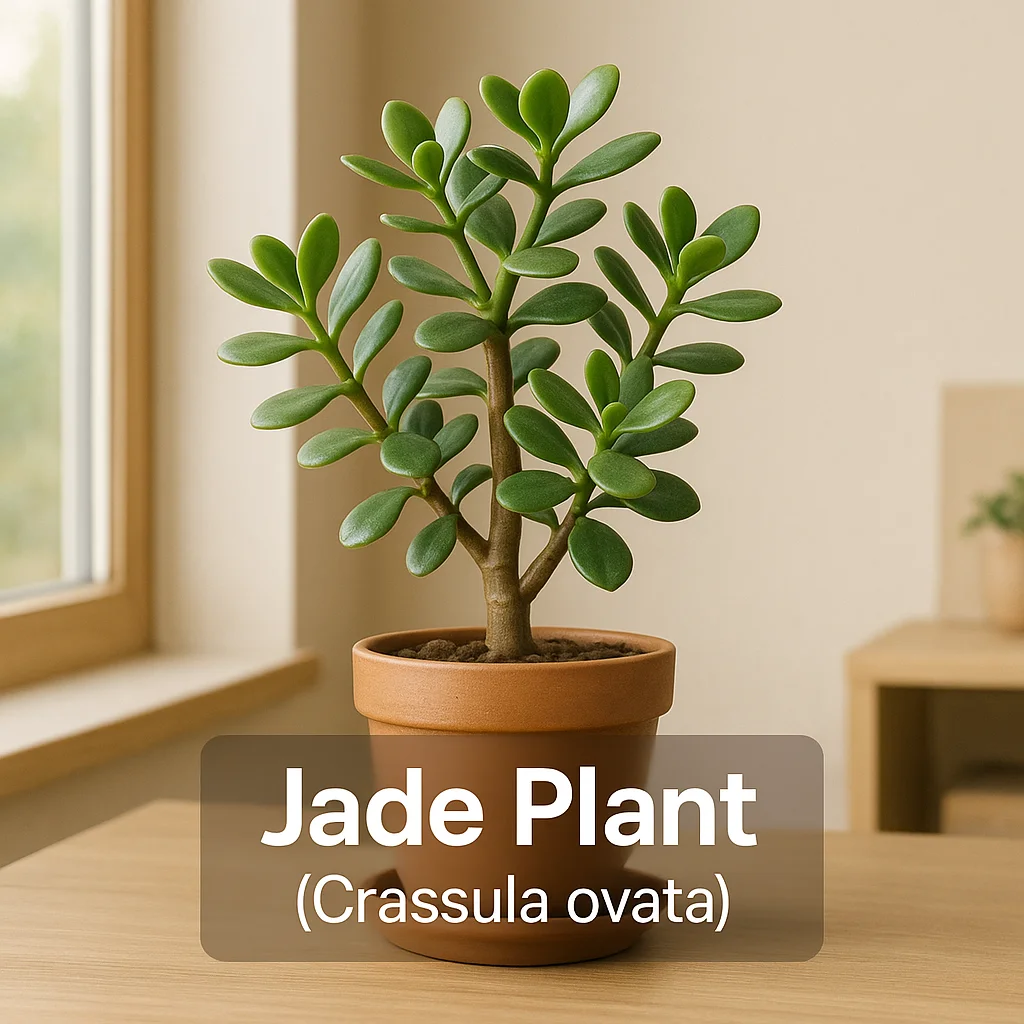
The Jade Plant, known for its lush, fleshy leaves and tree-like structure, is a popular indoor succulent. Here's a quick overview of its main characteristics:
- Common names: Jade Plant, Money Plant, Lucky Plant
- Scientific name: Crassula ovata
- Plant type: Succulent
- Growth habit: Shrub-like
- Typical indoor size range: 2-3 feet tall and wide
- Growth speed: Slow to moderate
- Lifespan: Can live many years with proper care
- Origin: South Africa and Mozambique; arid environments
- Light preference: Bright indirect light; can tolerate some direct sun
- Water needs: Low; prefers to dry out between waterings
- Temperature & humidity preference: Prefers warm, dry conditions
- Pet safety: May be irritating or toxic to pets if ingested; exercise caution
- Difficulty: Easy to moderate
🔍 Identification & Look-Alikes
The Jade Plant is recognizable for its thick, glossy, oval-shaped leaves that have a deep green color and can develop a red tinge around the edges with sufficient sunlight. The plant has a robust wooden stem that adds to its tree-like appearance. Crassula ovata may occasionally produce small white or pink star-shaped flowers, though this is less common indoors and it is mainly grown for its attractive foliage.
It is often confused with other Crassula species or similar succulents, like the Portulacaria afra (commonly known as the Dwarf Jade Plant), which has smaller leaves and a less dense stem structure.
- Thick, fleshy, oval leaves
- Glossy green with possible red tinges
- Woody stems enhancing a tree-like structure
- White or pink star-like flowers (rarely indoors)
- Shrub-like, dense and compact growth
- Distinguished from Dwarf Jade by larger leaves and thicker stems
🌍 Origin & Natural Habitat
The Jade Plant originates from the arid regions of South Africa and Mozambique. These areas are characterized by low rainfall, bright sunlight, and well-draining soils. In its natural habitat, the Jade Plant grows in rocky hills, benefiting from the dry, warm climate with plenty of sunlight. It thrives in places where the soil drains quickly, allowing its roots to dry out efficiently between rains.
Understanding its natural habitat helps inform its care as a houseplant. It requires similar conditions indoors, such as bright light and well-drained soil, to thrive.
☀️ Light Requirements
The Jade Plant prefers bright indirect light and can benefit from some direct sunlight, particularly in the morning or late afternoon. Positioning your Jade Plant near a south or west-facing window can meet these needs, but be cautious of too much direct midday sun, which may cause leaf scorching.
Inadequate light will result in leggy growth and duller leaf color. Conversely, too much light can cause leaf burn or shriveling. Adjust lighting based on plant appearance.
- Place near south or west-facing window
- Can tolerate some direct sun, avoid midday direct exposure
- Bright indirect light is ideal
- Signs of too much light: leaf scorch, browning tips
- Signs of too little light: legginess, dull leaves
- Rotate plant periodically for even light exposure
💧 Watering & Humidity
The Jade Plant thrives with a soak-and-dry watering method. Allow the soil to dry out completely between waterings, then water thoroughly until the excess drains out. The watering frequency highly depends on the season, light exposure, and pot size, with less water needed in the dormant winter months.
The Jade Plant prefers low humidity levels, so typical indoor humidity suits it well. Overwatering is a common issue and can lead to root rot, while underwatering may cause leaf shriveling.
- Use soak-and-dry method; let soil dry fully
- Reduce watering in winter or low light conditions
- Ensure pot has drainage holes
- Signs of overwatering: yellowing leaves, soft/mushy stems
- Signs of underwatering: shriveled, dry leaves
- Avoid misting, prefers dry air
🐛 Soil, Pot & Repotting
Jade Plants require a well-draining cactus or succulent soil mix to prevent water retention around the roots. Pots with drainage holes are essential; terracotta pots are preferred as they are porous and allow excess moisture to evaporate.
Repotting is recommended every two to three years or when the plant becomes rootbound. This is evident through slowed growth or roots growing out of drainage holes. Only increase the pot size slightly to prevent overwatering tendencies.
- Use succulent or cactus soil mix
- Prefer terracotta pots with drainage
- Repot every 2-3 years or when rootbound
- Signs to repot: roots visible, slow growth, fast drying soil
- Increase pot size slightly when repotting
- Handle roots gently during repotting
🌡️ Temperature, Airflow & Seasonal Care
The Jade Plant thrives in warm temperatures ranging from 65°F to 75°F (18°C to 24°C) and does not tolerate frost. Avoid placing it near drafty windows or heating vents, which can cause temperature fluctuations.
Growth may slow in winter, and the plant may enter a rest period, requiring less water. Ensure adequate airflow around the plant to prevent pests and diseases.
- Keep in temperatures between 65°F and 75°F
- Avoid placing near drafts and temperature extremes
- Reduce watering in winter when growth slows
- Keep away from heaters and direct AC drafts
- Ensure good air circulation
- Monitor for fungal issues during low growth periods
🌸 Flowers, Fruit & Growth Cycle
Indoors, Jade Plants rarely bloom, but if they do, it typically occurs in winter, producing small white to pink star-shaped flowers. Fruiting is rare indoors as well.
The plant grows slowly but steadily, producing new leaves primarily in the spring and summer. Pruning is straightforward; simply trim leggy stems to promote a more compact shape and remove any dead or damaged tissue.
🧬 Propagation & Reproduction
Jade Plants are easily propagated from stem cuttings or leaf cuttings. Simply allow the cuttings to callous over for a few days before planting in a well-draining soil mix. Patience is required as roots may take several weeks to develop.
Division or offsets are less common methods but can be utilized if branches naturally separate. Seed propagation is not generally pursued by amateur growers due to difficulty.
- Propagate easily from stem or leaf cuttings
- Allow cuttings to callous before planting
- Use well-draining soil mix for cuttings
- Be patient; rooting can take weeks
- Division possible but less common
- Hold off on watering cuttings immediately
🌿 Common Problems, Pests & Prevention
Common issues include yellowing leaves due to overwatering, brown tips from underwatering or sunburn, and leaves dropping from sudden temperature changes. Pests such as mealybugs, spider mites, and scale can be problematic but are preventable with regular inspections and maintaining optimal indoor conditions.
Avoid chemical treatments; instead, ensure proper care routines and conditions such as cleanliness, stable conditions, and proper watering techniques to prevent infestations.
- Inspect regularly for pests like mealybugs, scale
- Prevent overwatering to avoid root rot
- Avoid chemical pesticides, use clean care practices
- Maintain stable light and temperature conditions
- Address yellow or brown leaves by checking watering habits
- Quarantine new plants before integration
🐾 Pet & Home Safety Notes
The Jade Plant is listed by some sources as potentially irritating or toxic to pets if ingested. It is advisable to place the plant out of reach of pets and children to avoid any accidental consumption.
If ingestion is suspected, it is recommended to contact a professional or local poison control resources for advice. Sections of the plant that may be of concern include the leaves and stems.
🏡 Styling Ideas & Best Room Placement
The Jade Plant's elegant structure makes it an excellent choice for a variety of indoor settings. In well-lit living rooms, it serves as a focal piece on shelves or near windows. In offices, it's valuable for its low-maintenance characteristic.
Avoid places with high humidity like kitchens or bathrooms. It pairs well with other succulents and can be showcased on a plant stand or as a centerpiece on a side table.
📌 Summary
- ID highlights: Thick, glossy leaves with red edges
- Origin: Native to South Africa and Mozambique
- Light: Prefers bright, indirect light
- Watering: Allow to dry out between waterings
- Soil & repotting: Well-draining, repot every 2-3 years
- Temperature: Best in warm, stable conditions
- Propagation: Easy via stem/leaf cuttings
- Common issues: Pests, improper watering
- Difficulty: Easy to moderate care level
- Key cautions: May irritate pets; keep out of reach