🌱 Tradescantia pallida (Purple Heart)
🧾 Quick Facts
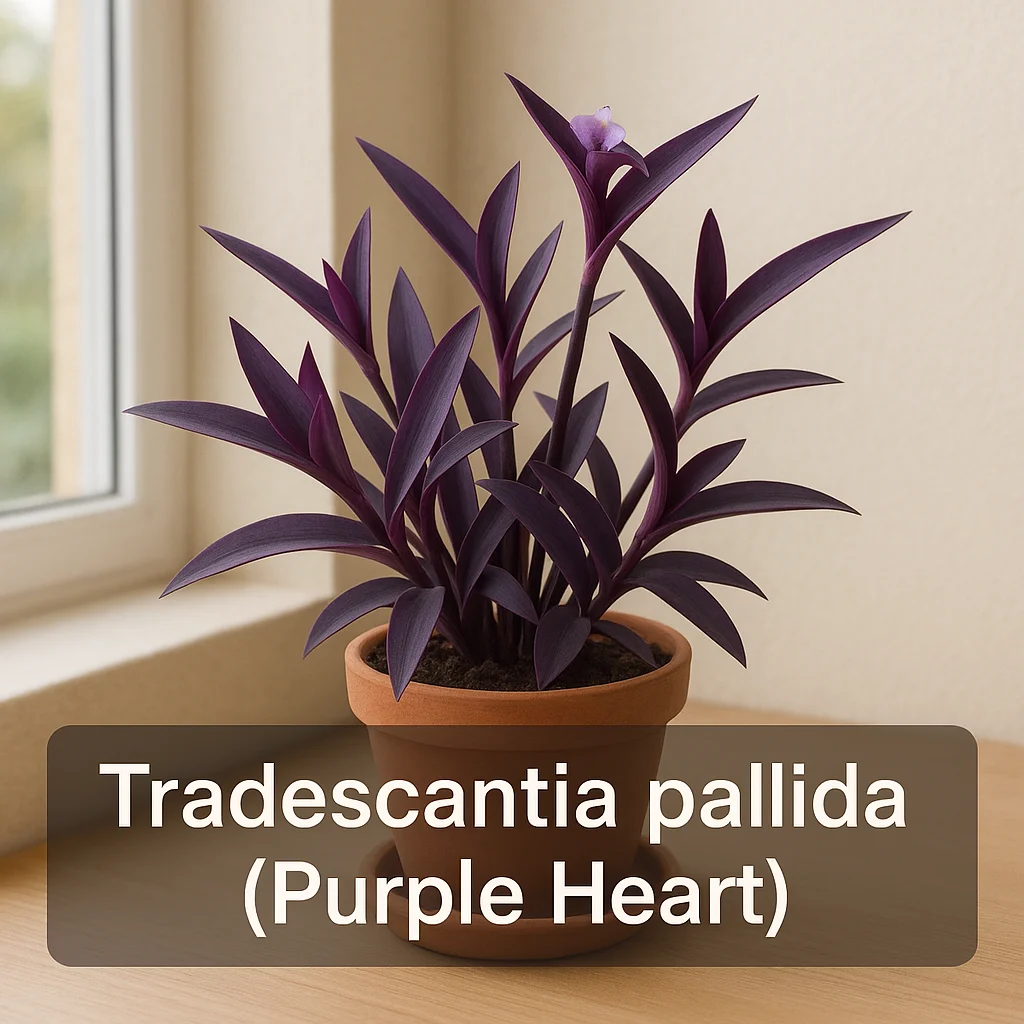
The Tradescantia pallida, commonly known as Purple Heart, is a beloved houseplant known for its striking purple foliage. Its vibrant color and easy care make it a favorite among both beginner and experienced plant enthusiasts.
- Common names: Purple Heart, Purple Queen
- Scientific name: Tradescantia pallida
- Plant type: Foliage
- Growth habit: Trailing
- Typical indoor size range: 1-2 feet in length
- Growth speed: Fast
- Lifespan: Can thrive for many years with proper care
- Origin: Northeastern Mexico; subtropical habitats
- Light preference: Bright indirect; can tolerate direct sunlight
- Water needs: Moderate; prefers to dry out between waterings
- Temperature & humidity preference: Warm, moderate humidity
- Pet safety: May be irritating to pets
- Difficulty: Easy
🔍 Identification & Look-Alikes
Tradescantia pallida is easy to recognize due to its vibrant purple leaves, which are long, pointed, and succulent-like. The leaves grow alternately along the stems, creating a lush trailing effect. The stems themselves are thick and brittle, with a purplish hue that complements the foliage. Occasionally, pinkish flowers may appear, but the plant is primarily cultivated for its foliage.
Common look-alikes include other types of Tradescantia, such as Tradescantia zebrina, which can be distinguished by their striped foliage. Additionally, Purple Heart's deep shade of purple is often more intense compared to other related species.
- Top ID Tips:
- Distinct deep purple leaves
- Succulent, pointed leaves
- Alternating leaf arrangement
- Thick, purplish stems
- Occasionally blooms with small pink flowers
- Fast-growing trailing habit
- Can become leggy if not pruned
- Handles direct sunlight better than many Tradescantia
🌍 Origin & Natural Habitat
The Purple Heart plant originates from the subtropical regions of northeastern Mexico. In its natural habitat, it thrives as a ground cover, spreading across forest floors and open areas. The climate in these regions is warm and moderately humid, with seasonal variations that include wetter and drier periods.
Understanding its natural preferences helps guide indoor care. Mimicking its native environment with bright lighting and allowing the soil to dry out occasionally can promote healthy growth.
☀️ Light Requirements
Tradescantia pallida thrives in bright indirect light but can tolerate direct sunlight. Many growers find that a south or west-facing window works well. Though the plant can survive in lower light conditions, its colors may become less vibrant. Signs of too much light include leaf scorch, while too little light results in leggy growth.
- Light Checklist:
- Place near a bright window
- Can handle some direct sun
- Bright indirect light maintains deep purple color
- Low light results in greener foliage
- Avoid sudden changes in light exposure
- Use curtains to diffuse direct sun when necessary
- Rotate plant to ensure even growth
💧 Watering & Humidity
Water Tradescantia pallida when the top inch of soil feels dry. Utilize the soak-and-drain method to ensure thorough watering, then let the soil dry out slightly. Frequency varies with pot size, season, and light exposure. In winter, reduce watering as growth slows. Moderate humidity is ideal, but the plant can tolerate varying levels.
Overwatering leads to root rot, marked by drooping leaves and soggy soil, while underwatering results in dry, wilting leaves.
- Watering Tips:
- Check soil dryness before watering
- Adjust frequency according to season
- Use well-draining soil to prevent rot
- Empty saucers to avoid stagnant water
- Consider humidity trays if air is very dry
- Watch for wilting as an underwatering sign
- Increase watering when growth is active
🐛 Soil, Pot & Repotting
An airy, well-draining soil mix with added perlite or sand is best for the Purple Heart, providing moisture retention along with drainage. Choose pots with drainage holes. Terracotta pots can aid in moisture evaporation but dry out faster than plastic pots.
Repot when roots are visibly bound, typically every two years. Move to a pot one size larger to avoid excessive water retention in the soil.
- Repotting Checklist:
- Check for rootbound conditions
- Inspect for slowed growth
- Use fresh, suitable soil mix
- Choose pots with good drainage
- Handle roots gently
- Repot in spring for optimal growth
- Gradually increase pot size
- Water after repotting to settle soil
🌡️ Temperature, Airflow & Seasonal Care
Tradescantia pallida thrives between 60-80°F, avoiding drafts or extreme temperature shifts. In winter, provide a consistent environment with reduced watering. During summer, ensure adequate airflow to mitigate heat stress. Colder temperatures may induce dormancy.
- Seasonal Notes:
- Protect from cold drafts
- Keep away from heater vents
- Reduce watering in winter
- Watch for dormancy in cold
- Increase humidity in dry settings
- Maintain consistent temperatures
🌸 Flowers, Fruit & Growth Cycle
While primarily grown for its foliage, Tradescantia pallida can produce small pink flowers under optimal conditions, often in late spring or summer. Indoors, blooms are less frequent. The plant grows quickly, with new leaves emerging in clusters along the stems. Regular pruning helps manage a compact shape and encourages denser growth.
🧬 Propagation & Reproduction
Propagation of the Purple Heart is typically achieved through stem cuttings during spring or summer. Simply cut a healthy stem, remove lower leaves, and place it in water or moist soil until roots develop. Division is also an option if the plant has become particularly full.
- Propagation Tips:
- Use clean scissors for cutting
- Choose healthy stems for cuttings
- Let cuttings dry briefly before rooting
- Root in water or soil for options
- Ensure cuttings get adequate light
- Plant rooted cuttings in well-draining soil
🌿 Common Problems, Pests & Prevention
Common issues with Tradescantia pallida include yellow leaves, due to overwatering or nutrient deficiency, and brown tips from low humidity or underwatering. Pests such as spider mites, mealybugs, and fungus gnats may occasionally occur.
Prevention includes maintaining stable care, cleaning leaves, ensuring airflow, and quarantining new or affected plants.
- Prevention Basics:
- Monitor watering closely
- Use clean tools for pruning
- Regularly inspect for pests
- Isolate new plants initially
- Maintain good airflow
- Avoid letting leaves stay wet
🐾 Pet & Home Safety Notes
Some sources list Tradescantia pallida as irritating to pets if ingested, causing mild gastrointestinal distress or skin irritation. To keep your pets safe, place the plant out of reach, or consider using barriers. If ingestion occurs, contact a professional or local poison control resources.
🏡 Styling Ideas & Best Room Placement
Tradescantia pallida's vibrant foliage can make it a statement piece in any room, particularly in hanging baskets where it can elegantly trail. Consider placing it in bathrooms or kitchens where humidity levels are naturally higher. It also pairs well with green foliage plants for contrast, such as ferns or spider plants.
📌 Summary
- Bright violet foliage with trailing habit
- Originates from subtropical Mexico
- Thrives in bright indirect light
- Requires letting soil dry between waterings
- Favors airy, well-draining soil
- Regular pruning encourages full growth
- Propagation is easy with stem cuttings
- Monitor for pests and adjust care proactively
- Caution around pets due to potential irritation
- Styling benefits from hanging baskets or as a trailing shelf plant