🌱 Fittonia albivenis (Nerve Plant)
🧾 Quick Facts
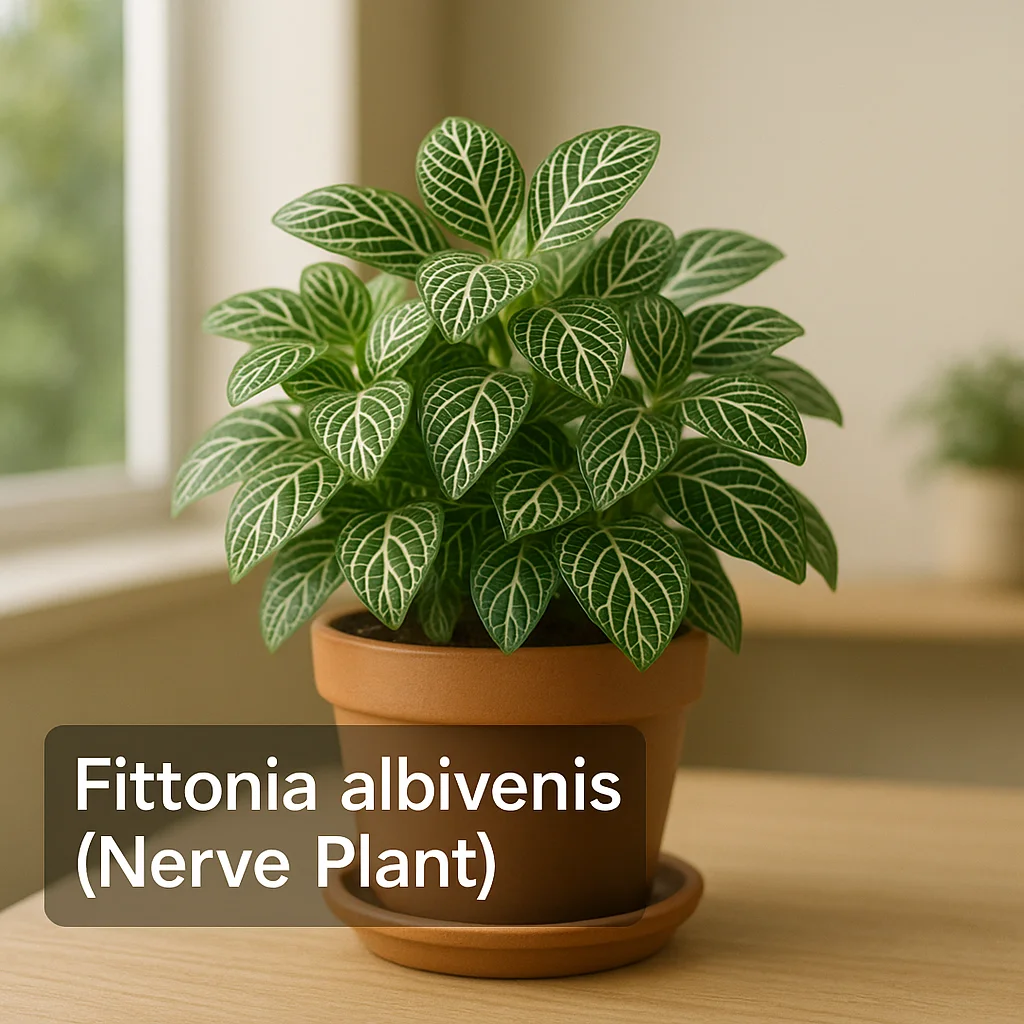
Fittonia albivenis, commonly known as the Nerve Plant, is a popular choice for indoor plant enthusiasts due to its striking leaf patterns and relatively manageable care requirements. This South American native brings vibrant foliage into any home setting, offering both visual appeal and a touch of elegance.
- Common Names: Nerve Plant, Mosaic Plant
- Scientific Name: Fittonia albivenis
- Plant Type: Foliage
- Growth Habit: Trailing
- Typical Indoor Size: 6-12 inches tall, 12-18 inches wide
- Growth Speed: Moderate
- Lifespan: Can live many years with care
- Origin: Tropical rainforest of South America
- Light Preference: Low to bright indirect light
- Water Needs: Moderate, prefers slightly moist soil
- Temperature & Humidity Preference: Warm and humid
- Pet Safety: Generally considered pet-friendlier
- Difficulty: Medium
🔍 Identification & Look-Alikes
The Nerve Plant is easily identifiable by its vibrant, veined leaves. These small, elliptical leaves prominently display intricate veining, typically in colors such as white, red, or pink against a green backdrop. The plant’s low-growing, trailing nature makes it suitable for hanging pots or as a ground cover in larger container arrangements.
Although primarily grown for its attractive foliage, Fittonia may produce tiny white or yellowish flowers, but they are often considered insignificant compared to its leaves. Some common look-alikes include the Peperomia species and the Calathea, both of which share similar veining patterns but differ in leaf texture and color intensity.
- Small, elliptical leaves with pronounced veining
- Vein colors: white, red, pink
- Trailing growth habit
- Grown mainly for foliage, occasional tiny flowers
- Can be mistaken for Peperomia or Calathea
- Generally low-growing and compact
- Leaf colors may vary in intensity with light exposure
🌍 Origin & Natural Habitat
Fittonia albivenis is native to the tropical rainforests of South America, particularly Peru. In the wild, it thrives as an understory plant in humid forest environments, benefiting from the dappled sunlight filtering through the canopy above. This natural habitat highlights the Nerve Plant's preference for moist, warm conditions with soft, indirect light.
The understanding of its natural environment can guide care practices indoors; replicating similar humidity levels and avoiding strong, direct sunlight will help keep the plant healthy and vibrant.
☀️ Light Requirements
For optimal growth, place the Fittonia albivenis in locations with bright, indirect light. A position near a north or east-facing window is ideal, or a few feet away from a south or west-facing one. While it can tolerate lower light conditions, this may cause the leaves to lose some vibrancy.
Monitor the Nerve Plant for signs of receiving too little light, such as leggy growth and dulled leaf colors, or too much light, like scorched leaves or fading colors.
- Prefers bright, indirect light
- Tolerates low light, but leaf colors may fade
- Avoid placing in direct sunlight
- Bright indirect light can be mimicked using sheer curtains
- Leggy growth suggests inadequate light
- Scorched leaves indicate too much sun exposure
- Regularly rotate the plant for even growth
💧 Watering & Humidity
The Nerve Plant has moderate water needs, preferring evenly moist soil. Allow the top inch of soil to dry out between waterings. In low-light conditions or cooler months, reduce the frequency to prevent overwatering.
High humidity is beneficial. Consider using a humidity tray or regularly misting the leaves. Be cautious of overwatering as it can lead to root rot. Conversely, wilting leaves are often a sign of underwatering, but Fittonia typically rebounds quickly after a thorough watering.
- Water when the top inch of soil is dry
- Maintain consistent moisture without waterlogging
- Increase humidity through misting or a humidity tray
- Signs of overwatering: yellowing leaves, soggy soil
- Signs of underwatering: wilting leaves, dry soil
- Adjust watering frequency based on season and pot size
- Prone to root rot if kept too wet
🐛 Soil, Pot & Repotting
A well-draining potting mix is crucial for Fittonia albivenis. Consider a mixture that includes peat and perlite for aeration and moisture retention. Ensure the pot has drainage holes to prevent water stagnation.
Repot every 1-2 years or when rootbound signs appear, such as slowed growth or water running through too quickly. Choose a slightly larger pot, carefully remove the plant, and place it in the fresh soil.
- Use potting mix with peat and perlite
- Ensure pot has adequate drainage holes
- Repot when roots are crowded
- Choose a pot 1-2 sizes larger during repotting
- Refresh soil for nutrient availability
- Avoid damaging roots during transfers
- Watch for slowed growth or rapid drainage
🌡️ Temperature, Airflow & Seasonal Care
Nerve Plants thrive in temperatures between 60°F to 80°F, typical for most indoor settings. Avoid cold drafts or placing the plant near heating vents, which might lead to drying out. In winter, with reduced growth, allow the plant to dry out slightly more between waterings but maintain humidity levels.
Avoid abrupt temperature swings as these can stress the plant. Consider moving the plant to a more stable environment if needed during seasonal changes.
- Ideal temperature: 60°F to 80°F
- Avoid drafts and sudden temperature changes
- Maintain humidity, even in drier winter months
- Adjust watering in slower winter growth
- Keep away from heating and AC vents
- Stable airflow is beneficial, but not direct wind
- Seasonal care involves adjustments in placement
🌸 Flowers, Fruit & Growth Cycle
While not commonly blooming indoors, Fittonia can produce small flowers, often overshadowed by its vibrant leaves. The growth cycle involves developing new foliage primarily during the growing season, with possible pruning needed to encourage bushier growth and remove any leggy sections.
Good hygiene, such as cleaning tools before pruning, helps maintain health and aesthetics.
🧬 Propagation & Reproduction
Propagation of Fittonia albivenis is commonly done through stem cuttings. Choose a healthy stem, cut several inches below a node, and remove the lower leaves. Place the cutting in water or directly into a moist soil mix until roots develop.
While seeds are available, they typically present a more challenging propagation method for home growers due to the need for specific conditions.
- Use stem cuttings for straightforward propagation
- Ensure cuttings have at least one node
- Root cuttings in water or directly in soil
- Maintain consistent moisture for successful rooting
- Avoid direct sunlight on new cuttings
- Propagate during the growing season for best results
🌿 Common Problems, Pests & Prevention
Common issues with Fittonia include yellowing leaves due to overwatering and brown tips from low humidity. Pests such as spider mites and mealybugs may also be occasional visitors. Regular inspection and maintenance, including leaf cleaning and ensuring airflow, are vital to keeping pests and problems at bay.
To prevent issues, embrace habits such as quarantining new plants, cleaning leaves occasionally, and ensuring stable care routines.
- Check for yellow leaves as an overwatering sign
- Brown tips often indicate low humidity levels
- Inspect regularly for spider mites and mealybugs
- Quarantine new plants before introducing them
- Clean leaves to remove dust and pests
- Consistent care reduces stress and vulnerability
- Provide adequate airflow to deter pests
🐾 Pet & Home Safety Notes
Fittonia albivenis is generally regarded as non-toxic to pets and humans, making it a safe addition to households with furry or little family members. Nevertheless, practicing common safety measures such as placing plants out of reach of curious hands or paws is advisable.
If ingestion is suspected, contact a professional or local poison control resources for advice.
🏡 Styling Ideas & Best Room Placement
Thanks to its love for humidity, Fittonia albivenis makes a great addition to bathrooms and kitchens. It can thrive in hanging baskets, offering an excellent way to display its trailing nature, or in tabletop pots where its color can be admired closely.
Pair with other humidity-loving plants like ferns or peace lilies to enhance both environment and aesthetic.
📌 Summary
- Identifiable by its striking veined leaves
- Originates from the humid rainforests of South America
- Thrives in bright, indirect light conditions
- Moderate water needs with attention to humidity
- Well-draining soil with necessary pot drainage
- Comfortable in typical room temperatures, 60°F-80°F
- Easy propagation through stem cuttings
- Prone to humidity and watering-related issues
- Generally non-toxic, pet and child-friendly