🌱 Winter Care (Dormancy, watering, light)
🧾 Quick Facts
When the temperature drops and indoor lighting conditions change, houseplants often require adjustments in care. Understanding their seasonal needs can ensure that they thrive even during colder months or periods of dormancy.
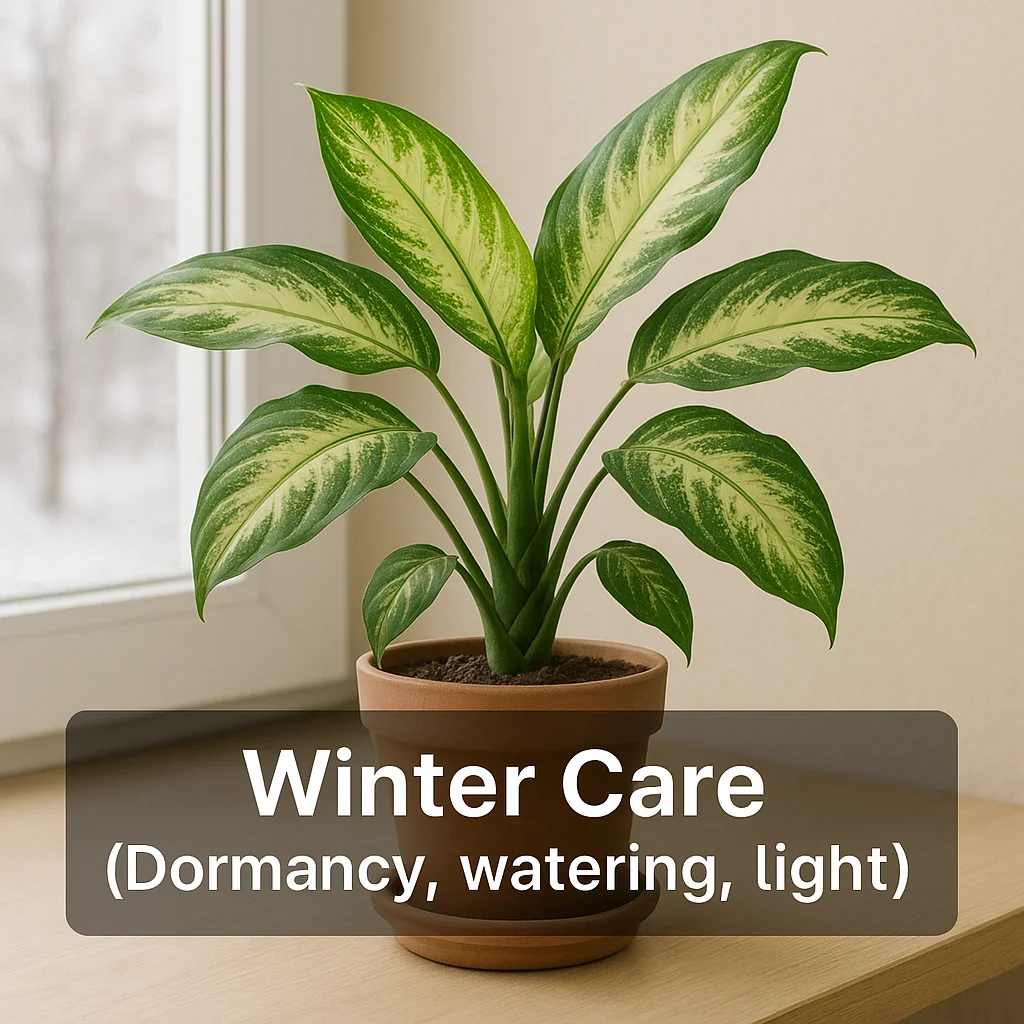
- Common names: Varies by plant (e.g., snake plants, pothos, orchids, succulents)
- Scientific name: Varies / commonly listed as species from multiple genera
- Plant type: Includes foliage, succulents, orchids, and cacti
- Growth habit: Upright, trailing, rosette, climbing depending on type
- Typical indoor size range: 20 cm to 1.8 m tall or wide
- Growth speed: Varies; commonly moderate
- Lifespan: Can live many years with care
- Origin: Various; tropical forests, arid regions
- Light preference: Medium to bright indirect light; varies by type
- Water needs: Low to moderate; varies, generally less in winter
- Temperature & humidity preference: Prefers warm and humid; avoid cold drafts
- Pet safety: Some may be irritating/toxic to pets
- Difficulty: Generally easy to medium
🔍 Identification & Look-Alikes
Winter care requirements can vary significantly among houseplants, which are often recognized by differences in their leaf shape, texture, and growth patterns. Identifying these correctly helps provide the right seasonal care.
- Top ID Tips:
- Look for broad, fleshy leaves typical of many succulents.
- Note the glossy, heart-shaped leaves found in plants like pothos.
- Identify sword-shaped leaves of snake plants.
- Orchids typically have waxy leaves and aerial roots.
- Consider leaf patterns: variegated versus solid green.
- Recognize rosette formation in certain succulents and aloe.
- Understand trailing versus upright growth habits.
- Observe stem structure: fibrous versus stiff.
🌍 Origin & Natural Habitat
Understanding the native habitat of a houseplant can inform its winter care requirements. Most indoor plants originate from tropical forests or arid regions where environmental conditions differ greatly from indoor climates.
Many houseplants are native to tropical forests under the canopy where they receive filtered sunlight, high humidity, and a consistent temperature. Others, like succulents and cacti, come from arid locations with intense sunlight, low humidity, and distinct dry periods. Recognizing these origins helps mimic appropriate winter care indoors.
☀️ Light Requirements
During winter, light levels drop, so understanding and adjusting the light exposure of your houseplants can be crucial.
Many houseplants prefer bright, indirect light. In winter, moving plants closer to windows may be necessary, but take care to avoid direct afternoon sun which can be harsh, even in cooler months.
- Light Checklist:
- Position for maximum light from south/east-facing windows.
- Utilize sheer curtains to filter direct sunlight.
- Consider artificial lights if natural light is insufficient.
- Watch for signs of too little light: leggy growth, pale leaves.
- Too much light may cause leaf scorch or lose variegation.
- Turn plants periodically for even growth.
- Aim for consistency: sudden changes can stress plants.
- Group plants to create a shared humidity microclimate.
💧 Watering & Humidity
Watering frequency in winter is not only less frequent but also requires careful observation of soil moisture levels. Letting water completely dry out between cycles is often necessary, depending on the species.
Humidity tends to drop indoors in winter due to heating systems, so ways to raise humidity safely are beneficial.
- Watering Tips:
- Check soil moisture before watering; allow topsoil to dry considerably.
- Consider pot size: smaller pots dry out faster.
- Remember that lower light means less frequent watering.
- Overwatering signs include yellowing lower leaves.
- Underwatering signs include dry, crispy leaf tips.
- Humidifiers can increase ambient moisture.
- Group plants together for better humidity.
- Avoid misting directly on leaves to prevent fungal issues.
🐛 Soil, Pot & Repotting
Using well-draining soil mixes prevents waterlogged roots. In general, you may consider repotting as growth begins in spring.
- Repotting Checklist:
- Use a lightweight, well-draining soil mix.
- Ensure pots have drainage holes.
- Choose terracotta pots to allow soil breathability for most plants.
- Repot only if rootbound or soil dries too quickly.
- Perform repotting at the start of the growing season.
- Only upsize pots by one or two inches larger.
- Inspect roots for health: white and firm, not mushy.
- Be gentle when splitting or untangling roots.
🌡️ Temperature, Airflow & Seasonal Care
Maintain a stable temperature between 15-24°C (59-75°F) indoors. Avoid placing plants near cold drafts or heat sources like radiators, which can cause stress.
- Seasonal Notes:
- Most houseplants can handle slight drops, cold-sensitive plants may need warmer locations.
- Avoid placing near frequently opened doors to the outside.
- Monitor closely for pests as growth slows but recovery rates also slow.
- Decrease fertilization and watering over winter.
- Remove dead foliage to reduce pest habitats.
- Rotate for even light exposure.
- Provide occasional refresh of airflow.
🌸 Flowers, Fruit & Growth Cycle
The flowering and growth cycle of houseplants can vary; some may not bloom at all during winter and enter a phase of slowing or dormancy.
Growth patterns in winter might include reduced progression, with new leaves coming in smaller or less frequently.
🧬 Propagation & Reproduction
While propagation can be more of a challenge in winter due to slower growth, some methods like division or certain node cuttings may still be successfully undertaken with proper care.
- Propagation Tips:
- Choose the healthiest parent plants for cuttings.
- Cut below a node with sterilized tools.
- Use rooting hormone sparingly if desired.
- Place cuttings in water or moist soil mix.
- Provide indirect light and warm temperatures for rooting.
- Avoid large-scale propagation projects in winter.
🌿 Common Problems, Pests & Prevention
Common winter issues include leaf yellowing, brown tips, and more visible pests. Prevention via monitoring and a stable environment is key.
- Prevention Basics:
- Quarantine new plants before adding them to your collection.
- Clean leaves periodically for dust removal.
- Observe for common pests like spider mites and mealybugs.
- Trim affected leaves to encourage healthy new growth.
- Avoid sudden shifts in environment.
- Maintain regular watering routines but adjust for seasonal needs.
🐾 Pet & Home Safety Notes
Some houseplants can be mildly irritating or toxic to pets if ingested. Known pet toxic plants should be placed out of reach or with barriers to prevent contact, such as on high shelves or hanging planters.
In the event of ingestion, contact a vet or local poison control for guidance.
🏡 Styling Ideas & Best Room Placement
Houseplants can enhance the aesthetic of various rooms when placed appropriately:
- Kitchens: consider medium indirect light foliage plants.
- Bathrooms: choose humidity lovers like ferns or pothos.
- Living rooms: use floor pots with upright or climbing plants.
- Offices: small succulents or air plants for desk decoration.
- Pair large leaf plants with minimalist décor for contrast.
- Combine with moss poles or trellises for vertical interest.
📌 Summary
- Match care to the innate resilience of the plant for winter adjustment.
- Adjust light as days shorten to maintain growth.
- Reduce watering to prevent root rot.
- Maintain a stable temperature and humidity.
- Propagate only when environmental conditions are sufficient.
- Watch for pests and act proactively.
- Utilize strategic and safe pet placement.
- Balance aesthetic with functional plant care considerations.