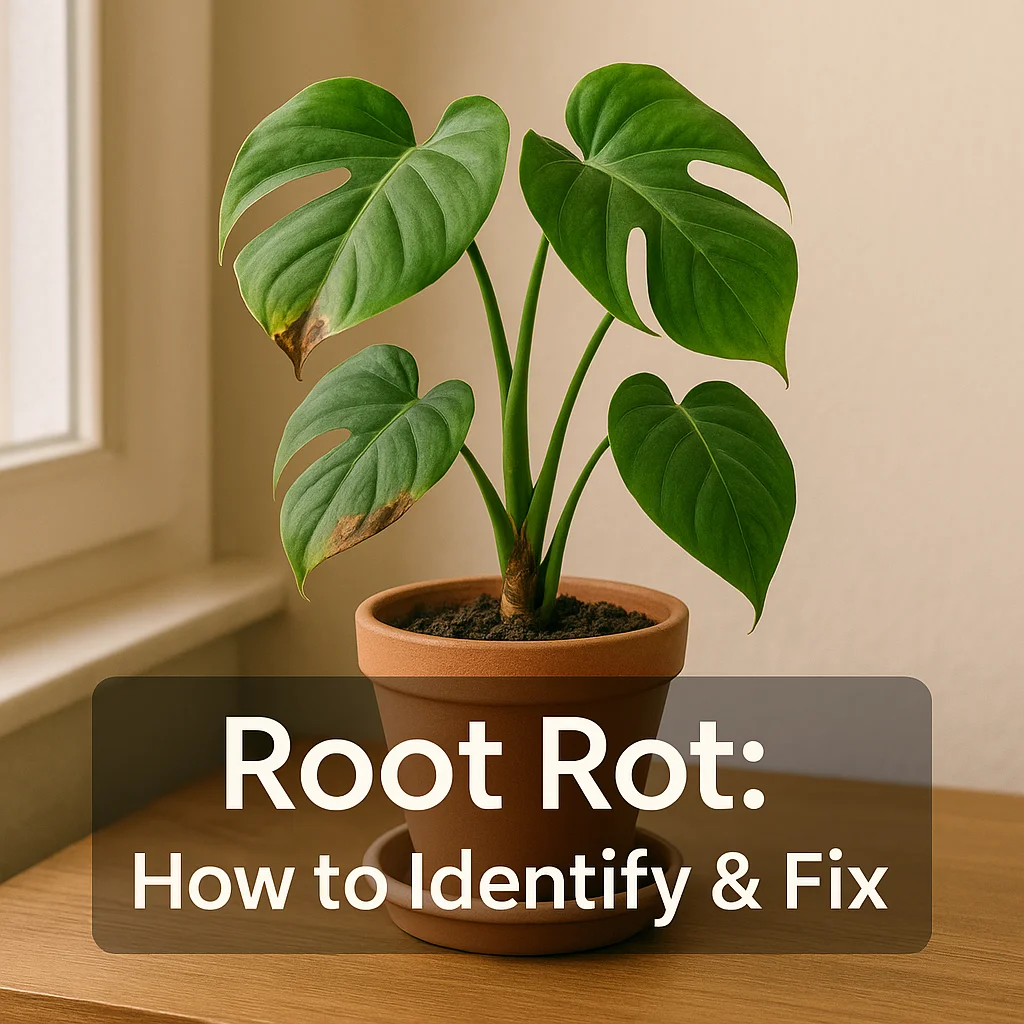
🌱 Root Rot: How to Identify & Fix
🧾 Quick Facts
Root rot is a broad issue affecting many types of houseplants, often caused by overwatering and poor drainage. It is not exclusive to any one species, but understanding the symptoms and solutions is essential for plant health.
- Common names: Root rot
- Scientific name: Varies / commonly listed as Pythium, Phytophthora
- Plant type: Affects foliage, flowering, succulents, ferns, and more
- Growth habit: Most commonly affects upright and rosette-forming plants
- Typical indoor size range: Highly variable depending on the plant affected
- Growth speed: Often rapid if conditions are poor
- Lifespan: Affected plants may die quickly without intervention
- Origin: Root rot organisms are found worldwide
- Light preference: Varies by plant type
- Water needs: Low to moderate, depending on species
- Temperature & humidity preference: Depends on plant species, generally moderate
- Pet safety: Some affected plants may be irritating/toxic to pets
- Difficulty: Medium to advanced once root rot is established
🔍 Identification & Look-Alikes
Root rot can be identified by examining both visible symptoms and roots. Above ground, plants may show wilting, yellowing leaves, and stunted growth. Underneath, roots become mushy, brown, or black instead of firm and white. This condition is not to be confused with under-watering symptoms.
- Leaf shape: Wilting, yellowing, drooping
- Stem structure: Soft, collapsing
- Color: Roots turn brown or black
- Flower traits: If affected, flowering weakens or stops
- Look-alikes include under-watered plants or those with nutrient deficiencies, which can show similar above-ground symptoms.
- Leaves showing wilting
- Mushy or discolored roots below soil
- Poor or no growth despite care
- Off-color leaves that easily fall off
- Soft or collapsing stems in worse cases
- No or reduced flowering if the plant typically blooms
- Distinguish from under-watering by root examination
🌍 Origin & Natural Habitat
Root rot pathogens such as Pythium and Phytophthora are prevalent in many environments worldwide, particularly in humid regions and poorly drained soils. They thrive in wet conditions where drainage is inadequate, often affecting plants in unnatural, continuous moisture settings.
Knowledge of these pathogens' preferences highlights the importance of recreating natural drainage conditions indoors, allowing soil to dry moderately between watering to prevent pathogen thrive.
☀️ Light Requirements
Light requirements vary by plant species affected by root rot. Common houseplants typically require bright, indirect sunlight to thrive without inciting conditions favoring rot development. Light indirectly impacts watering needs; more light usually means faster drying soil and less chance for root decay.
- Placement in bright, indirect light is ideal
- South or east-facing windows work for most plants
- Avoid too much direct sun, which can stress plants
- Low light can slow down metabolism
- Yellowing leaves may suggest poor light or root issues
- Leaves reaching towards light may indicate insufficient light
- Observe plant response to adjust light conditions
💧 Watering & Humidity
Effective water management is crucial in preventing and overcoming root rot. Water thoroughly, allowing excess to drain, and ensure the soil dries out somewhat before the next watering. The timing varies with plant size, pot type, and environmental factors such as light and season.
Humidity should match plant needs; excess humidity without good airflow can worsen root problems. Moderate indoor humidity is generally preferred by most affected species.
- Water less frequently during dormancy or low-light periods
- Ensure complete soil drying near roots before the next watering
- Use pots with drainage holes to avoid waterlogging
- Humidity levels shouldn't be extremely high for most affected plants
- Signs of overwatering include wilting and yellow leaves
- Underwatering can also cause similar leaf symptoms
- Touch soil to check moisture level before watering
🐛 Soil, Pot & Repotting
Well-draining soil is a must when combating root rot. A mix with adequate aeration properties is key, like peat-based soil with perlite or bark for moisture retentiveness balanced with drainage. Choose pots with ample drainage holes to prevent stagnant conditions.
Repotting typically requires gentle handling and removing affected roots. Upsize pots cautiously, cutting back affected areas with clean tools.
- Use airy, well-drained soil mix
- Repot during growing seasons
- Remove soggy or discolored roots while repotting
- Consider terracotta pots for additional breathability
- Avoid oversized containers to prevent excess water retention
- Ensure pot has adequate drainage holes
- Place a layer of pebbles or charcoal on the bottom for drainage improvement
🌡️ Temperature, Airflow & Seasonal Care
Affected plants often prefer stable indoor temperatures between 65 and 75°F. Protection from extreme temperature fluctuations and proper airflow helps prevent issues. Seasonal adjustments in care, especially in watering and positioning, should account for temperature and natural light changes.
During cooler months, a reduction in watering frequency is often needed as plant growth slows. Ensure plants are not in drafty areas during winter nor near heat sources such as radiators or vents.
- Keep plants away from open windows in colder months
- Ensure stable temperatures; no sudden shifts
- Decrease watering during winter slow growth phase
- Boost airflow through fans if room is humid or stagnant
- Check heating sources' impact during heating seasons
- Assess light exposure changes with seasons
🌸 Flowers, Fruit & Growth Cycle
Root rot often stints a plant's ability to flower or produce fruit. The growth cycle generally sees reduced vigor, new growth lethargy, and cessation of budding. Restore health by correcting conditions to see possible improvement in growth cycles over time.
Pruning any diseased, damaged, or dying parts is crucial to prevent spread and support recovery.
If flowering, timing varies widely by species, with common indoor plants often seeing seasonal blooms if otherwise healthy.
🧬 Propagation & Reproduction
Propagation success partly depends on the chosen method and the health of the plant pre-root rot. Healthy stem cuttings can sometimes be salvaged, but impacted areas should be discarded. Division and offset removal do best from healthy plants without rot.
Mass propagation is difficult during rot due to disease spread potential. It's better to re-establish a thriving mother plant before widespread cutting or division attempts.
- Ensure source material is from healthy plant sections
- Avoid using affected roots for propagation
- Consider cuttings during active growth phases
- Disinfect tools before use to prevent disease spread
- Suitably root-protecting hormones may help with cuttings
🌿 Common Problems, Pests & Prevention
Root rot commonly coincides with yellowing leaves, leaf drop, wilting, and stunted growth. While largely a watering-related issue, it can be exacerbated by poor lighting, improper fertilization, or pest issues such as spider mites and fungus gnats, which thrive in damp soil.
Prevention hinges on good hygiene, avoiding overwatering, and maintaining plant vigor through balanced and consistent care.
- Quarantine new plants
- Regularly clean foliage to promote photosynthesis
- Establish stable watering routines
- Maintain optimal airflow around plants
- Avoid perpetually damp soil
- Periodically check for pests
- Look for signs of distress and adjust care
🐾 Pet & Home Safety Notes
While root rot itself poses no specific threat to pets, some commonly affected plants might. Plants such as Peace Lilies, Philodendrons, and Pothos contain calcium oxalates, which may be mildly toxic if ingested by pets.
As a safety measure, keep suspect plants out of reach. If potential ingestion occurs, contact a professional or local poison control promptly.
🏡 Styling Ideas & Best Room Placement
When considering placing plants recovering or prone to root rot, bathrooms or kitchens often provide the necessary humidity and light levels without excessive moisture risk. Consider placing on shelves away from direct reach, or suspending in hanging baskets.
Pairing with resilient, low-water companions like snake plants or succulents can enhance environment aesthetics.
📌 Summary
- Root rot affects a wide variety of plants
- Often caused by overwatering and poor drainage
- Identified by soft, discolored roots and wilting leaves
- Common preventative measures include correct watering rhythm
- Enhanced soil aeration and proper light positioning are essential
- Temperature and humidity adjustments prevent recurrence
- Propagation should focus on healthy sources
- Maintain good airflow and moderate humidity indoors
- Watch for common issues like root mushiness and pests
- Care requires medium to advanced attention post-root rot establishment