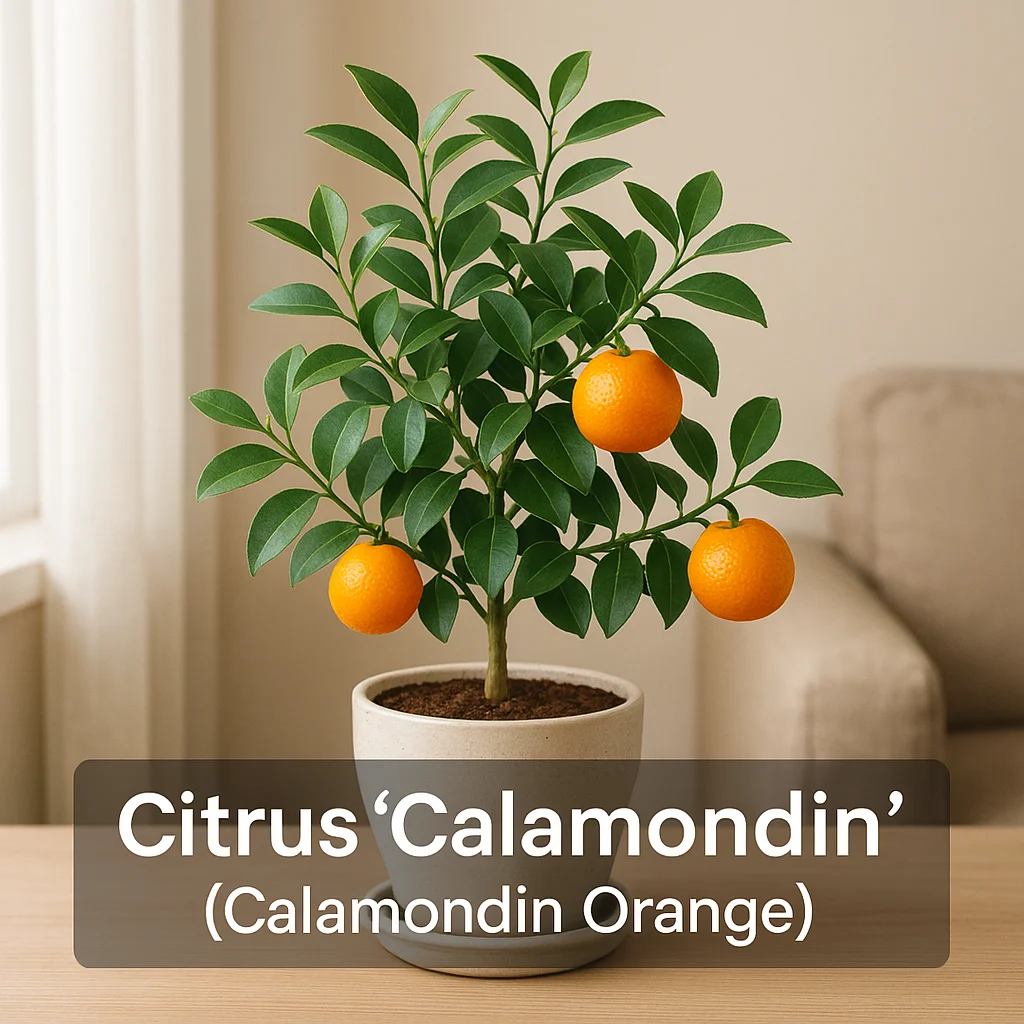
🌱 Citrus ‘Calamondin’ (Calamondin Orange)
🧾 Quick Facts
The Citrus 'Calamondin', commonly known as the Calamondin Orange, is a popular choice for indoor plant enthusiasts due to its attractive foliage and ability to bear small citrus fruits indoors. Below are key facts about this versatile plant.
- Common Names: Calamondin Orange, Miniature Orange, Calamansi
- Scientific Name: Citrus x microcarpa (varies, commonly listed as)
- Plant Type: Fruiting/Flowering
- Growth Habit: Upright, bushy
- Typical Indoor Size: 2-6 feet in height, 2-3 feet spread
- Growth Speed: Moderate
- Lifespan: Can live many years with proper care
- Origin: Southeast Asia; tropical climates
- Light Preference: Bright indirect light, can tolerate some direct sun
- Water Needs: Moderate; allow top inch of soil to dry
- Temperature & Humidity: Prefers warm, humid conditions; avoid cold drafts
- Pet Safety: May be irritating/toxic to pets if ingested
- Difficulty: Medium
🔍 Identification & Look-Alikes
The Calamondin Orange can be recognized by its small, glossy green leaves and compact growth habit. The stems are woody with a slightly bumpy texture. Its variegation is typically consistent, with a uniform deep green. The flowers are small, white, and fragrant, often appearing in clusters. Calamondin is grown mainly for its fruit, small and round, bearing a bright orange color when ripe.
Common look-alikes include other citrus varieties such as the Meyer Lemon. Calamondin can be distinguished by its smaller-sized fruit and more compact foliage structure.
- Top ID Tips:
- Deep green, glossy leaves
- Small, fragrant white flowers
- Compact, bushy growth habit
- Small, round, orange fruits
- Woody stems with slight bumps
- Slightly acidic scent from crushed leaves
- Fruiting mainly on new growth
- Distinctive citrus fragrance
- Uniform leaf distribution
- Thorn presence on stems (less prominent than other citrus)
🌍 Origin & Natural Habitat
The Calamondin Orange is native to Southeast Asia, where it thrives in warm, tropical climates. In its natural habitat, it grows as a small tree in the understory of tropical forests. The climate in these regions is typically humid and warm year-round, with distinct wet and dry seasons.
Understanding its tropical origins helps indoor growers provide appropriate care by ensuring adequate warmth, humidity, and light levels, similar to its natural environmental conditions.
☀️ Light Requirements
The Calamondin Orange thrives in bright indirect light but can tolerate some direct sun exposure, particularly in the morning or late afternoon when the sun is less intense. It should be placed near a south or east-facing window for optimal growth. Inadequate light can lead to leggy growth and poor fruit production, while too much direct sunlight can scorch the leaves.
- Light Checklist:
- Bright, indirect light preferred
- East or south-facing window is ideal
- Morning sunlight tolerable, avoid afternoon sun
- Signs of insufficient light: leggy growth and sparse foliage
- Signs of excess light: leaf burn, yellowing tips
- Consistent lighting helps with flowering and fruiting
- Rotate plant for even sun exposure
- Avoid full midday sun
- Can supplement with grow lights in low-light conditions
💧 Watering & Humidity
Calamondin Orange prefers a soak-and-drain watering approach, allowing the top inch of soil to dry out between waterings. Be mindful of potential variations due to pot size, ambient temperature, and light exposure. During the winter months, less frequent watering is required.
Moderate to high humidity levels are beneficial; this can be achieved through occasional misting or using a pebble tray. Overwatering can cause root rot, while underwatering might lead to yellow leaves and fruit drop.
- Watering Tips:
- Water when top 1 inch of soil is dry
- Avoid waterlogged soil
- Reduce watering in winter months
- Mist leaves to increase humidity
- Use a pebble tray for humidity boost
- Check pot drainage to prevent root rot
- Signs of overwatering: mushy roots, mold on soil
- Underwatering indicators: dry leaves and poor fruiting
- Keep on a consistent watering schedule
🐛 Soil, Pot & Repotting
An airy, well-draining potting mix is recommended. A mix designed for citrus or cacti with added perlite will work well. Choose pots with adequate drainage holes to prevent water accumulation. Terracotta pots are often recommended to help with soil aeration.
Repotting every two to three years, or when the plant becomes root-bound, is advisable. Signs include roots growing out of drainage holes or slowed growth despite optimal conditions. When repotting, select a pot just one size larger to avoid excessive soil retaining water.
- Repotting Checklist:
- Use well-draining, airy soil mix
- Check for adequate drainage holes in pots
- Repot every 2-3 years or when root-bound
- Choose terracotta pots if overwatering is a concern
- Move to a slightly larger pot only
- Gently loosen root ball when repotting
- Shake off excess old soil
- Water thoroughly after repotting
- Monitor for improved growth post-repotting
🌡️ Temperature, Airflow & Seasonal Care
The Calamondin Orange prefers temperatures between 60°F and 80°F (15°C and 27°C). Avoid cold drafts, such as those from windows or air conditioners, which can stress the plant. Good airflow is crucial to prevent fungal issues, though avoid placing in areas of constant direct draft.
During winter, growth slows down, reducing the need for water and fertilizers. If temperatures drop, consider using covers or relocating to warmer areas to prevent cold damage.
- Seasonal Notes:
- Optimum temperature: 60°F - 80°F
- Avoid placing in direct draft areas
- Reduce watering in cooler months
- Expect slower growth in winter
- Use plant covers in case of unexpected cold
- Increase room humidity with the season
- No major temperature swings preferred
- Maintain stable room temperature
- Protect from heater vent heat exposure
🌸 Flowers, Fruit & Growth Cycle
The Calamondin Orange is known for its ability to flower and fruit indoors under optimal conditions. It typically blooms in spring and summer, with small, fragrant white flowers. While indoor fruiting is possible, it often depends on light and humidity conditions. The fruit is small, tart, and orange when ripe.
The plant exhibits a bushy growth pattern, with new leaves and stems emerging mainly in spring. Pruning is essential for maintaining shape and promoting healthy growth. Remove dead or leggy parts while being careful to retain the plant's natural form.
🧬 Propagation & Reproduction
Propagation of the Calamondin Orange is commonly done through seeds or stem cuttings. Seeds can be collected from ripe fruit, though germination can be slow. Stem cuttings are preferred for faster propagation, typically taken in spring or summer.
Cut a healthy stem section, remove lower leaves, and plant in a suitable growing medium. For seeds, sow in small pots using citrus soil, keeping them warm and moist to encourage germination.
- Propagation Tips:
- Use stem cuttings for quicker results
- Sow seeds in warm, moist conditions
- Rooting hormone can enhance success
- Ensure cuttings have 2-3 nodes
- Keep cuttings in bright, indirect light
- Monitor for root development
- Avoid full sun during rooting phase
- Be patient; germination can be slow
- Seedlings need care to avoid damping off
🌿 Common Problems, Pests & Prevention
Calamondin Oranges can face issues like yellowing leaves, brown tips, and fruit drop, often due to improper watering or light conditions. Common pests include spider mites, mealybugs, scale, and fungus gnats. Preemptive care involves preventive measures such as keeping leaves clean, ensuring proper airflow, and avoiding overwatering.
- Prevention Basics:
- Quarantine new plants to prevent pest spread
- Regularly clean leaves to remove dust
- Avoid letting water sit on leaves
- Ensure proper airflow around plant
- Don't let plant stand in water
- Identify and address issues early
- Rotate the plant regularly
- Encourage natural predators in the environment
- Provide consistent care to reduce stress
- Visual checks for pests during watering
🐾 Pet & Home Safety Notes
While not generally deadly, the Calamondin's fruits and leaves may cause irritation if ingested by pets or children. Symptoms could include mild gastrointestinal upset. To minimize risks, place the plant out of reach or use plant barriers. If ingestion is suspected, it is best to contact a professional or local poison control resources for guidance.
🏡 Styling Ideas & Best Room Placement
The Calamondin Orange fits well in living rooms, kitchens, or sunny offices due to its need for bright light and warm conditions. Positioning it near a window ensures optimal light exposure. Avoid placing it near heater or air conditioner vents to protect it from temperature fluctuations.
It pairs beautifully with other lush houseplants, such as ferns or palms, creating a tropical indoor environment. Use decorative pots that complement your interior design to enhance its aesthetic appeal.
📌 Summary
- Recognizable by its glossy green leaves and small orange fruits
- Native to Southeast Asia, thrives in warm, humid conditions
- Prefers bright, indirect light; tolerates some direct sun
- Water when the top inch of soil is dry; prefers higher humidity
- Use a well-draining citrus soil mix; repot when root-bound
- Comfortable in temperatures of 60°F - 80°F
- Propagation best through stem cuttings or seeds
- Common issues include pests and overwatering
- Medium care difficulty; requires regular monitoring
- Potentially irritating if ingested by pets