🌱 Peace Lily (Spathiphyllum wallisii)
🧾 Quick Facts
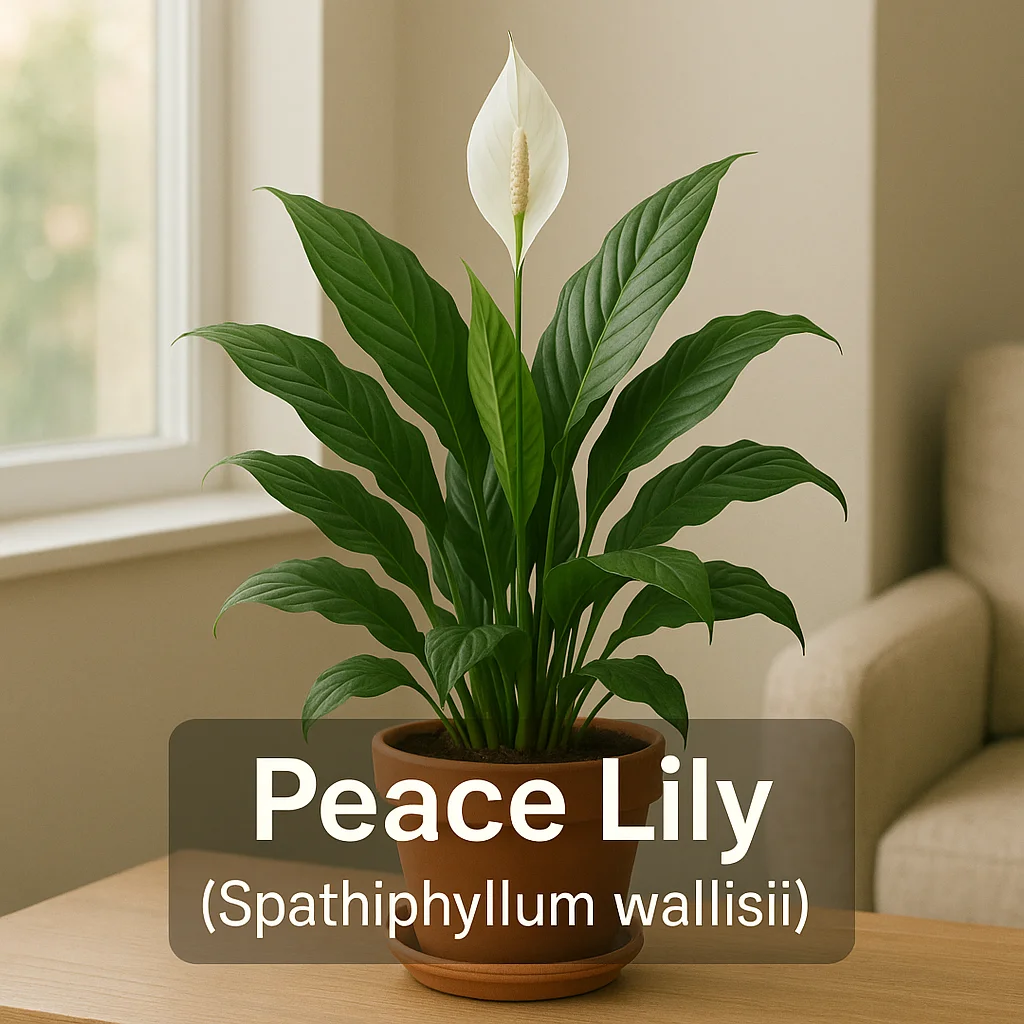
The Peace Lily, scientifically recognized as Spathiphyllum wallisii, is a popular houseplant known for its lush foliage and elegant white flowers. Its ease of care and suitability for indoor environments make it a preferred choice for plant enthusiasts and beginners alike.
- Common Names: Peace Lily, White Sails, Spathiphyllum
- Scientific Name: Spathiphyllum wallisii
- Plant Type: Flowering plant
- Growth Habit: Upright
- Typical Indoor Size: 1-4 feet tall, with a similar spread
- Growth Speed: Moderate
- Lifespan: Can live many years with proper care
- Origin: Tropical regions of the Americas
- Light Preference: Medium to low indirect light
- Water Needs: Moderate; prefers to dry out slightly between waterings
- Temperature & Humidity Preference: Prefers warm temperatures and high humidity
- Pet Safety: May be irritating/toxic to pets if ingested
- Difficulty: Easy
🔍 Identification & Look-Alikes
The Peace Lily is characterized by its deep green, lance-shaped leaves and striking white flowers, which are actually modified leaves known as spathes. The actual flowers are small and cluster on the spadix. The plant tends to have an upright and bushy appearance, with leaves forming a rosette pattern.
Peace Lilies are often confused with similar-looking houseplants such as Anthuriums and certain types of Calla Lilies. However, unlike Calla Lilies, Peace Lilies do not grow from a bulb and have more elongated leaves.
- Top ID Tips:
- Leaves are dark green and glossy
- Flowers, called spathes, are white and often mistaken for petals
- Leaves form an upright clump
- Stems are absent; leaves rise directly from the soil
- Flowers may develop a subtle fragrance
- Leaves have a defined midrib and slightly wavy edges
- Location of spathes can help differentiate from Anthuriums, which have more waxy, heart-shaped leaves
- Peace Lily foliage remains lush and full, unlike some other species that thin with age
🌍 Origin & Natural Habitat
Peace Lilies are native to tropical regions of Central and South America, thriving in humid forest environments. Naturally, they are found in the understory of rainforests, adapting to lower light conditions. These areas are characterized by consistent moisture and high humidity, providing insights into why Peace Lilies appreciate indirect light and moist soil without waterlogging.
Understanding its natural habitat allows indoor growers to mimic conditions by providing average to high humidity and ensuring the plant is not exposed to direct sunlight, which can scorch its leaves.
☀️ Light Requirements
Peace Lilies thrive in medium to low light conditions, making them suitable for rooms with indirect sunlight. Direct sunlight can lead to leaf burn, while too little light may slow growth and reduce flowering. A position near an east or north-facing window is ideal. "Bright indirect light" can be compared to the light filtered through a sheer curtain.
- Light Checklist:
- Prefer bright, indirect light
- Tolerate low light, but may flower less
- Avoid direct sun exposure
- Signs of too little light: Yellowing leaves
- Signs of too much light: Brown leaf tips
- Adjust plant position seasonally for best light
- Rotate the plant to ensure even light exposure
- Supplement with artificial light if needed
💧 Watering & Humidity
Watering Peace Lilies requires a balance; overwatering can lead to root rot while underwatering causes wilting. Allow the top of the soil to dry before watering thoroughly. Pot size, season, and light influence watering frequency, with less watering needed in winter.
Peace Lilies appreciate high humidity. Increasing humidity can be achieved by placing the plant on a pebble tray or using a humidifier. Overwatering signs include yellow leaves, while drooping suggests a need for water.
- Watering Tips:
- Water when the top inch of soil is dry
- Avoid leaving the plant in standing water
- Reduce watering in the cooler months
- Increase humidity with a pebble tray
- Mist leaves to improve humidity
- Watch for signs of overwatering: yellowing leaves
- Watch for signs of underwatering: wilting leaves
- Ensure pots have good drainage
🐛 Soil, Pot & Repotting
Peace Lilies thrive in a well-draining, peat-based potting mix. Choosing a pot with drainage holes is essential to prevent waterlogging. Terracotta pots can help balance moisture levels due to their porous nature.
Repotting should occur every 1-2 years or when the plant becomes rootbound, indicated by roots circling the pot or water quickly running through. Choose a slightly larger pot when repotting.
- Repotting Checklist:
- Use a general peat-based mix
- Ensure the pot has drainage holes
- Repot every 1-2 years
- Look for roots coming out of drainage holes
- Water thoroughly after repotting
- Avoid pots too large; step up slowly
- Trim damaged roots while repotting
- Water less post-repot to allow adjustment
🌡️ Temperature, Airflow & Seasonal Care
Peace Lilies prefer temperatures between 65-80°F (18-27°C). They do not tolerate cold drafts or sudden temperature changes well, which can lead to leaf damage. Avoid placing them near AC/heating vents.
In winter, they may experience slower growth, requiring less frequent watering. Maintain a regular airflow to prevent mold build-up but avoid strong drafts.
- Seasonal Notes:
- Optimal temperature: 65-80°F (18-27°C)
- Avoid cold drafts and sudden changes
- Heater vents may dry out foliage
- Reduce watering when growth slows in winter
- Keep away from freezing temperatures
- Ensure adequate airflow but not strong winds
- Watch for reduced growth in low winter light
- Gradually adjust plant to seasonal changes
🌸 Flowers, Fruit & Growth Cycle
Peace Lilies are valued for their striking spathes. While they can bloom indoors throughout the year, blooms are more prolific in spring and summer under optimal conditions. They do not commonly produce fruit indoors.
The plant grows new leaves from its base, expanding in clump size over time. Routine pruning of faded blossoms and damaged leaves can keep the plant healthy and neat.
🧬 Propagation & Reproduction
Propagating Peace Lilies is easiest through division, as they naturally form clumps. During repotting, gently separate the rootball into smaller sections, ensuring each division has roots and leaves.
Peace Lilies are not ideally propagated from seeds or stem cuttings, as these methods are less successful and more time-consuming.
- Propagation Tips:
- Use division method most effectively
- Separate during repot when clumps form
- Ensure divisions have both roots and leaves
- Replant divisions in well-draining soil
- Water lightly after dividing, allowing adjustment
- Monitor new divisions for stress signs
🌿 Common Problems, Pests & Prevention
Peace Lilies can face issues like yellow leaves, brown leaf tips, and drooping. Pests such as spider mites, mealybugs, and fungus gnats may occasionally appear but are manageable with careful cleaning and prevention.
Maintaining consistent care, avoiding overwatering, and ensuring proper airflow can prevent these common issues.
- Prevention Basics:
- Check regularly for signs of pests
- Wipe leaves to remove dust
- Quarantine new plants before introducing
- Promote good airflow around plants
- Reduce humidity if mold or pests appear
- Avoid extreme watering conditions
- Inspect soil moisture before watering
- Remove dead leaves to prevent decay
🐾 Pet & Home Safety Notes
Peace Lilies contain calcium oxalate crystals, which can be mildly toxic if ingested by pets or children, potentially causing irritation in the mouth and gastrointestinal tract. To prevent any issues, place the plant out of reach and educate family members on the risks. If ingestion is suspected, contact a professional or local poison control resources.
🏡 Styling Ideas & Best Room Placement
Peace Lilies adapt well to a variety of indoor spaces, from bathrooms to living rooms, where indirect light and humidity levels are consistent. Display them in decorative floor pots or on plant stands to elevate their foliage display. Their sleek appearance pairs well with other shade-tolerant plants like ferns or calatheas for a lush indoor rainforest vibe.
📌 Summary
- ID with lush, dark green foliage and white spathes
- Native to tropical American regions, preferring humidity
- Performs best in medium to low light
- Moderate watering needs; avoid waterlogging
- Plant in well-draining peat-based soil
- Tolerates temperatures between 65-80°F (18-27°C)
- Propagated easily via division of clumps
- Subject to common pests; clean leaves to prevent
- Simple care; moderately sized, pet-cautionary plant
- Considered easy to care for and a stylish addition to homes