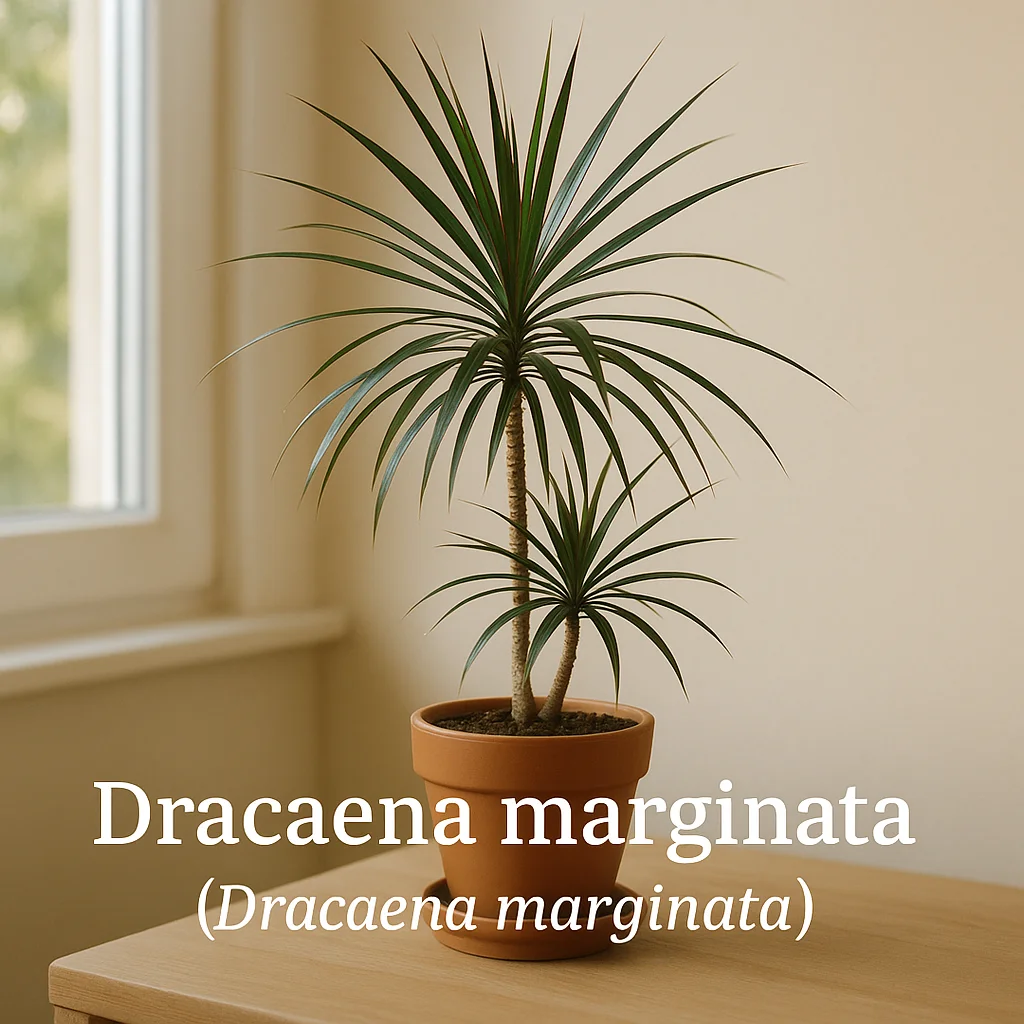
🌱 Dracaena marginata (Dracaena marginata)
The Dracaena marginata, commonly referred to as the Madagascar Dragon Tree, is a popular houseplant known for its striking form and hardy nature. With its origins in Madagascar, this plant has graced homes across the globe, celebrated for its elegant appearance and ease of care.
🧾 Quick Facts
- Common Names: Madagascar Dragon Tree, Red-edge Dracaena
- Scientific Name: Dracaena marginata
- Plant Type: Foliage
- Growth Habit: Upright, cane-like
- Typical Indoor Size Range: 4 to 6 feet tall
- Growth Speed: Slow to moderate
- Lifespan: Can live many years with proper care
- Origin: Madagascar; tropical forests
- Light Preference: Medium to bright indirect light
- Water Needs: Moderate; prefers to dry slightly between waterings
- Temperature & Humidity Preference: Prefers warm, moderately humid environments
- Pet Safety: May be irritating to pets
- Difficulty: Easy
🔍 Identification & Look-Alikes
The Dracaena marginata is often identified by its long, slender, arching leaves that are dark green with red or burgundy edges. These leaves are arranged in a rosette atop thin, woody trunks or canes, giving it a palm-like appearance. The trunks can be trained to bend and twist, adding to the plant's visual interest. Generally, it is grown for its foliage as it rarely flowers indoors.
Common look-alikes include other Dracaena species like the Dracaena fragrans, which has broader leaves with different variegation patterns. It can be distinguished by its narrower, spiky leaves and characteristic red edges.
- Top ID Tips:
- Look for long, narrow leaves with red margins
- Check for thick, woody canes
- Observe the upright, treelike form
- Leaves are often arching and flexible
- Trunk may be styled with bends
- Note the overall palm-like appearance
- Variegation may fade in low light
- Rarely flowers indoors; primarily foliage-focused
🌍 Origin & Natural Habitat
Native to Madagascar, the Dracaena marginata thrives in the island's tropical forests. It adapts to various light levels found beneath the forest canopy. Understanding its natural environment supports its care—aim for humidity, stable warmth, and steady, non-direct light. These conditions mimic its tropical habitat, promoting health and vigor indoors.
The plant's resilience in varying conditions makes it a versatile choice for many interior spaces, reminding us of its adaptable origins.
☀️ Light Requirements
Dracaena marginata prefers medium to bright indirect light. Positioning near east or west-facing windows is usually ideal; it thrives with filtered sunlight or in bright rooms. Intense direct sun may scorch the leaves, while too little light can cause leggy growth and fade its striking red margins.
- Light Checklist:
- Best near east or west windows
- Avoid harsh midday sun to prevent leaf burn
- Moderate light maintains vibrant foliage color
- Watch for leaf fading as a sign of low light
- Adjust positioning gradually to brighter spots
- Keep away from drafts and artificial heat
- Rotate plant occasionally for even growth
- Supplement with artificial light if necessary
💧 Watering & Humidity
Water the Dracaena marginata when the top inch of soil feels dry, utilizing a soaking approach before allowing it to dry out. Pot size, season, and light conditions can all affect watering frequency, with less needed in cooler months. While it prefers moderate humidity, avoid extreme methods like misting to prevent fungal issues. Signs of overwatering include yellowing leaves and mushy stems, whereas dry, crispy leaves can suggest underwatering.
- Watering Tips:
- Allow topsoil to dry slightly between waterings
- Reduce watering in fall and winter
- Choose pots with drainage holes
- Use room-temperature, non-chlorinated water if possible
- Check soil moisture more frequently in summer
- Raise humidity with trays of pebbles and water
- Watch for droopy leaves as a sign of thirst
- Monitor plant weight; a lighter pot may indicate dry soil
🐛 Soil, Pot & Repotting
Dracaena marginata thrives in a well-draining potting mix, such as one formulated for palms or succulents. Use containers with drainage holes and consider terracotta pots for their breathability. Repotting should be done every two to three years or when the plant becomes rootbound, characterized by roots circling the pot. During repotting, gently untangle roots and move to a pot only slightly larger to prevent excess soil moisture retention.
- Repotting Checklist:
- Use well-draining soil blends
- Ensure pots have adequate drainage holes
- Repot when roots fill the pot
- Select slightly larger pots to avoid excess soil
- Handle roots delicately during transplant
- Repot in spring for optimal growth
- Water after repotting to settle soil
- Trim damaged roots before potting
🌡️ Temperature, Airflow & Seasonal Care
For optimal growth, maintain indoor temperatures between 65°F and 80°F. Avoid exposing the Dracaena marginata to cold drafts or heat from HVAC vents, as sudden temperature fluctuations can stress the plant. In winter, growth slows, so adjust watering slightly to prevent overhydration. Steady airflow from fans can aid in mimicking its native environment.
- Seasonal Notes:
- Keep away from direct heat sources
- Guard against cold drafts in winter
- Provide consistent temperatures
- Reduce watering in cooler periods
- Increase humidity with standing trays of water
- Avoid forced-air heaters that dry air quickly
- Monitor for pests in winter when plants are indoor-bound
🌸 Flowers, Fruit & Growth Cycle
Although not commonly flowering indoors, Dracaena marginata may produce small, fragrant white flowers if conditions are favorable and the plant is mature. Its typical growth pattern involves elongating canes and producing new leaves from the tips. Pruning is recommended to control height and shape; cleaning tools between cuts prevents infection.
🧬 Propagation & Reproduction
Dracaena marginata can be propagated via stem cuttings. Cut healthy sections of the stem below a node and root them in water or a soilless medium. Division and propagation via offsets are possible during repotting; however, this plant doesn’t readily produce offsets. Propagation from seeds is uncommon for home growers.
- Propagation Tips:
- Take stem cuttings with clean, sharp scissors
- Root cuttings in water or soil
- Monitor for root development before potting
- Conduct propagation during growing season
- Use rooting hormone to encourage root growth if needed
- Avoid propagating in extreme cold or heat
- Observe new growth for signs of adaptation
🌿 Common Problems, Pests & Prevention
Common ailments for Dracaena marginata include yellowing leaves, which can indicate overwatering, and brown tips caused by low humidity or over-fertilization. Keep an eye for pests like spider mites, mealybugs, and scale insects. Prevention includes regular cleaning of leaves, maintaining stable care routines, and ensuring good airflow. Avoid overwatering, which encourages fungal growth and pest attraction.
- Prevention Basics:
- Inspect new plants before introducing them indoors
- Regularly clean leaves to prevent dust buildup
- Quarantine new or infested plants quickly
- Use gentle insecticidal soap if pests are noticed
- Maintain consistent watering practices
- Ensure proper drainage to avoid root rot
- Watch for physical damage leading to infection
- Adjust care based on seasonal changes
🐾 Pet & Home Safety Notes
The Dracaena marginata is considered toxic to pets, potentially causing mild symptoms like drooling, vomiting, or lack of appetite if ingested. If you have pets, place the plant out of reach or use barriers. In cases of suspected ingestion, contact a professional or local poison control for guidance. Maintaining awareness and precaution is key to a safe environment.
🏡 Styling Ideas & Best Room Placement
Dracaena marginata works well in various home settings due to its adaptable nature. It can complement bathrooms and kitchens with its need for moderate humidity, thrive in living rooms with ample indirect light, or bring interest to office spaces as a solitary statement plant. Pair it with other foliage types like Pothos and Philodendrons to create a green cornerstone in any room.
📌 Summary
- Elegant, palm-like foliage with red-edged leaves
- Originates from Madagascar's tropical climate
- Thrives in medium to bright indirect light
- Preferable watering when topsoil is dry
- Favors well-draining soil and moderate humidity
- Handles temperatures between 65°F-80°F comfortably
- Propagation typically via stem cuttings
- Watch for pests like spider mites and scale
- Potent for producing mild pet irritation