🌱 Dracaena fragrans (Dracaena fragrans)
🧾 Quick Facts
Dracaena fragrans, also known as the corn plant, is a popular houseplant appreciated for its lush, arching leaves. It fits well in a variety of interior settings, offering both aesthetic appeal and air-purifying benefits. This plant is relatively easy to care for and well-suited to novice plant enthusiasts.
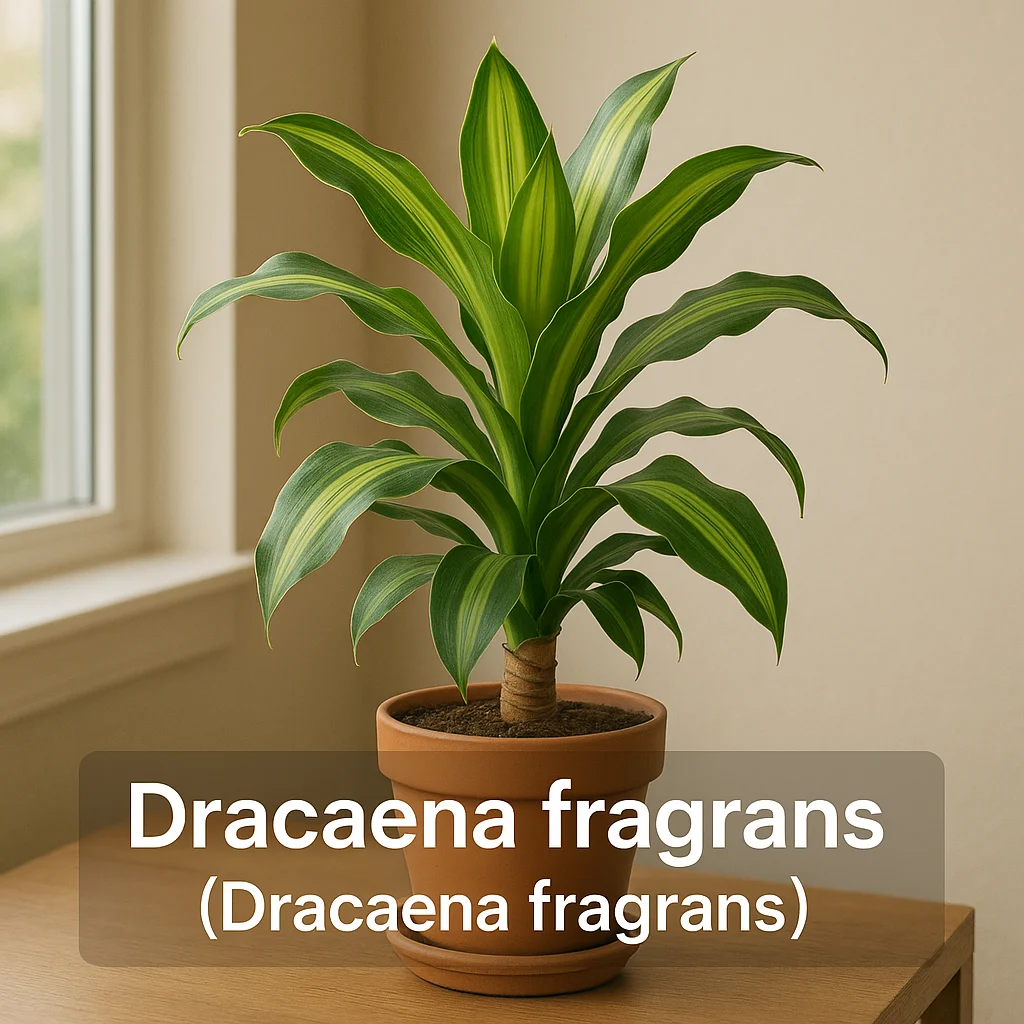
- Common names: Corn plant, cornstalk dracaena
- Scientific name: Dracaena fragrans
- Plant type: Foliage
- Growth habit: Upright, shrub-like
- Typical indoor size range: 3 to 6 feet tall, 2 to 3 feet wide
- Growth speed: Moderate
- Lifespan: Can live many years with care
- Origin: Tropical Africa
- Light preference: Bright, indirect light
- Water needs: Moderate; prefer drying out between waterings
- Temperature & humidity preference: Prefers temperatures from 65°F to 75°F, humidity 40%-60%
- Pet safety: May be irritating/toxic to pets
- Difficulty: Easy
🔍 Identification & Look-Alikes
Dracaena fragrans is characterized by its long, arching leaves that are typically glossy green, often with a hint of yellow on the edges in certain cultivars. The plant tends to develop a thick cane-like stem over time. While it primarily blossoms in outdoor climates, blooming indoors is rare, and it's mainly grown for its attractive foliage. Common look-alikes include other species within the Dracaena genus, such as Dracaena marginata and Dracaena deremensis, but these can be differentiated by their distinctive leaf patterns and colors.
- Long, arching leaves
- Glossy green foliage
- Cane-like stem with age
- Little to no flowering indoors
- Different from Dracaena marginata by leaf width and color
- Robust, vertical growth habit
- Watch for leaf variegation, depending on light
- Thick central stalk
🌍 Origin & Natural Habitat
Dracaena fragrans originates from the tropical regions of Africa, typically found in rainforest and tropical areas. It grows naturally under the forest canopy, which informs its preference for bright, indirect sunlight when kept as a houseplant. Knowing the natural habitat of Dracaena fragrans helps in providing the right conditions for it to thrive indoors—namely avoiding harsh direct sunlight and maintaining a humid environment similar to its native setting.
☀️ Light Requirements
For optimal growth, place Dracaena fragrans in an area with bright, indirect sunlight. East or west-facing windows, where the light is filtered, are ideal. Too much direct sunlight can scorch the leaves, while too little can slow growth and reduce vibrancy in variegated types. Adjust the plant's location if you notice leaf discoloration or stunted growth, indicative of improper lighting conditions.
- Avoid direct mid-day sun
- Bright, indirect light is best
- Filtered sunlight through curtains works well
- Too much light may cause leaf scorch
- Rotate the plant for even growth
- If variegation fades, try increasing light
- Monitor leaf color for light adjustments
💧 Watering & Humidity
Water Dracaena fragrans deeply, allowing the top inch of soil to dry out before watering again. During warmer months, this might mean weekly watering, while less frequent watering is required in cooler seasons. Ensure proper drainage to prevent root rot. While the plant tolerates average home humidity, occasional misting or a nearby humidifier can enhance its growth and vitality, especially during dry winter months.
- Water when top inch of soil is dry
- Reduce frequency in cooler months
- Ensure pots have good drainage
- Mist leaves to raise humidity
- Yellow leaves may indicate overwatering
- Crispy leaf tips usually mean low humidity
- Use room-temperature water
🐛 Soil, Pot & Repotting
Dracaena fragrans thrives in a well-draining, peat-based potting mix. A standard houseplant soil with added perlite or sand works well. Pots with drainage holes are crucial to prevent root rot. Repot every 2-3 years or when roots outgrow the current container, usually signaled by roots growing out of the drainage holes or slowed growth. Gradually increase pot size, never over-potting as it can lead to waterlogged soil.
- Use well-draining potting soil
- Include perlite or sand for aeration
- Pots must have drainage holes
- Repot every 2-3 years
- Gentle handling of roots during repot
- Increase pot size by 1-2 inches only
- Avoid compacting soil during repotting
🌡️ Temperature, Airflow & Seasonal Care
Dracaena fragrans enjoys a comfortable range of temperatures between 65°F and 75°F. It’s important to protect it from drafts, sudden temperature changes, and direct airflow from heating or cooling vents. In winter, the plant’s growth will slow down, and watering should be reduced accordingly. It's not frost-tolerant, so avoid placing it near cold windows or doors.
- Maintain 65°F to 75°F range
- Keep away from drafty areas
- Slow growth in winter is normal
- Adjust water based on season
- Avoid near vents
- Gradual temperature shifts
- Watch for leaf drop in cold
🌸 Flowers, Fruit & Growth Cycle
While flowering is rare indoors, Dracaena fragrans can produce small, fragrant white flowers in ideal conditions, usually in mature plants. It typically doesn't fruit indoors. The plant grows periodically, with new leaves emerging at the crown. Regular pruning of dead leaves and stems can promote tidier growth and prevent moisture-related issues. Prune using clean, sharp tools to avoid introducing disease.
🧬 Propagation & Reproduction
Dracaena fragrans is commonly propagated through stem cuttings. To do this, cut a healthy section of the stem, ensuring it has a few nodes, and plant in moist potting soil or water until roots develop. Division is possible but less common due to the plant’s natural growth habit. Seed propagation is rare in home environments due to low flowering frequency.
- Use healthy stem cuttings
- Ensure cuttings have nodes
- Root in soil or water
- Keep propagating medium moist
- Division less common, but possible
- Rooting hormone can aid propagation
🌿 Common Problems, Pests & Prevention
Dracaena fragrans may face issues like yellowing leaves, often from overwatering, brown leaf tips from low humidity, or droopy leaves from underwatering. Common pests include spider mites, mealybugs, and scale. Prevention includes inspecting new plants before introducing them to your home, regular leaf cleaning, and maintaining stable care conditions.
- Inspect for spider mites and mealybugs
- Keep leaves clean
- Maintain consistent care
- Isolate new or sick plants
- Avoid overwatering
- Trim dead leaves regularly
- Monitor humidity levels
🐾 Pet & Home Safety Notes
Dracaena fragrans contains compounds that might be irritating to pets if ingested, generally causing drooling or gastrointestinal upset. To keep pets and children safe, position the plant out of reach, or consider physical barriers or training to deter access. If ingestion is suspected, contact a professional or local poison control resources promptly for guidance.
🏡 Styling Ideas & Best Room Placement
Dracaena fragrans thrives in living rooms and offices where it can enjoy indirect light. Its resilience to variable humidity makes it suitable for kitchens or well-lit bathrooms. Tall varieties can enhance empty corners, while shorter ones complement shelves or side tables. Pair with peace lilies or pothos for visual balance and versatility.
📌 Summary
- Recognizable by glossy arching leaves and cane-like stems
- Originates from tropical Africa; loves bright, indirect light
- Moderate watering and consistent humidity preferred
- Needs well-draining soil; repot every 2–3 years
- Stable indoor temperatures are key
- Propagation mainly through stem cuttings
- Common pests: spider mites, mealybugs
- Pet caution: some parts may be irritating
- Easy care makes it a great plant for beginners
- Place in a spot where it won't receive direct harsh sunlight