🌱 Arrowhead Plant (Syngonium podophyllum)
🧾 Quick Facts
The Arrowhead Plant, also known scientifically as Syngonium podophyllum, is a versatile houseplant prized for its lush foliage and easy-care nature. Recognized for its arrow-shaped leaves, it's a popular choice for both novices and seasoned plant enthusiasts.
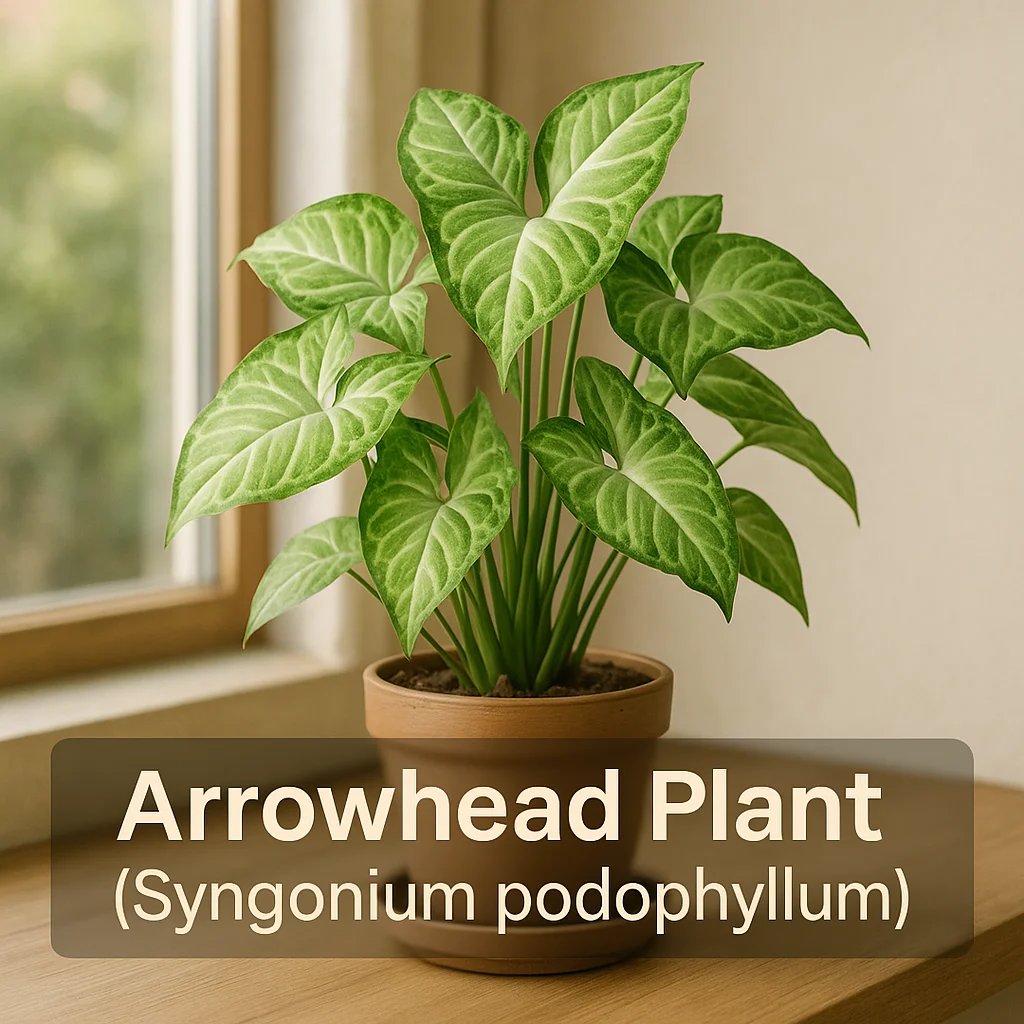
- Common Names: Arrowhead Plant, Goosefoot Plant, African Evergreen
- Scientific Name: Syngonium podophyllum
- Plant Type: Foliage
- Growth Habit: Climbing vine
- Typical Indoor Size Range: 1 to 3 feet in height and spread
- Growth Speed: Moderate to fast
- Lifespan: Can live many years with proper care
- Origin: Central and South America; tropical forests
- Light Preference: Bright, indirect light
- Water Needs: Moderate; prefers to dry slightly between waterings
- Temperature & Humidity Preference: Warm temperatures and high humidity
- Pet Safety: May be irritating/toxic to pets
- Difficulty: Easy
🔍 Identification & Look-Alikes
The Arrowhead Plant is distinguished by its arrowhead-shaped leaves, which may exhibit a range of colors and variegation patterns, including green, white, cream, and pink. The leaves are typically smooth and arranged alternately along the vine-like stems. Over time, the plant can develop a trailing or climbing habit, making it ideal for hanging baskets or climbing supports.
While it is grown mainly for its foliage, some cultivars may occasionally produce small, nondescript flowers under ideal indoor conditions. This plant is often confused with philodendrons due to similar growth habits, but differs in leaf shape and developmental stages.
- Top ID Tips:
- Arrow-shaped leaves
- Variegated patterns of green, white, or pink
- Trailing or climbing growth habit
- Alternately arranged smooth leaves
- Tolerates various light levels, affecting variegation
- May confuse with philodendrons
- Rare indoor flowering
- Juvenile and adult leaf differences
- Commonly cascades from hanging containers
🌍 Origin & Natural Habitat
The Arrowhead Plant is native to the tropical rainforests of Central and South America, thriving in warm, humid environments. Its natural habitat includes the forest understory, where it grows as a climber or epiphyte on trees. Understanding its origin helps in providing optimal indoor care by replicating similar conditions in terms of temperature and humidity.
Seasonal patterns in its native habitat are characterized by distinct wet and dry periods, influencing its growth and dormancy cycles.
☀️ Light Requirements
The Arrowhead Plant thrives in bright, indirect light, such as that found near an east or north-facing window. It can tolerate lower light levels, although growth may slow and variegation patterns may become less pronounced. Avoid direct sunlight, which can scorch the leaves, and provide filtered light for optimal growth.
Signs of too little light include sluggish growth and pale foliage, while too much light may cause leaf burn.
- Light Checklist:
- Bright, indirect light is ideal
- Avoid direct sunlight exposure
- Can adapt to lower light but may lose variegation
- Monitor for leaf burn from excessive light
- Consider sheer curtains for filtering intense sunlight
- Regularly rotate plant for even growth
- Vary light based on season and growth phase
- Artificial grow lights can supplement lighting
💧 Watering & Humidity
For the Arrowhead Plant, apply a soak-and-drain watering method, allowing the top 1–2 inches of soil to dry out between waterings. Water less frequently in lower light or during cooler months. Because the plant prefers higher humidity, mist the foliage regularly or use a humidity tray.
Be vigilant for overwatering signs such as yellowing leaves, while crisp or brown leaf edges suggest underwatering.
- Watering Tips:
- Allow top soil to dry before watering
- Humidity: Regular misting supports health
- Reduce watering in low light seasons
- Pot size affects water needs: larger pots retain more moisture
- Avoid standing water in drip trays
- Check moisture level using finger test
- Water collected rainwater when possible
- Ensure proper drainage to avoid root rot
- Humidity trays can aid moisture levels
🐛 Soil, Pot & Repotting
Well-draining, peat-based soil is ideal for the Arrowhead Plant, retaining moisture without becoming waterlogged. Choose pots with ample drainage holes to prevent water accumulation. Repot every 1–2 years or when you notice slow growth, roots circling the pot, or if water drains through quickly.
When repotting, gently remove the plant, shake off excess soil, and place it into a slightly larger pot with fresh soil. Avoid excessively large pots to reduce the risk of overwatering.
- Repotting Checklist:
- Use peat-based, well-draining soil
- Pots must have drainage holes
- Repot annually or as growth slows
- Signs: roots circling, pot-bound, water rushing through
- Choose pot size barely larger than root ball
- Repot gentle without root damage
- Update to fresh soil when repotting
- Avoid oversized pots to prevent drowning roots
- Ensure minimal transplant shock post-repotting
🌡️ Temperature, Airflow & Seasonal Care
The Arrowhead Plant prefers temperatures ranging between 60-80°F (15-27°C) and will suffer if exposed to drafts, cold air, or extreme temperature shifts. This plant may slow growth in cooler temperatures during winter.
Ensure consistent airflow around the plant, avoiding direct exposure to heating or AC vents.
- Seasonal Notes:
- Ideal range: 60-80°F (15-27°C)
- Avoid sudden temperature drops
- Ensure steady airflow, avoid drafts
- Growth slows during winter months
- Reduce watering as growth slows
- Away from direct exposure to heat/cold vents
- Naturally enters a slower growing in colder seasons
🌸 Flowers, Fruit & Growth Cycle
The Arrowhead Plant, while primarily grown for its foliage, may infrequently produce small, greenish flowers with optimal conditions. Typically, this occurs due to a mature growth phase and ideal light conditions.
Growth involves regular emergence of new leaves from the vine tips and possible development of aerial roots for climbing. Regular pruning helps shape the plant, controls leggy growth, and encourages bushier foliage.
🧬 Propagation & Reproduction
Propagation of the Arrowhead Plant is straightforward, primarily through stem cuttings. Select healthy, mature stems with 2-3 nodes, and place the cuttings in water until roots develop or plant directly in soil with high humidity. Division of mature plants can also be effective.
Leaf propagation is not typical for this species.
- Propagation Tips:
- Use sharp tools for stem cuttings
- Water propagation option for roots visibility
- Direct soil planting: ensure humidity
- Regularly change propagation water
- Choose healthy-looking stems
- Observe newly rooted plants before potting
🌿 Common Problems, Pests & Prevention
Common issues with the Arrowhead Plant include yellowing leaves due to overwatering, brown tips from low humidity, and droopiness from underwatering or improper light conditions. Additionally, pests such as spider mites, mealybugs, and scale insects can affect health. Implementing basic plant hygiene, stable care conditions, and proper watering can minimize these problems.
- Prevention Basics:
- Maintain stable watering schedule
- Regularly inspect for pests
- Keep leaves clean with gentle wiping
- Ensure good airflow around plant
- Isolate new plants before integrating
- Pruning helps manage healthy plant size
- Maintain stress-free environment for plants
🐾 Pet & Home Safety Notes
The Arrowhead Plant contains substances that can be irritating or toxic if ingested by pets or children. To ensure safety, place the plant out of reach, use training aids or barriers if needed, and monitor interactions.
If ingestion is suspected, contact a professional or local poison control resources promptly for guidance.
🏡 Styling Ideas & Best Room Placement
The Arrowhead Plant fits well in any setting, from living rooms and bedrooms to bathrooms and kitchens. Its adaptability to various light conditions makes it versatile for use in hanging baskets, climbing on moss poles, or elegantly displayed on shelves.
Pairing it with other humidity-loving plants like peace lilies or ferns can enhance the aesthetic appeal of your indoor garden.
📌 Summary
- Arrow-shaped leaves with diverse variegation
- Native to Central and South American tropical forests
- Prefers bright, indirect light; too much sun can damage leaves
- Moderate water needs; ensure soil dries between waterings
- Use well-draining soil and regularly repot when needed
- Comfortable in temperatures from 60-80°F (15-27°C)
- Propagation mainly via stem cuttings; easy for home growers
- Common pests include spider mites and mealybugs; keep leaves clean
- May be irritating/toxic to pets; choose strategic placement
- Styling suits diverse room environments, adaptable for hanging or climbing arrangements