🌱 Lemongrass (Cymbopogon citratus)
🧾 Quick Facts
Lemongrass (Cymbopogon citratus) is a popular herb known for its fresh, lemony fragrance and common use in culinary applications. It is increasingly cultivated as an indoor plant for its ornamental appeal and practical uses. Here are the key details about Lemongrass that indoor gardeners should know:
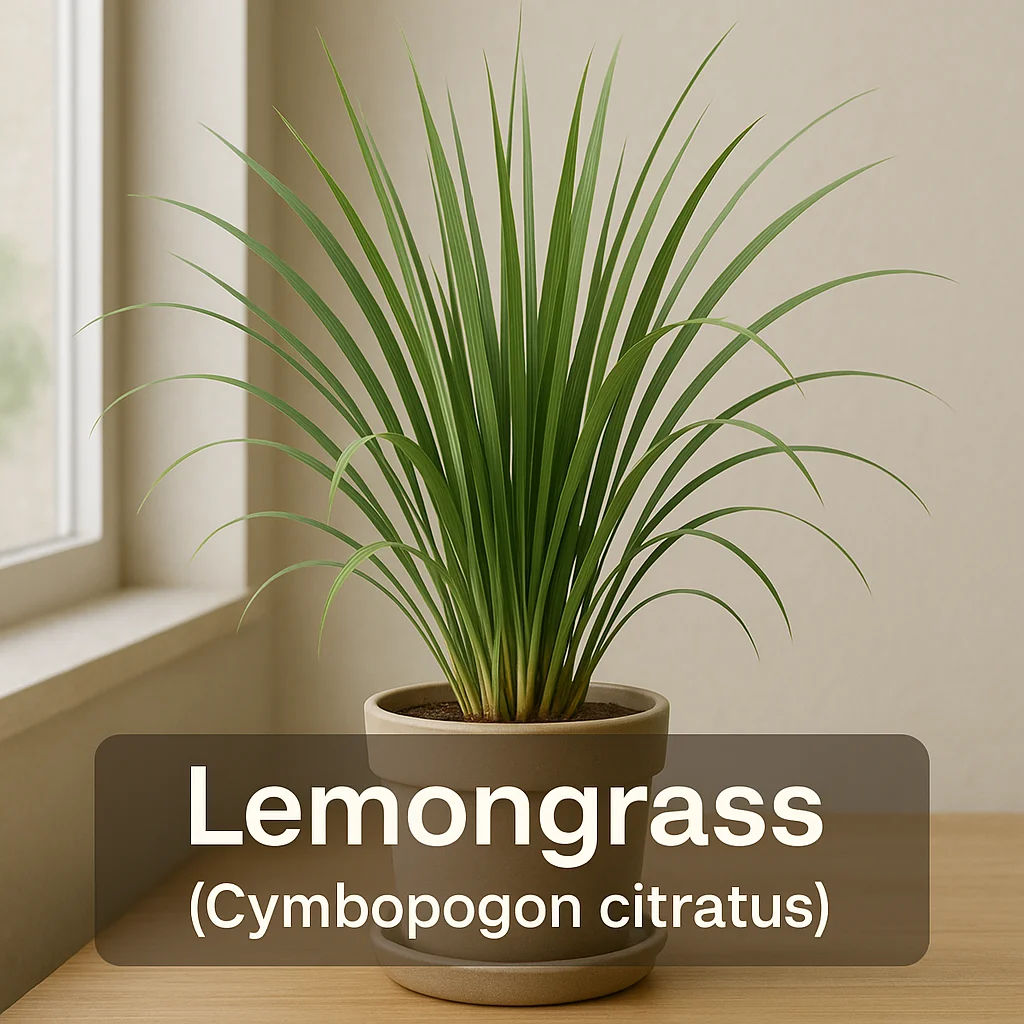
- Common names: Lemongrass, West Indian Lemongrass
- Scientific name: Cymbopogon citratus
- Plant type: Herb
- Growth habit: Upright clumps
- Typical indoor size range: 2 to 4 feet tall, 1 to 2 feet wide
- Growth speed: Fast
- Lifespan: Can live several years with proper care
- Origin: Southeast Asia, tropical regions
- Light preference: Bright indirect light to direct sun
- Water needs: Moderate to high
- Temperature & humidity preference: Warm temperatures, high humidity
- Pet safety: May be irritating, especially if pets are prone to chewing plants
- Difficulty: Medium
🔍 Identification & Look-Alikes
Lemongrass is recognizable by its long, slender, bright green leaves and clumping growth pattern. The leaves have a prominent midrib and are rough to the touch. Lemongrass does not typically bloom indoors, as it is mainly grown for its foliage. Other plants that resemble Lemongrass include other species within the Cymbopogon genus, such as Citronella (Cymbopogon nardus), which can be distinguished by a more fragrant citrus smell and slightly broader leaves.
- Top ID Tips:
- Long, linear leaves with a sharp edge
- Leaves form dense clumps
- Strong lemon scent when leaves are crushed
- Bright to dark green depending on light exposure
- Growth occurs in tufts from the base
- Leaves have a rough texture
- No significant flowers indoors
- Thinner leaves compared to lemon balm or Citronella grass
- Situate along with cooking herbs for easy identification
🌍 Origin & Natural Habitat
Lemongrass is native to Southeast Asia and thrives in tropical regions. It typically grows in sunny, warm areas with well-drained soil. The natural habitat includes open grasslands and sunny fields where the climate supports its vigorous growth year-round. Seasonal patterns include wet and dry seasons that align with its need for consistent moisture but preferred drainage.
Understanding its habitat helps inform indoor care, as it benefits from as much light and warmth as possible, mimicking its natural environment, and requires good drainage to reflect the conditions of well-drained tropical soils.
☀️ Light Requirements
Lemongrass thrives in bright indirect to direct sunlight. Indoors, placing Lemongrass near a south-facing window can offer the best light exposure. If the light is too low, the plant's growth will slow, and its color may fade. Conversely, too much direct sun might bleach the leaves. Ideal light encourages lush, vibrant growth.
- Light Checklist:
- Best near south or west-facing windows
- Requires at least 6 hours of direct light for optimal growth
- Leaves fade or bleach if overexposed
- Rotate plant regularly for even growth
- Supplement with grow lights in low-light conditions
- Monitor leaf color as an indicator of light levels
- Consider light-filtering curtains to moderate intense rays
- Strategic placement for light reflection using mirrors
💧 Watering & Humidity
Lemongrass requires regular watering to thrive, but it is important to let the top inch of soil dry out between waterings to prevent root rot. During warmer months, increase watering frequency. The plant benefits from high humidity, so humidifiers or pebble trays can help maintain moisture levels without overwatering.
- Watering Tips:
- Use a soak-and-drain method to ensure even moisture
- Adjust watering frequency based on season and light intensity
- Signs of underwatering: browning leaf tips, droopiness
- Signs of overwatering: yellowing leaves, mold on soil
- Maintain moderate humidity through regular misting
- Avoid waterlogged conditions in the pot
- Consider using a moisture meter for accuracy
- Use room-temperature water to prevent shock
🐛 Soil, Pot & Repotting
Lemongrass prefers a well-draining soil mix rich in organic matter, such as a blend of regular potting soil with added sand or perlite for aeration. Pots should have drainage holes to prevent water retention. Repotting is necessary once the plant becomes root-bound, typically every 1-2 years. When repotting, choose a pot one size larger than the current one to provide adequate space for growth.
- Repotting Checklist:
- Use a potting soil mix with good drainage
- Ensure pots have adequate drainage holes
- Repot every 1-2 years or when root-bound
- Gently loosen roots during repotting
- Water after repotting to settle the soil
- Choose terracotta pots for better moisture regulation
- Avoid compacted soils that retain excess water
- Consider a slightly larger pot to prevent stunting
🌡️ Temperature, Airflow & Seasonal Care
Lemongrass enjoys warm temperatures and does best in a range of 65–85°F (18–29°C). It is sensitive to cold drafts and should be kept away from air conditioning vents or drafty windows. In winter, reduce watering as growth slows down, and ensure it stays in a warm spot.
- Seasonal Notes:
- Optimal temperature range: 65–85°F (18–29°C)
- Avoid cold spots and sudden temperature changes
- Protect from drafts and intense air conditioning
- Reduce watering frequency in winter months
- Maintain consistent warmth for continued growth
- Allow slower growth in cool seasons naturally
- Facilitate good airflow to prevent fungal issues
🌸 Flowers, Fruit & Growth Cycle
Lemongrass rarely flowers indoors; it's appreciated for its aromatic foliage rather than blooms. It grows by producing new tufts of grass, expanding outward from the center. Regular pruning of older leaves encourages new growth and maintains shape.
🧬 Propagation & Reproduction
Lemongrass can be easily propagated by division, making it accessible to home growers. During repotting, divide the plant at the roots ensuring each section has multiple stalks. Stem cuttings are less common but possible. Propagation from seeds is generally challenging for home growers.
- Propagation Tips:
- Divide mature plants during repotting for best results
- Ensure each division has a healthy root segment
- Plant divisions in fresh, well-draining soil
- Water new divisions thoroughly but avoid saturation
- Begin new plants in shaded light until well-rooted
- Use sharp, sterile tools to divide plants cleanly
🌿 Common Problems, Pests & Prevention
Common issues with Lemongrass include yellowing leaves from overwatering, brown tips from underwatering, and root rot. Pest issues include spider mites and mealybugs; regular inspection and cleaning of leaves can help control outbreaks. Ensuring stable care conditions and proper airflow prevents most problems.
- Prevention Basics:
- Inspect new plants before adding to the collection
- Maintain good airflow to reduce fungal risk
- Clean leaves regularly to deter pests
- Avoid excessive watering to prevent root rot
- Quarantine new additions to avoid spreading pests
- Check for spider mites and mealybugs periodically
- Ensure pot’s drainage to avoid water accumulation
- Keep care consistent and adjust with season changes
🐾 Pet & Home Safety Notes
Lemongrass may be mildly irritating to pets if chewed, affecting the mouth and stomach. To prevent pet access, placing it out of reach or implementing barriers is advisable. In case ingestion is suspected, monitor the pet and consult a professional or local poison control resources.
🏡 Styling Ideas & Best Room Placement
Lemongrass can complement sunny spots in kitchens or patios due to its need for bright light and practical harvesting access. It pairs well with other herbs such as basil and thyme. Consider placing Lemongrass in well-lit corners of living rooms or offices if space allows.
📌 Summary
- ID highlights: Upright clumps, lemon-scented leaves
- Origin: Southeast Asia, tropical preference
- Light: Bright indirect to direct sunlight
- Watering: Moderate, with dry-down between waterings
- Soil/Repotting: Well-draining mix; repot when rootbound
- Temperature: Warm, drafts-sensitive, slows in winter
- Propagation: Division preferred, easy in spring
- Common issues: Overwatering, pests like spider mites
- Difficulty: Medium; suitable for intermediate growers
- Key cautions: May irritate pets if ingested