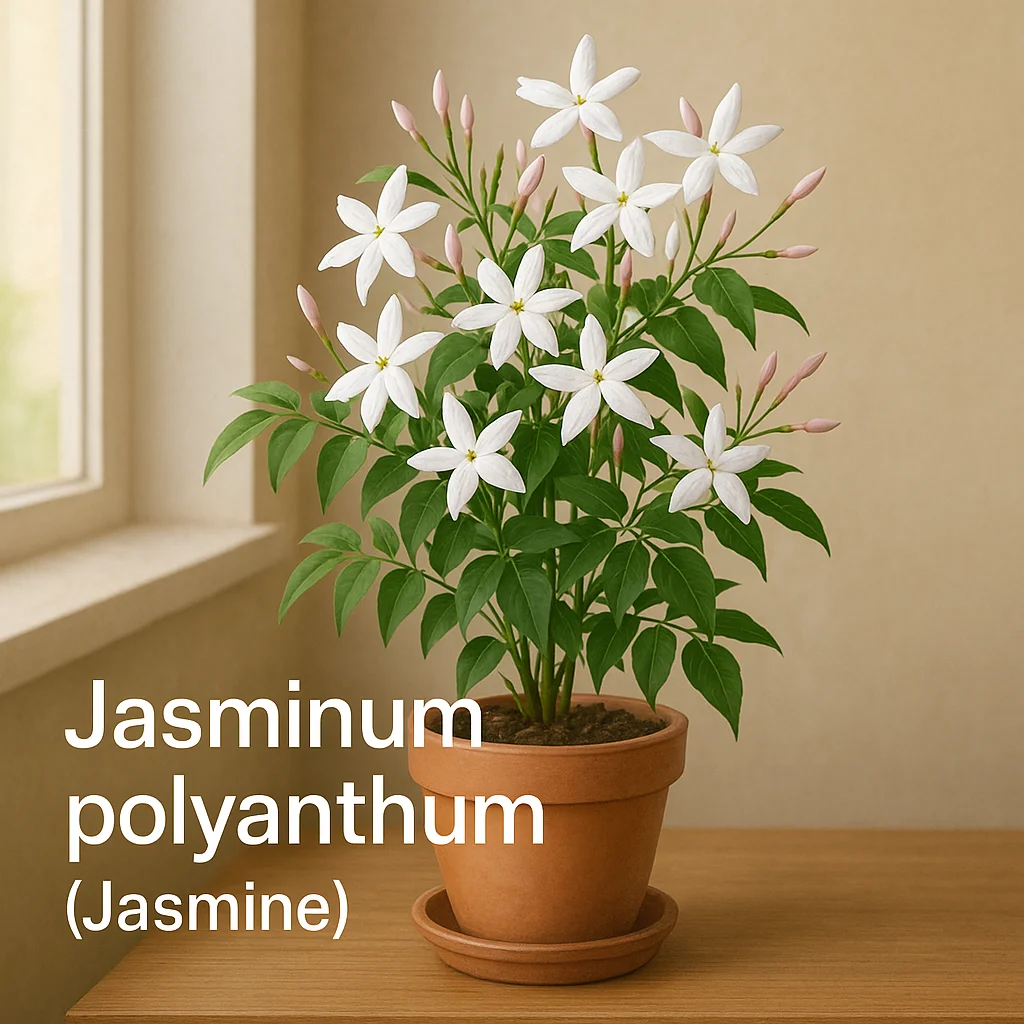
🌱 Jasminum polyanthum (Jasmine)
🧾 Quick Facts
Jasminum polyanthum, commonly known as jasmine, is a popular vine both indoors and outdoors for its fragrant flowers and easy adaptability. Known for its climbing habit, this plant is perfect for adding a touch of nature to your home with minimal fuss.
- Common names: Pink Jasmine, White Jasmine, Chinese Jasmine
- Scientific name: Jasminum polyanthum
- Plant type: Flowering
- Growth habit: Climbing vine
- Typical indoor size range: 3 to 6 feet height, 2 to 3 feet spread
- Growth speed: Fast
- Lifespan: Can live many years with proper care
- Origin: Southeast Asia, mainly China
- Light preference: Bright indirect light; can tolerate direct sun
- Water needs: Moderate; prefer slightly dry down between watering
- Temperature & humidity preference: Prefers moderate to high humidity, average room temperature
- Pet safety: May be irritating/toxic to pets
- Difficulty: Medium
🔍 Identification & Look-Alikes
Jasminum polyanthum is best identified by its star-shaped, white to pale pink flowers, which produce a strong, pleasant fragrance. The leaves are glossy green, opposing, and compound, featuring five to nine leaflets. Its vines are long and slender, often requiring support to climb effectively. Light exposure might slightly influence the lushness of the foliage.
Common look-alikes include other jasmine species and some honeysuckles, which can be distinguished by Jasmine's strong scent during bloom and specific leaf arrangement.
- Top ID Tips:
- Star-shaped, fragrant flowers
- Glossy, compound leaves with multiple leaflets
- Slender, climbing vines
- Fragrance noticeable during blooming season
- Flowers turn pink before fully opening to white
- Leaflets arranged oppositely
- Requires staking or support for climbing
- Grows rapidly under ideal conditions
🌍 Origin & Natural Habitat
Native to Southeast Asia, particularly China, Jasminum polyanthum grows in subtropical regions. It flourishes in forested areas and hillside regions, thriving in warm, humid climates. Understanding its natural habitat helps mimic these conditions indoors, adjusting for higher humidity and ample indirect light to promote flowering.
The plant's natural growth pattern includes climbing over other vegetation, supported by its slender vines. This climbing tendency serves as inspiration for decorating indoor spaces, utilizing trellises or other support structures.
☀️ Light Requirements
Jasminum polyanthum thrives in bright indirect light and can tolerate some direct sunlight, which can enhance flowering. Place it near an east or west-facing window for optimal light conditions. While it can endure lower light periods, insufficient light leads to reduced flowering and leggier growth.
Signs of inadequate light include leaf drop and lack of new growth, whereas too much direct light may cause leaf scorching.
- Light Checklist:
- Place near east or west-facing window
- Bright indirect light is ideal
- Tolerates some direct sunlight
- Avoid full afternoon sun to prevent scorching
- Monitor for sparse growth as a sign of low light
- Rotate plant periodically for even light exposure
- Adjust placement seasonally based on light change
💧 Watering & Humidity
Follow a soak-and-drain watering pattern, allowing the top inch of soil to dry out between waterings. Adjust your watering rhythm with the seasons; reduce in winter when growth slows and increase during blooming periods. As a plant that prefers humidity, consider using a humidifier or pebble tray to raise ambient humidity safely.
Signs of overwatering include yellowing leaves and root rot, while underwatering results in wilting and dry, crispy leaves. Maintain a careful balance for optimal plant health.
- Watering Tips:
- Allow top inch of soil to dry out between waterings
- Water less frequently in winter
- Increase watering as new growth and flowering occur
- Use distilled water if water quality is poor
- Employ pebble tray or humidifier to raise humidity
- Avoid letting plant sit in waterlogged soil
- Watch for signs of overwatering or underwatering
🐛 Soil, Pot & Repotting
Use a well-draining potting mix augmented with sand or perlite to promote air circulation around roots. Choose pots with adequate drainage holes, and terracotta can be beneficial for moisture control. Repot every 2-3 years or when growth slows, observing for rootbound signs.
To repot, gently remove it from the current pot, clear old soil, check for root health, and place it into a slightly larger pot. Refill with fresh soil and water moderately afterward.
- Repotting Checklist:
- Choose well-draining, airy soil mix
- Ensure pots have drainage holes
- Consider terracotta for better aeration
- Repot when growth slows or roots become bound
- Trim any unhealthy roots during repotting
- Only increase pot size slightly to avoid waterlogging
- Be gentle with root handling
🌡️ Temperature, Airflow & Seasonal Care
Jasmine prefers temperatures between 60-75°F. Protect it from cold drafts, sudden temperature changes, and keep it away from AC/heater vents. During winter, allow for cooler temperatures to encourage budding the following spring.
Good airflow is essential in preventing fungal diseases and ensuring a healthy plant. Place the plant in areas with gentle air circulation.
- Seasonal Notes:
- Maintain temperatures between 60-75°F
- Avoid placing near cold drafts or heat vents
- Allow cooler winter temperatures for spring flowering
- Ensure good airflow to prevent disease
- Adjust watering based on seasonal growth changes
- Cautious of rapid temperature fluctuations
🌸 Flowers, Fruit & Growth Cycle
Indoors, Jasminum polyanthum blooms early spring, showcasing profuse clusters of small, star-like flowers, transitioning from pink buds to white blooms. While the plant can fruit, indoor conditions rarely encourage fruiting.
Focus on pruning any dead or overly long vines to maintain shape and encourage new growth. Regular pruning helps achieve a fuller, more aesthetically pleasing plant form.
🧬 Propagation & Reproduction
Propagation is typically done by stem cuttings. Select healthy vines, cut below a node, remove lower leaves, and root in water or a soil mix. Though less common, seeds can also be used but require more attention from home growers.
Be patient as cuttings take time to develop roots, ensuring continued humidity and warmth to trigger growth.
- Propagation Tips:
- Use sharp, clean tools for cutting
- Select stems with multiple nodes
- Remove lower leaves before propagating
- Root in water or well-draining soil
- Keep newly rooted cuttings in humid environment
- Provide warmth for quicker root development
- Patience is key as roots can take weeks to establish
🌿 Common Problems, Pests & Prevention
Jasminum polyanthum can be prone to pests like spider mites, mealybugs, and scale. Symptoms of common issues include yellow leaves, brown tips, and droop. Regular monitoring and safe practices, such as isolating new plants, cleaning leaves, and maintaining good care, are essential in preventing infestations.
Ensure stable environmental conditions to minimize stress and growth issues.
- Prevention Basics:
- Inspect new plants before introduction
- Regularly clean leaves to deter pests
- Monitor for signs of pest activity
- Maintain consistent care to avoid stress
- Provide adequate airflow to prevent stagnant humidity
- Avoid overwatering to deter fungal issues
- Use natural pest control methods when needed
🐾 Pet & Home Safety Notes
While Jasminum polyanthum is appreciated for its beauty, some sources list it as potentially irritating to pets if ingested. Place it out of reach of curious pets and monitor for any chewing or ingestion incidents. If exposure is suspected, consult a professional or local poison control resources for advice.
Training strategies or use of barriers can help keep plants safe from pets.
🏡 Styling Ideas & Best Room Placement
Due to its climbing nature, Jasminum polyanthum is ideal for placing in living rooms where it can be trained onto trellises or moss poles. Its fragrant blooms also make it suitable as a bathroom plant, and its climbing habit makes it perfect for hanging baskets or on shelves near windows.
Pairing it with ferns or other foliage plants benefits from its lush appearance and helps create a tropical look.
📌 Summary
- Identify by star-shaped, fragrant flowers and glossy compound leaves
- Native to Southeast Asia; prefers warm, humid conditions
- Thrives in bright indirect light; avoid extreme direct sun
- Water moderately; loves high humidity
- Prefers well-draining, airy soil; repot every few years
- Keep temperature between 60-75°F; cool winters encourage blooms
- Propagate by stem cuttings or seeds with care
- Prone to pests; maintain stable environment for best growth
- Pet caution advised; place out of reach or use barriers
- Styling includes training on trellises or hanging baskets