🌱 Anthurium andraeanum (Flamingo Flower)
🧾 Quick Facts
The Anthurium andraeanum, commonly known as the Flamingo Flower, is a popular houseplant admired for its vibrant blooms and glossy leaves. Often grown for its striking flowers, this plant adds a tropical touch to indoor spaces.
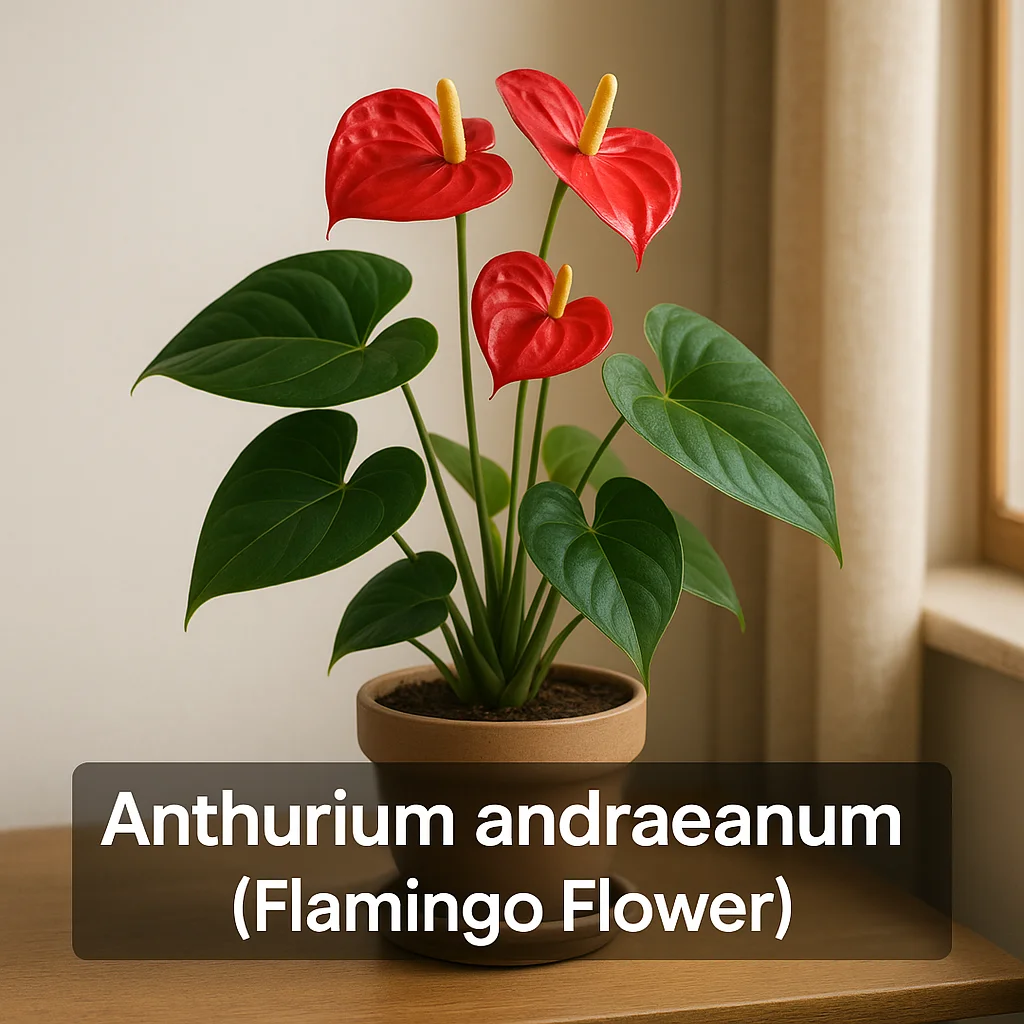
- Common names: Flamingo Flower, Laceleaf, Tailflower
- Scientific name: Anthurium andraeanum
- Plant type: Flowering houseplant
- Growth habit: Upright
- Typical indoor size range: 12 to 24 inches tall and wide
- Growth speed: Moderate
- Lifespan: Can live many years with proper care
- Origin: Colombia and Ecuador; tropical rainforest undergrowth
- Light preference: Bright indirect light
- Water needs: Moderate; prefers consistent moisture
- Temperature & humidity preference: Warm temperatures; high humidity
- Pet safety: May be irritating/toxic to pets if ingested
- Difficulty: Medium
🔍 Identification & Look-Alikes
The Anthurium andraeanum is recognized by its heart-shaped, leathery leaves and glossy, diamond-shaped spathes. The spathes, often mistaken for flowers, can be red, white, or pink, with a contrasting yellow or white spadix in the center. The plant's upright stems are sturdy, and leaves are arranged in a rosette pattern.
- Top ID Tips:
- Heart-shaped, waxy leaves
- Glossy spathes with a smooth texture
- Color variations include red, pink, and white
- Yellow or white spadix emerging from spathes
- Tough, upright stems
- Similar to peace lilies but distinguishable by thicker leaves and colorful spathes
- Distinctive leaf venation with glossy surface
- The spathe lasts for several weeks, maintaining vibrant color
🌍 Origin & Natural Habitat
The Flamingo Flower is native to the tropical rainforests of Colombia and Ecuador, where it grows under the canopy of tall trees. This environment provides filtered sunlight, warmth, and high humidity, explaining the plant's preference for bright indirect light and moisture-rich conditions.
Understanding the Flamingo Flower's natural habitat informs indoor care by mimicking warm temperatures, high humidity, and avoiding direct sunlight exposure.
☀️ Light Requirements
To best care for an Anthurium andraeanum indoors, place it in a location with bright indirect light. This can be achieved near east or north-facing windows or a few feet from a south or west-facing window with filtered light. Direct sunlight can scorch the leaves, while too little light will reduce blooming.
- Light Checklist:
- Place near an east or north-facing window for optimal light
- Avoid direct midday sun to prevent leaf burn
- Use sheer curtains to filter harsh sunlight
- Signs of too little light include leggy growth and fewer blooms
- Rotate the plant occasionally for even growth
- Cleaning dust from leaves can enhance light absorption
- Supplement with grow lights in low-light conditions
- Avoid sudden changes in light intensity
- Maintain consistent light exposure year-round
💧 Watering & Humidity
The Flamingo Flower thrives with a balanced watering routine. Allow the top inch of soil to dry out between waterings. In warmer months, this may mean watering every 1-2 weeks, with frequency reduced during cooler months. High humidity is beneficial, and regular misting or a humidity tray can help.
- Watering Tips:
- Allow the top inch of soil to dry out before re-watering
- Water less frequently in cooler months
- Use room-temperature water to avoid shock
- Increase humidity with pebble trays or misting
- Signs of overwatering: yellowing leaves, root rot
- Signs of underwatering: drooping or crispy leaf edges
- Consider a humidifier in dry indoor environments
- Avoid waterlogging by ensuring good drainage
- Dust leaves regularly to enhance humidity effects
- Monitor plant response and adjust as needed
🐛 Soil, Pot & Repotting
An optimal soil mix for the Flamingo Flower should be well-draining yet moisture-retentive, such as a blend of orchid bark, peat, and perlite. Choose a pot with drainage holes to prevent water retention. Repotting is recommended every 2-3 years or when root-bound, particularly in spring.
- Repotting Checklist:
- Use a soil mix of orchid bark, peat, and perlite
- Choose a pot with adequate drainage
- Repot every 2-3 years or when root-bound
- Gently remove the plant and loosen any compacted roots
- Select a pot one size larger for repotting
- Fill new pot with fresh soil mix, ensuring correct depth
- Water thoroughly after repotting to settle the soil
- Avoid fertilizing immediately after repotting
- Check drainage frequently to avoid waterlogging
- Monitor plant’s growth post-repotting for adjustments
🌡️ Temperature, Airflow & Seasonal Care
Flamingo Flowers prefer temperatures between 65-75°F (18-24°C) and are sensitive to cold drafts and sudden temperature swings. They thrive in environments with stable air circulation, avoiding direct airflow from vents or heaters. During winter, growth may slow, and watering should be adjusted accordingly.
- Seasonal Notes:
- Ideal temperature range: 65-75°F (18-24°C)
- Avoid cold drafts and sudden temperature changes
- Do not place near AC or heater vents
- Expect slowed growth in winter months
- Reduce watering frequency in cooler seasons
- Protect from freezing temperatures
- Adjust humidity levels as seasons change
- Provide gentle air circulation for health
- Monitor temperature fluctuations regularly
🌸 Flowers, Fruit & Growth Cycle
The Anthurium andraeanum is renowned for its vibrant spathes, often mistaken for flowers, which can last up to eight weeks. They can bloom year-round if conditions are favorable. This plant does not typically produce fruit indoors. Leaves emerge from the base and grow vertically. Pruning dead or yellowing leaves will promote healthy growth.
🧬 Propagation & Reproduction
Propagation of the Flamingo Flower is most effectively done through division. During repotting, separate clumps of roots to form new plants. While stem cuttings can be attempted, it is less common due to lower success rates.
- Propagation Tips:
- Best propagated through division during repotting
- Separate healthy root clumps with each division
- Use a well-draining soil mix for new plants
- Ensure each division has a healthy root system
- Avoid propagating during extreme temperature seasons
- Keep newly propagated sections in appropriate humidity
- Monitor propagates closely during initial growth stages
🌿 Common Problems, Pests & Prevention
Common issues include yellow leaves from excessive moisture, brown tips from low humidity, and root rot from waterlogged soil. Pests such as spider mites, mealybugs, and scale can be controlled with regular leaf cleaning and maintaining healthy plant conditions.
- Prevention Basics:
- Quarantine new plants before introducing them to your collection
- Regularly clean leaves to prevent dust and deter pests
- Ensure proper watering and avoid waterlogging
- Provide stable temperature and humidity levels
- Use neem oil or insecticidal soap for minor pest issues
- Check under leaves regularly for pests
- Maintain good air circulation around plants
- Prevent fungal issues with proper spacing
- Monitor plant health and respond to changes quickly
🐾 Pet & Home Safety Notes
The Flamingo Flower contains calcium oxalate crystals, which may irritate pets and humans if ingested. To ensure safety, place plants in inaccessible locations for curious pets and children. If ingestion occurs, contact a professional or poison control resource for assistance.
🏡 Styling Ideas & Best Room Placement
The Flamingo Flower, with its colorful blooms, complements modern and tropical decor styles. It thrives in living rooms and offices with ample indirect light and sufficient humidity. Consider placing it near a bathroom window or kitchen where humidity is naturally higher. The plant suits pedestal stands or decorative pots for a stylish impact.
📌 Summary
- Identifiable by heart-shaped, glossy leaves and colorful spathes
- Native to the tropical rainforests of South America
- Prefers bright indirect light; avoid direct sun
- Water moderately, allowing topsoil to dry slightly
- Requires well-draining, moisture-retentive soil
- Optimal temperatures range between 65-75°F
- Propagation through division; challenging by cuttings
- Common issues include pests and leaf yellowing
- Medium care difficulty; toxic to pets if ingested
- Place out of reach of pets and children