🌱 Tradescantia zebrina (Tradescantia zebrina)
🧾 Quick Facts
The Tradescantia zebrina, also commonly known as the Wandering Jew or Inch Plant, is a popular houseplant noted for its striking foliage and ease of care. Here are some quick facts to help you understand this charming addition to your indoor garden:
- Common Names: Wandering Jew, Inch Plant, Spiderwort
- Scientific Name: Tradescantia zebrina
- Plant Type: Foliage
- Growth Habit: Trailing
- Typical Indoor Size: 6–12 inches in height, can spread up to several feet
- Growth Speed: Fast
- Lifespan: Can live many years with proper care
- Origin: Central and South America
- Light Preference: Bright, indirect light
- Water Needs: Moderate; allow top inch of soil to dry out between watering
- Temperature & Humidity Preference: Prefers warm and humid conditions
- Pet Safety: May be irritating to pets
- Difficulty: Easy
🔍 Identification & Look-Alikes
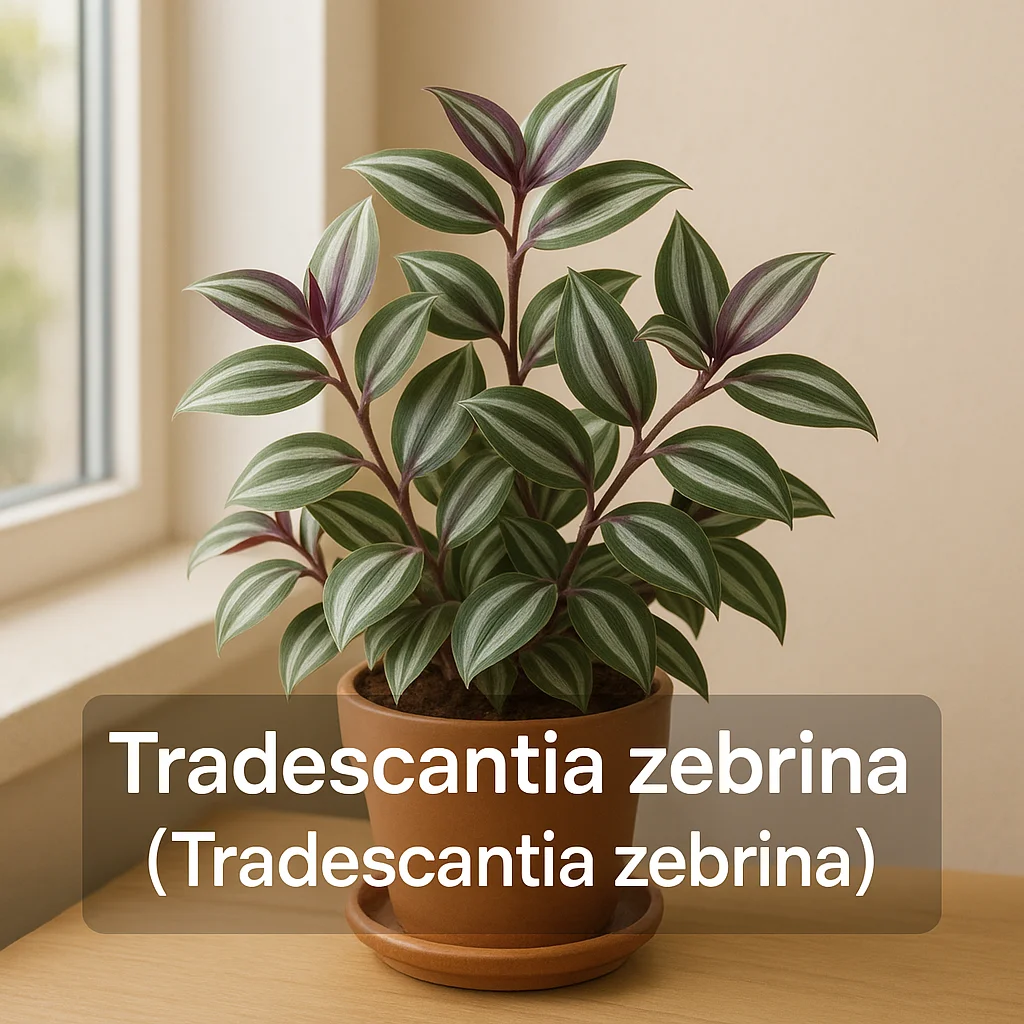
Tradescantia zebrina can be recognized by its beautifully striped leaves, which feature a combination of green, purple, and silver tones. The leaves are broadly lance-shaped with a glossy texture, and they grow in a symmetrical pattern along the stem, which tends to trail or cascade over the pot. It's primarily grown for its foliage rather than its flowers, which are small, and may not always bloom indoors.
Look-alikes include other species of Tradescantia, such as Tradescantia fluminensis, which may have less pronounced variegation. The distinctive color pattern of Tradescantia zebrina helps distinguish it from these and other houseplants.
- Leaves: Lance-shaped with purple, green, and silver stripes
- Texture: Glossy
- Growth Pattern: Trailing vines
- Main Use: Foliage interest
- Light Effect: Stronger color patterns with bright light
- Variegation: Silver stripes are most visible with sufficient light
- Vine Structure: Symmetrically arranged leaves along stems
- Flower: Sometimes produces small, unobtrusive flowers
- Common Look-Alikes: Other Tradescantia species
- Primary Difference: Unique striped leaf pattern
🌍 Origin & Natural Habitat
Tradescantia zebrina is native to the tropical regions of Central and South America, where it thrives in moist and shaded forest environments. It naturally grows at low elevations in areas that receive ample rainfall. In its wild habitat, this plant often drapes over rocks and trees, benefiting from the humidity and moderate light filtered through the forest canopy.
Understanding its natural habitat explains why Tradescantia zebrina prefers bright, indirect light and moderate moisture. By mimicking these conditions indoors, gardeners can ensure the plant flourishes and displays its vibrant leaf coloration.
☀️ Light Requirements
Tradescantia zebrina thrives in bright, indirect light. A spot near an east or west-facing window is ideal to provide the right amount of light without exposing the plant to intense direct sunlight, which could scorch the leaves. The plant's coloration is more vivid when it receives adequate light, while insufficient light may lead to fading.
Signs of too little light include leggy growth and muted leaf colors. Conversely, too much light can cause browning edges or sunburned patches on the leaves.
- Best placement: Near east or west-facing windows
- Bright indirect explained: No direct sun, but light diffused or reflected
- Effects of light on color: Enhances variegation
- Insufficient light: Leads to reduced color clarity and legginess
- Too much light: Leaves can burn or brown at edges
- Observation: Monitor leaf color and growth pattern
- Rotation: Rotate plant periodically for even light exposure
- Adjustments: Move closer to a light source if color fades
💧 Watering & Humidity
Tradescantia zebrina requires moderate watering, preferring to dry out slightly between waterings. Allow the top inch of soil to dry out before watering again. Overwatering can lead to root rot, while underwatering is less common but may cause leaf droop or tips to become brown.
Humidity is beneficial. While the plant can tolerate average household humidity, it thrives in higher humidity. Consider using a humidifier or a simple pebble tray filled with water to raise humidity levels safely.
- Watering rhythm: Soak and drain thoroughly
- Dry-down preference: Allow top soil inch to dry
- Pot size impact: Larger pots hold moisture longer
- Seasonal changes: Reduce watering in winter
- Humidity needs: Prefers above average humidity
- Overwatering signs: Yellowing leaves, root rot
- Underwatering signs: Wilting, dry leaf tips
- Humid environment: Pebble trays or humidifiers aid conditions
🐛 Soil, Pot & Repotting
Tradescantia zebrina grows well in a standard potting mix that is airy and has good drainage. Adding perlite or sand can enhance drainage. Choose pots with drainage holes to prevent water logging.
Repot your Tradescantia zebrina when it becomes rootbound or growth slows significantly. Choose a pot only slightly larger than the current one to avoid excessive soil, which can retain moisture and lead to root rot. Handle the roots gently during repotting, and fill in with fresh soil to support new growth.
- Soil mix: Well-draining, moderately moisture-retentive
- Pot choice: Must have drainage holes
- Repotting signals: Rootbound or minimal growth
- Frequency: Annually or when growth dictates
- Root care: Handle roots delicately
- Fresh soil: Replace old soil during repotting
- Pot size: Slightly larger to accommodate growth
- Repot timing: Best in spring or growing season
🌡️ Temperature, Airflow & Seasonal Care
Tradescantia zebrina thrives in temperatures ranging from 65°F to 80°F (18°C to 27°C). It does not respond well to cold drafts or sudden temperature changes, so keep it away from air conditioners and heaters.
In winter, it may enter a period of slower growth and require less frequent watering. Maintain airflow in the room to reduce humidity variances and help prevent pest problems.
- Temperature range: Comfortable between 65°F and 80°F
- Drafts: Avoid exposure to AC and heater drafts
- Seasonal growth changes: Slows in winter
- Watering adjustment: Water less in dormant season
- Airflow importance: Prevents stagnation and pest issues
- Protection: Use screens or curtains for temperature control
🌸 Flowers, Fruit & Growth Cycle
While Tradescantia zebrina primarily captures attention for its foliage, it can produce small, three-petaled flowers, usually pink to purple in color, though these are not commonly observed indoors. It's more relevant to focus on the plant's growth pattern, as it continuously produces new stems and leaves, which add to its lush appearance.
Prune regularly to encourage bushier growth and prevent legginess. Use sanitized tools to avoid transmitting diseases between plants.
🧬 Propagation & Reproduction
Tradescantia zebrina is remarkably easy to propagate. The most common method is through stem cuttings. Simply cut a few inches of stem with a few nodes, remove the lower leaves, and place it in water or moist soil until roots develop.
- Propagation method: Stem cuttings are most successful
- Rooting medium: Water or soil; both work effectively
- Node presence: Ensure cuttings include nodes
- Submerging: Avoid leaf contact with water in vases
- Regular monitoring: Keep cuttings moist
- Leaf removal: Leaves near the cut end should be cleared
- Visual cues: Look for root growth before potting
🌿 Common Problems, Pests & Prevention
Common issues with Tradescantia zebrina include leaf yellowing, brown tips, and legginess, which are often tied to watering and light conditions. Pests such as spider mites, mealybugs, and fungus gnats can be problematic, especially if airflow is poor.
Prevent issues by maintaining stable care routines, avoiding waterlogged soil, and regularly dusting leaves to keep them healthy. Quarantine new plants to prevent pest introduction.
- Common issues: Yellow leaves, leggy growth
- Pests: Watch for spider mites, mealybugs
- Prevention: Clean leaves regularly
- Watering habits: Avoid pooling water in pots
- Airflow management: Encourages healthy plant environments
- Quarantine: Isolate new plants initially
- Stable care: Keeps stress factors low for the plant
🐾 Pet & Home Safety Notes
Parts of Tradescantia zebrina may irritate pets if ingested or touched. The plant's sap can cause contact dermatitis in both pets and humans. Place the plant out of reach of curious pets or use training strategies like deterrent sprays to prevent chewing.
If ingestion occurs, contact a professional or local poison control resources for guidance.
🏡 Styling Ideas & Best Room Placement
With its trailing habit and vibrant colors, Tradescantia zebrina is perfect for hanging baskets or high shelves. It thrives in humid environments, making it an ideal choice for bathrooms or kitchens. Its striking foliage complements other houseplants with different textures, such as ferns or snake plants, providing a diverse green space.
- Hanging baskets: Showcase cascading growth
- Room placement: Excels in humid rooms like bathrooms
- Combining: Pairs well with snake plants
- Shelf positioning: Highlight trailing vines
- Matching decor: Consider room colors complementing purple foliage
📌 Summary
- Identification: Trailing vine, striped leaves
- Origin: Central and South American forests
- Light: Prefers bright, indirect light
- Watering: Moderate, avoid overwatering
- Soil & Repotting: Well-draining soil, repot annually
- Temperature: Enjoys warm, consistent conditions
- Propagation: Easy via stem cuttings
- Common Issues: Yellow leaves, pests manageable
- Difficulty: Easy to care for, ideal for beginners
- Cautions: May irritate pets