🌱 Thaumatophyllum bipinnatifidum (Split-Leaf Philodendron)
🧾 Quick Facts
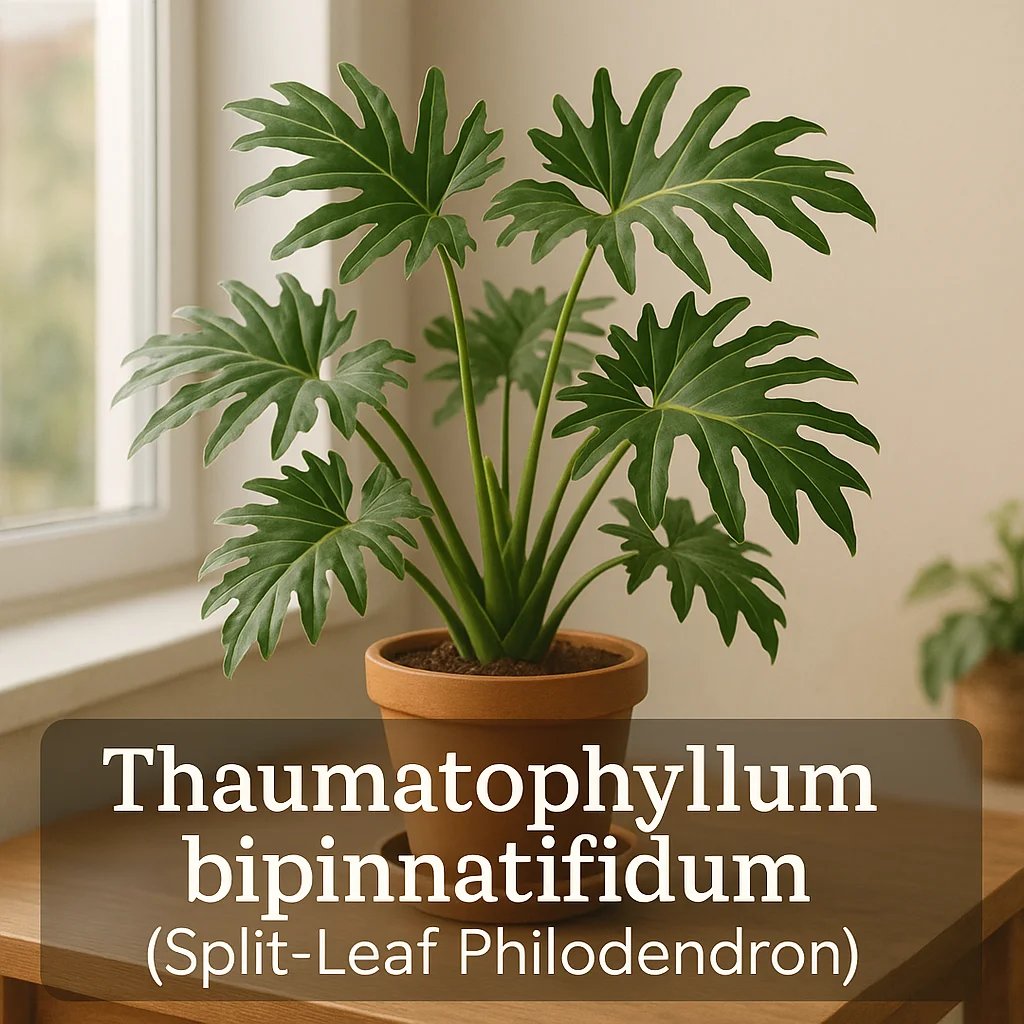
The Thaumatophyllum bipinnatifidum, commonly known as the Split-Leaf Philodendron or Tree Philodendron, is a popular indoor foliage plant. It is admired for its dramatic, deeply lobed leaves. Though often incorrectly referred to as a Philodendron selloum, it is now reclassified under the genus Thaumatophyllum. It is well-suited for spacious indoor environments due to its potential size and striking appearance.
- Common names: Split-Leaf Philodendron, Tree Philodendron
- Scientific name: Thaumatophyllum bipinnatifidum (formerly Philodendron selloum)
- Plant type: Foliage
- Growth habit: Upright, shrub-like
- Typical indoor size: 5-8 feet in height and width
- Growth speed: Moderate
- Lifespan: Can live many years with proper care
- Origin: South America, especially Brazil, Bolivia, Paraguay, and Argentina
- Light preference: Bright indirect light, tolerates medium light
- Water needs: Moderate; allow soil to partially dry between waterings
- Temperature & humidity preference: Prefers warm, humid conditions
- Pet safety: May be irritating/toxic to pets
- Difficulty: Medium
🔍 Identification & Look-Alikes
The Thaumatophyllum bipinnatifidum can be identified by its large, glossy, green leaves that are deeply split, giving it a unique textured look. The leaves can grow up to 3 feet long and 2 feet wide, emerging from stout, herbaceous stems. The plant usually appears as a dense cluster of upright stems topped with these impressive leaf fans.
It is primarily grown for its foliage, with the possibility of flowering and producing arum-like flowers being mostly non-existent indoors.
Common look-alikes for the Split-Leaf Philodendron include the Philodendron Monstera (Monstera deliciosa), which has Swiss cheese-like holes in its leaves, and the Philodendron xanadu, with smaller and less deeply lobed leaves.
- Large, deeply lobed green leaves up to 3 feet in length
- Upright, shrub-like growth habit
- Glossy leaf surface
- No aerial roots like many Philodendrons
- Stout woody stems near the base
- Rarely flowers indoors
- Easily mistaken for Monstera deliciosa or Philodendron xanadu
🌍 Origin & Natural Habitat
The Thaumatophyllum bipinnatifidum is native to the rainforests of South America, predominantly found in Brazil, Bolivia, Paraguay, and Argentina. In its natural habitat, it grows as a terrestrial plant under the rainforest canopy, thriving in humid and warm conditions. Thaumatophyllum bipinnatifidum benefits from the dappled, filtered light typical of the understory environment where direct sunlight is mitigated by taller trees. Seasonal changes include a consistent warm wet climate year-round with occasional dry spells depending on the region.
Understanding its natural habitat helps in recreating similar conditions indoors to support healthy growth. It highlights the importance of maintaining consistent humidity and warmth, with indirect light mimicking its native rainforest environment.
☀️ Light Requirements
The Split-Leaf Philodendron flourishes in bright, indirect light but can tolerate medium light conditions. Ideal placements include rooms with east or north-facing windows, or a few feet back from a south or west-facing window to avoid harsh direct sunlight that can scorch the leaves. Bright indirect light means the plant receives plenty of ambient light, but any direct sun exposure is softened by curtains or filtered through other objects.
Watch out for signs of inadequate light, such as leggy growth with widely spaced leaves or decreased leaf size, and signs of too much light, like browning or yellowing of leaves.
- Best in bright, indirect light
- East or north-facing window ideal
- Can tolerate some medium light
- Protect from harsh direct sunlight
- Signs of too much light: browning leaves
- Signs of too little light: leggy growth
- Use sheer curtains to filter direct sun
- Adjust location seasonally as natural light changes
💧 Watering & Humidity
Water the Split-Leaf Philodendron when the top inch or two of soil feels dry to touch. Employ a soak-and-drain method by watering thoroughly until excess drains from the pot, ensuring roots are adequately hydrated, then allow the soil to dry back. Adjust watering frequency based on the plant's environment—more often during active growth in spring and summer, less in fall and winter.
The plant appreciates high humidity; aim for humidity levels above 50%. Increase humidity with a pebble tray under the plant or by occasional misting, but avoid overdoing it to prevent rot. Opt for a space humidifier if your indoor air is particularly dry.
- Water when top 1-2 inches of soil are dry
- Soak-and-drain watering method recommended
- Fewer waterings during dormant seasons
- Target above 50% humidity
- Use pebble trays or mist to increase humidity
- Signs of overwatering: yellowing leaves, root rot
- Signs of underwatering: wilting, dry leaf edges
🐛 Soil, Pot & Repotting
A well-draining potting mix rich in organic matter works best for Thaumatophyllum bipinnatifidum—consider a blend of peat moss, perlite, and pine bark. Choose pots with drainage holes to prevent waterlogged soil. Terracotta pots can be beneficial for their breathability, though regular plastic pots will retain moisture longer and are acceptable in drier environments.
Repot when roots become visible at the drainage holes or when growth slows down—a sign the plant is becoming rootbound. Repotting is best done every couple of years. Increase pot size by 1-2 inches in diameter, and gently loosen tangled roots before transferring to fresh soil.
- Well-draining, organic-rich soil mix recommended
- Terracotta pots for breathability
- Pot has sufficient drainage holes
- Repot every 2 years or when rootbound
- Increase pot size by 1-2 inches
- Signs for repotting: roots through drainage holes
- Loosen roots gently during repotting
- Best to repot in spring during active growth
🌡️ Temperature, Airflow & Seasonal Care
The Split-Leaf Philodendron prefers temperatures ranging between 65°F and 80°F (18°C and 27°C). It does best when sheltered from drafts and sudden temperature changes caused by AC units or radiators. It appreciates good airflow to prevent fungal diseases but avoid placing it in the path of constant air currents that could stress the plant.
During colder months, expect slowed growth as it enters a semi-dormant phase. During this time, reduce watering as the plant requires less moisture, and ensure the environment is still warm enough to prevent cold damage.
- Preferred temperature: 65°F-80°F (18°C-27°C)
- Away from drafts and sudden temperature changes
- Airflow should not be direct or persistent
- Growth slow in colder months
- Reduce water frequency in winter
- Watch for signs of cold damage (darkened leaf edges)
- Ensure consistent warm environment year-round
🌸 Flowers, Fruit & Growth Cycle
In an indoor environment, Thaumatophyllum bipinnatifidum is grown almost exclusively for its lush foliage. While it can produce arum-like white spathes and green spadices in its natural habitat, flowering indoors is rare and generally not encouraged by most growers.
The plant grows by producing new leaves from the central growing point in the crown. Pruning involves removing yellowed or damaged leaves to maintain aesthetics and health. Pruning can also help manage size in indoor spaces, but should be done carefully to not damage new growth points.
🧬 Propagation & Reproduction
Propagation of Thaumatophyllum bipinnatifidum is most commonly done through division, as it tends to produce multiple stems from the base. Carefully separate sections of the plant during repotting, ensuring each new division has a portion of root systems associated with healthy foliage.
- Best propagated by division
- Separate during repotting
- Ensure each section has roots and healthy leaves
- Placement in warm, humid conditions post-division
- Avoid stem cuttings as less effective for this species
Propagation via seeds is possible but requires patience and suitable conditions, making it less common among home growers.
🌿 Common Problems, Pests & Prevention
The Split-Leaf Philodendron can face several issues, such as yellowing leaves due to overwatering, brown tips from insufficient humidity, or leggy growth caused by inadequate light. Regularly dusting leaves and monitoring surroundings can help keep the plant healthy.
Common pests include spider mites, mealybugs, and occasionally scale. Physical removal and regular leaf cleaning can prevent high infestation levels.
- Yellow leaves often due to overwatering
- Brown tips indicate low humidity
- Maintain stable light and humidity levels
- Dust leaves to prevent pest buildup
- Isolate new plants before introducing them
- Monitor for spider mites, mealybugs, scale
🐾 Pet & Home Safety Notes
Thaumatophyllum bipinnatifidum may cause irritation if ingested due to the presence of calcium oxalates, which are toxic to both pets and children if consumed. Symptoms can include oral discomfort and swelling. Therefore, it is vital to keep the plant out of reach of curious pets and children.
If you suspect ingestion, it is crucial to contact a professional or consult local poison control resources promptly for advice. Keeping plants elevated or using barriers can help reduce the risk.
🏡 Styling Ideas & Best Room Placement
The Split-Leaf Philodendron, with its large leaves and dramatic presence, suits spaces with high ceilings and ample room to spread. Ideal room placements include living rooms, offices, or sunrooms with ample diffused light. In humid environments like bathrooms or kitchens, ensure good light levels remain consistent.
Pairing it with plants like ferns or other foliage plants can create a lush, tropical display. Ensure the plant has enough space to grow unobstructed, perhaps with a complementing decorative floor planter.
📌 Summary
- Thaumatophyllum bipinnatifidum has large, deeply split leaves
- Native to South American rainforests
- Thrives in bright, indirect sunlight
- Water when topsoil dries; prefers high humidity
- Requires rich, well-draining potting mix
- Optimal indoor temperature 65°F-80°F (18°C-27°C)
- Propagation mainly by division
- Pests include spider mites, mealybugs; regular cleaning helps
- May be toxic to pets/children
- Difficulty level is medium; avoid overwatering