🌱 Philodendron gloriosum
🧾 Quick Facts
The Philodendron gloriosum is a striking houseplant prized for its large, velvety leaves and unique crawling growth habit. It's a member of the Araceae family and is often cherished by both novice and experienced plant enthusiasts.
- Common names: Philodendron gloriosum
- Scientific name: Philodendron gloriosum
- Plant type: Foliage
- Growth habit: Crawling (creeping rhizome)
- Typical indoor size: 1.5-3 feet in height and spread
- Growth speed: Moderate
- Lifespan: Can live many years with care
- Origin: Colombia, tropical rainforests
- Light preference: Bright indirect light
- Water needs: Moderate; allow topsoil to dry slightly
- Temperature & humidity preference: Warm and humid environments
- Pet safety: May be irritating/toxic to pets
- Difficulty: Medium
🔍 Identification & Look-Alikes
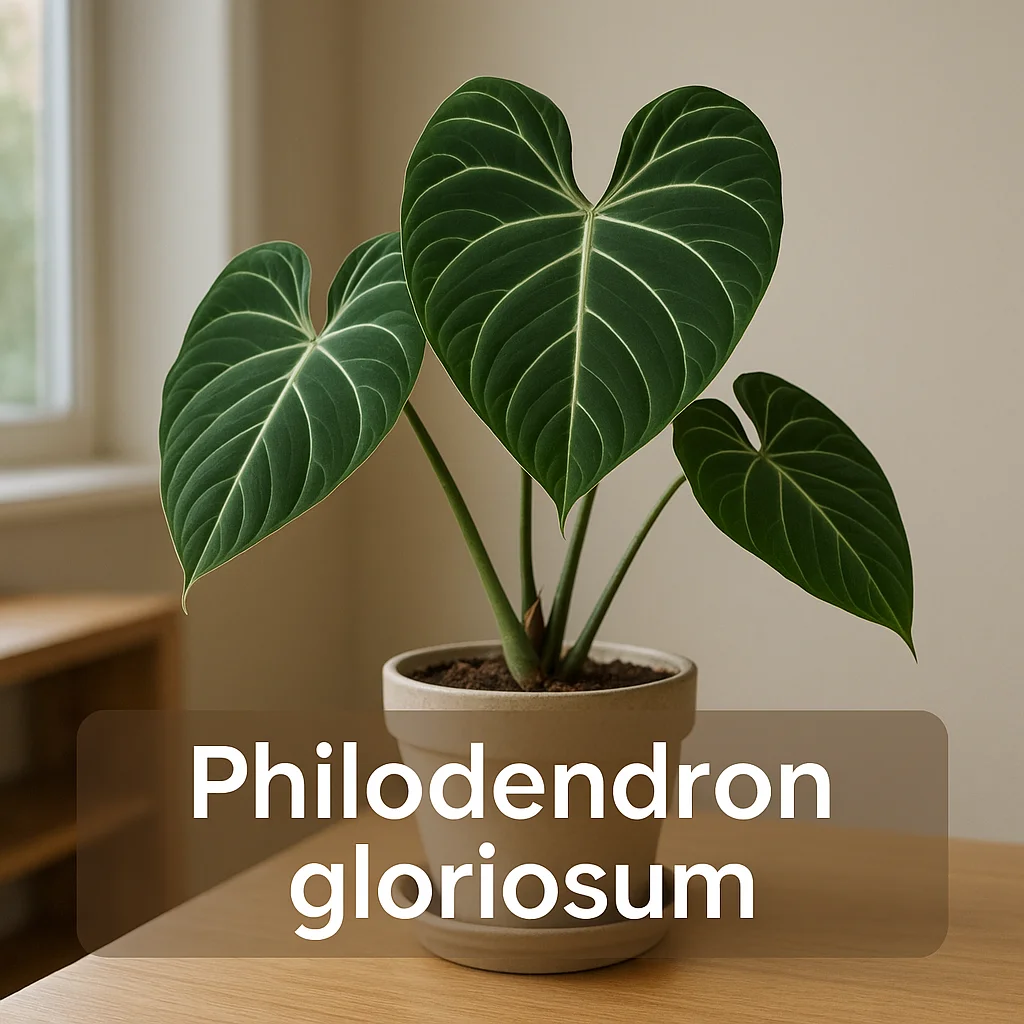
The Philodendron gloriosum is recognized by its large, heart-shaped leaves which have a velvety texture and striking white veins. The leaves are usually dark green but can vary in intensity. This plant has a creeping growth, meaning it grows horizontally along the soil rather than upright, with a rhizome that extends as the plant matures. It's primarily grown for its foliage, and while it may rarely flower indoors, its inflorescence is not a primary attraction.
Common look-alikes include the Philodendron mamei and Philodendron plowmanii, which also have large, velvety leaves but differ in the pattern and coloration of their leaves. The gloriosum's distinct vein pattern helps in distinguishing it from similar species.
- Heart-shaped, velvety leaves with white veins
- Creeping growth with a horizontal rhizome
- Dark green foliage
- Rarely flowers indoors; mainly for foliage
- Often mistaken for Philodendron mamei or plowmanii
- White vein pattern distinguishes it
- Foliage color varies with light conditions
- Leaves grow large, up to 36 inches long
🌍 Origin & Natural Habitat
The Philodendron gloriosum is native to the tropical rainforests of Colombia. This plant thrives in the understory of these rainforests, where it grows along the forest floor in warm, humid conditions with filtered light. Understanding its natural habitat helps in providing ideal indoor conditions that mimic its wild environment, such as providing high humidity, consistent warmth, and avoiding direct sunlight exposure.
☀️ Light Requirements
Philodendron gloriosum prefers bright indirect light, which mimics the dappled sunlight it would receive on the forest floor. Place it near an east or west-facing window with sheer curtains or further back from a south-facing window to avoid direct sunlight, which can scorch its leaves. In low light conditions, leaf growth may slow, and the vibrant vein pattern may fade. Too much light can lead to leaf burn.
- Bright indirect light is ideal
- Avoid direct sunlight to prevent leaf burn
- Can tolerate low light but might slow in growth
- East or west-facing windows with sheer curtains
- Check for faded veins as a sign of too low light
- Browning tips may indicate too much light
💧 Watering & Humidity
Philodendron gloriosum requires a soak-and-drain method with its soil allowed to dry slightly between waterings. Typically, during warmer months, watering is needed every 1-2 weeks, while in cooler months, it can be extended as growth slows. Humidity is essential, with levels ideally above 60% to prevent browning edges. Consider using a humidifier, clustering plants, or a pebble tray to maintain humidity. Signs of overwatering include yellowing leaves and a soggy pot, while underwatering is indicated by drooping and crispy leaf edges.
- Water when the top inch of soil is dry
- Use soak-and-drain technique
- Increase frequency in summer, decrease in winter
- Maintain humidity around 60% or higher
- Yellow leaves can indicate overwatering
- Droopy, crispy leaves indicate underwatering
- Ensure good pot drainage
- Avoid waterlogged soil
🐛 Soil, Pot & Repotting
Philodendron gloriosum thrives in an airy, well-draining, and moisture-retentive soil mix. A typical aroid mix containing peat, perlite, and orchid bark suits its needs well. Choose pots with drainage holes to prevent root rot. Repotting is generally needed every 1-2 years or when the plant becomes rootbound, indicated by roots coming out of pot drainage holes. Upsize the pot slightly to allow room for growth, ensuring you handle the rhizome carefully during the process.
- Use a well-draining aroid mix
- Opt for pots with good drainage
- Repot every 1-2 years or when rootbound
- Gently handle the rhizome during repotting
- Increase pot size gradually
- Monitor for water running through too quickly
- Rootbound signs include roots through drainage holes
🌡️ Temperature, Airflow & Seasonal Care
Philodendron gloriosum prefers warm temperatures ranging from 65-85°F. Protect it from drafty areas such as those near air conditioners or heaters, which can cause stress. During winter, growth may slow, and watering should be adjusted accordingly as the plant becomes more dormant. Ensure consistent airflow to help prevent fungal issues and maintain stable temperatures to avoid shocking the plant.
- Maintain temperatures of 65-85°F
- Avoid drafts from AC or heaters
- Water less in winter as growth slows
- Ensure good air circulation
- Consistent conditions prevent stress
- Avoid sudden temperature changes
🌸 Flowers, Fruit & Growth Cycle
Philodendron gloriosum is primarily grown for its stunning foliage, and it rarely flowers indoors. When it does, it produces an inconspicuous inflorescence typical of aroid species. The plant grows through a rhizome, sending out new leaves from this creeping root structure. Pruning is generally not needed, but if necessary for removing damaged leaves, ensure tools are sterile to prevent disease spread.
🧬 Propagation & Reproduction
The Philodendron gloriosum is commonly propagated through division of its rhizome. Cut a section of the rhizome that has at least one leaf and a node, then plant it in a suitable aroid mix. Keep the cutting in a warm and humid environment to encourage root development. Water propagation is less common due to the plant's growth habit.
- Propagate via rhizome division
- Ensure each cutting has a node
- Use a well-draining soil mix for new plants
- Keep cuttings warm and humid
- Water propagation is less suitable
- Check for root growth before transplanting
🌿 Common Problems, Pests & Prevention
Common problems with Philodendron gloriosum include yellow leaves, often due to overwatering, and brown leaf tips from low humidity. Pests such as spider mites, mealybugs, and scale can occasionally infest the plant. Regularly check your plant for signs of pests, clean its leaves to prevent dust buildup, and maintain stable care conditions to minimize stress.
- Yellow leaves could indicate overwatering
- Brown tips may result from low humidity
- Common pests: spider mites, mealybugs, scale
- Regularly check for pest infestations
- Clean leaves gently to prevent dust and pests
- Maintain stable conditions to reduce stress
- Quarantine new plants before integrating
- Avoid waterlogged conditions to prevent rot
🐾 Pet & Home Safety Notes
Philodendron gloriosum contains calcium oxalate crystals, which can be irritating or toxic to pets and children if ingested. It's advisable to place the plant out of reach of curious pets or toddlers and use physical barriers if necessary. If ingestion is suspected, contact a professional or local poison control resources for advice.
🏡 Styling Ideas & Best Room Placement
The Philodendron gloriosum is ideal for adding a tropical touch to living rooms, offices, or spacious kitchens where its large leaves can be appreciated. It suits rooms with medium to bright indirect light and humidity, such as bathrooms. Pair it with other tropical plants like Monsteras or ferns for a cohesive look. Consider displaying it in floor pots that accommodate its wide-reaching rhizome growth.
📌 Summary
- Distinctive heart-shaped, velvety leaves with white veins
- Native to Colombian tropical rainforests
- Thrives in bright indirect light
- Prefers soak-and-drain watering; not too dry or soggy
- Responds well to well-draining, moisture-retentive soil
- Comfortable in temperatures 65-85°F
- Propagation typically through rhizome division
- Common mite, mealybug, and scale issues
- Ensure out-of-reach placement for pet safety
- Medium difficulty; rewarding with proper care