🌱 Kimberly Queen Fern (Nephrolepis obliterata)
The Kimberly Queen Fern, scientifically known as Nephrolepis obliterata, is a popular houseplant appreciated for its lush green foliage and ease of care. Originating from the tropical regions of Australia and southeastern Asia, this fern is ideal for plant enthusiasts seeking to add a touch of nature indoors. This guide provides detailed information on how to care for and identify the Kimberly Queen Fern.
🧾 Quick Facts
Here is a quick overview of the Kimberly Queen Fern's characteristics and care needs:
- Common names: Kimberly Queen Fern, Sword Fern
- Scientific name: Nephrolepis obliterata
- Plant type: Fern
- Growth habit: Upright, bushy
- Typical indoor size: 2-3 feet in height and width
- Growth speed: Moderate
- Lifespan: Can live many years with proper care
- Origin: Tropical regions of Australia and southeastern Asia
- Light preference: Bright indirect light; can tolerate some direct light
- Water needs: Moderate; prefers evenly moist soil
- Temperature & humidity preference: Warm temperatures; high humidity
- Pet safety: Generally considered non-toxic to pets
- Difficulty: Medium
🔍 Identification & Look-Alikes
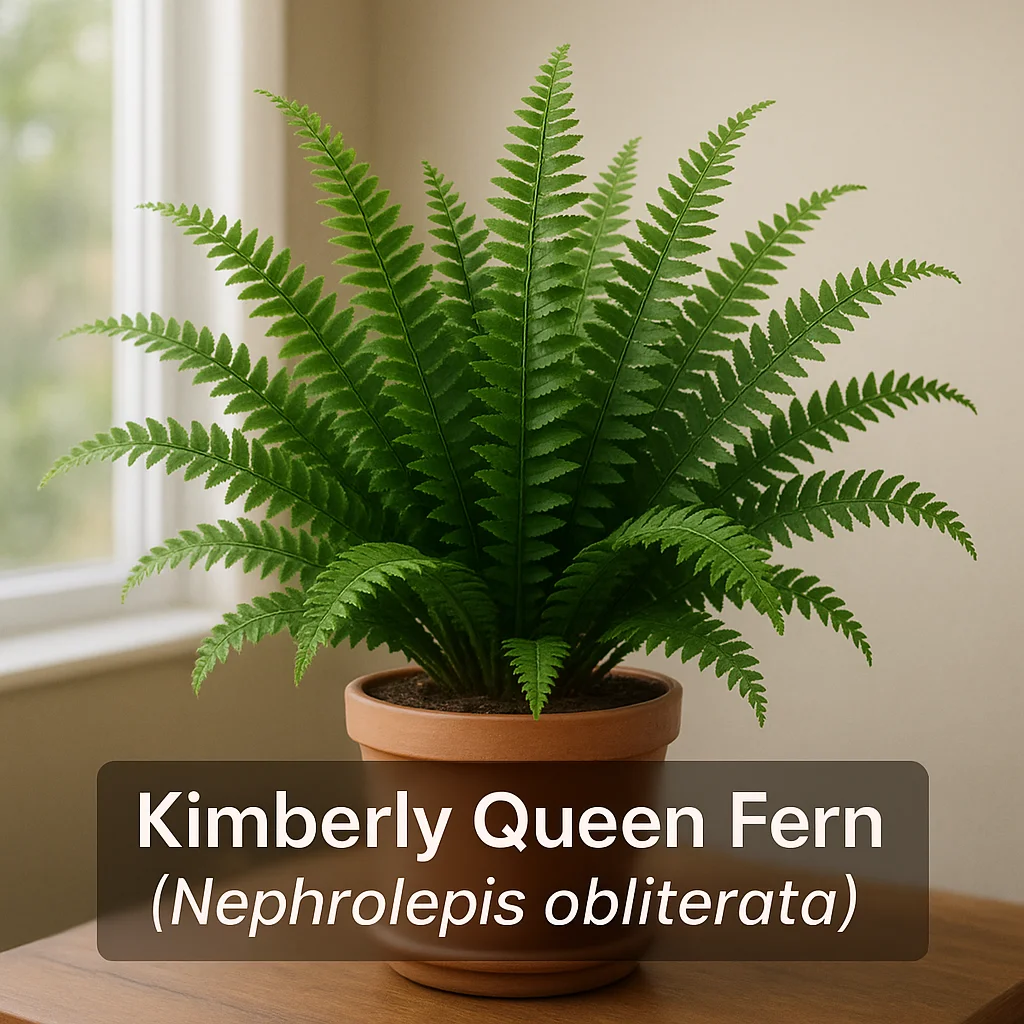
The Kimberly Queen Fern is recognized by its robust, upright, sword-like fronds that maintain an elegant arching shape. The fronds are densely packed and have a leathery texture that exhibits a consistent dark green color. Unlike the Boston Fern, which has droopy, feathery fronds, the Kimberly Queen Fern maintains a more rigid and orderly form.
The Kimberly Queen Fern is primarily grown for its foliage and does not bloom indoors. Its appearance can sometimes be confused with other Nephrolepis species, but it lacks the feathery texture and droopiness of Boston Ferns.
- Top ID Tips:
- Upright, dense, sword-like fronds
- Consistent dark green color
- Leathery texture
- Non-droopy, maintains shape
- No flowers indoors
- Often mistaken for Boston Ferns but different in rigidity
🌍 Origin & Natural Habitat
Native to the tropical regions of Australia and southeastern Asia, the Kimberly Queen Fern thrives in warm, humid environments. In the wild, it's commonly found in forest understories, appreciating the dappled light and rich, well-drained soil. Understanding its natural habitat helps indoor growers simulate similar conditions to ensure robust growth. For instance, the high humidity of its native habitat can be mimicked indoors, benefiting the plant’s growth and overall health.
☀️ Light Requirements
The Kimberly Queen Fern does best in bright, indirect light but can tolerate some direct sunlight, particularly in the morning or late afternoon. Placement near an east or north-facing window is ideal. Too much direct sunlight can scorch the leaves, while too little light might result in poor growth and pale fronds.
- Light Checklist:
- Bright, indirect light preferred
- East or north-facing windows are ideal
- Avoid harsh midday direct sunlight
- Signs of too little light: pale or leggy growth
- Signs of too much light: leaf scorching
- Rotate plant for even light exposure
💧 Watering & Humidity
The Kimberly Queen Fern prefers consistently moist soil. Water when the top inch of the soil feels slightly dry, ensuring thorough soaking and draining to prevent root rot. Increase watering frequency during warm seasons and reduce it during cooler months. Given its love for humidity, maintaining a higher humidity environment by misting or using a humidity tray can be beneficial. Ensure there’s good air circulation to avoid fungal issues.
- Watering Tips:
- Water when top inch of soil is dry
- Ensure thorough soak and drain method
- Increase frequency in warmer months
- Maintain high humidity through misting
- Avoid waterlogging to prevent root rot
- Watch for overwatering signs: soggy soil, yellowing leaves
🐛 Soil, Pot & Repotting
The optimal soil mix for Kimberly Queen Fern is well-draining and rich in organic matter. A typical houseplant soil mix with added perlite or peat works well. Pots with drainage holes are essential to prevent water accumulation. Repotting is advisable every 1-2 years or when the plant becomes root-bound. Choose a pot that is one size larger than the current one to allow room for growth.
- Repotting Checklist:
- Use well-draining, organic-rich soil mix
- Ensure pots have adequate drainage holes
- Repot every 1-2 years or when root-bound
- Gently untangle and handle roots during repotting
- Conservatively upsize the pot
- Water thoroughly after repotting
🌡️ Temperature, Airflow & Seasonal Care
The Kimberly Queen Fern thrives in temperatures between 65°F to 75°F (18°C to 24°C). It does not cope well with cold drafts or environments below 50°F (10°C). Providing balanced airflow by avoiding direct exposure to air conditioning or heaters helps maintain a stable environment. During the winter, expect slower growth and adjust watering accordingly as the plant enters a semi-dormant phase.
- Seasonal Notes:
- Optimal temperature: 65°F - 75°F (18°C - 24°C)
- Avoid cold drafts and temperatures below 50°F (10°C)
- Maintain steadiness in airflow and humidity
- Expect slower growth in winter months
- Adjust watering pattern in colder seasons
🌸 Flowers, Fruit & Growth Cycle
The Kimberly Queen Fern does not typically flower indoors and is grown primarily for its decorative foliage. New fronds unfurl from the center, gradually increasing the plant's overall bushiness. Minimal pruning is required, usually limited to removing damaged or brown fronds to maintain health and appearance.
🧬 Propagation & Reproduction
Propagation of Kimberly Queen Fern is typically done through division. When the plant becomes too large for its pot, or during routine repotting, gently separate the root ball into smaller sections, ensuring each portion has adequate roots and foliage. Replant the divisions into suitable pots, keeping the soil moist to encourage growth.
- Propagation Tips:
- Best propagated by division
- Divide during repotting or when root-bound
- Ensure each division has healthy roots and foliage
- Plant divisions into adequately sized pots
- Maintain moist soil to establish new growth
🌿 Common Problems, Pests & Prevention
Common issues with Kimberly Queen Ferns include yellowing leaves due to overwatering, brown tips from low humidity, and droopy fronds from improper lighting. It may attract pests like spider mites, mealybugs, and scale, which are best managed by maintaining cleanliness and monitoring plant health regularly. A stable care routine helps prevent most issues.
- Prevention Basics:
- Ensure optimal watering to prevent yellow leaves
- Maintain high humidity to avoid brown tips
- Provide sufficient indirect light to prevent droop
- Check for pests regularly and clean foliage
- Quarantine new plants before introduction
- Stable care routine to deter issues
🐾 Pet & Home Safety Notes
The Kimberly Queen Fern is generally considered non-toxic to pets, making it an excellent choice for homes with animals. However, as with all houseplants, it's best to keep plants out of reach of curious pets and children. If ingestion is suspected, contact a professional or local poison control resources.
🏡 Styling Ideas & Best Room Placement
The Kimberly Queen Fern's upright growth and lush foliage make it a versatile option for home styling. It thrives in humid spaces like bathrooms or kitchens with adequate natural light. Its size and bushy nature also suit living rooms and offices. Placing it in a hanging basket or on a shelf adds greenery to any room, and it pairs well with other humidity-loving plants.
📌 Summary
- Recognizable by its upright, dense, sword-like fronds
- Native to Australia and southeastern Asia's tropical environments
- Prefers bright indirect light; avoid harsh direct sun
- Maintain moist soil; high humidity benefits growth
- Repot every 1-2 years, using well-draining soil
- Thrives in 65°F - 75°F temperatures, with consistent conditions
- Easily propagated by division during repotting
- Prone to common pests; keep foliage clean
- Generally non-toxic, but keep away from children and pets
- Medium difficulty; regular care ensures longevity