🌱 English Ivy (Hedera helix)
🧾 Quick Facts
English Ivy, known for its lush, trailing vines and distinctive leaves, is a popular houseplant choice for its classic look and versatility as an indoor climber or ground cover. Here are some quick facts about this plant:
- Common names: English Ivy, Common Ivy
- Scientific name: Hedera helix
- Plant type: Vine
- Growth habit: Climbing and trailing
- Typical indoor size range: 1–10 feet long, depending on support
- Growth speed: Moderate to fast
- Lifespan: Can live many years with care
- Origin: Europe, Western Asia
- Light preference: Bright indirect light, tolerates low light
- Water needs: Moderate, prefers to dry slightly between waterings
- Temperature & humidity preference: Prefers cooler conditions, moderate to high humidity
- Pet safety: May be irritating/toxic to pets if ingested
- Difficulty: Medium
🔍 Identification & Look-Alikes
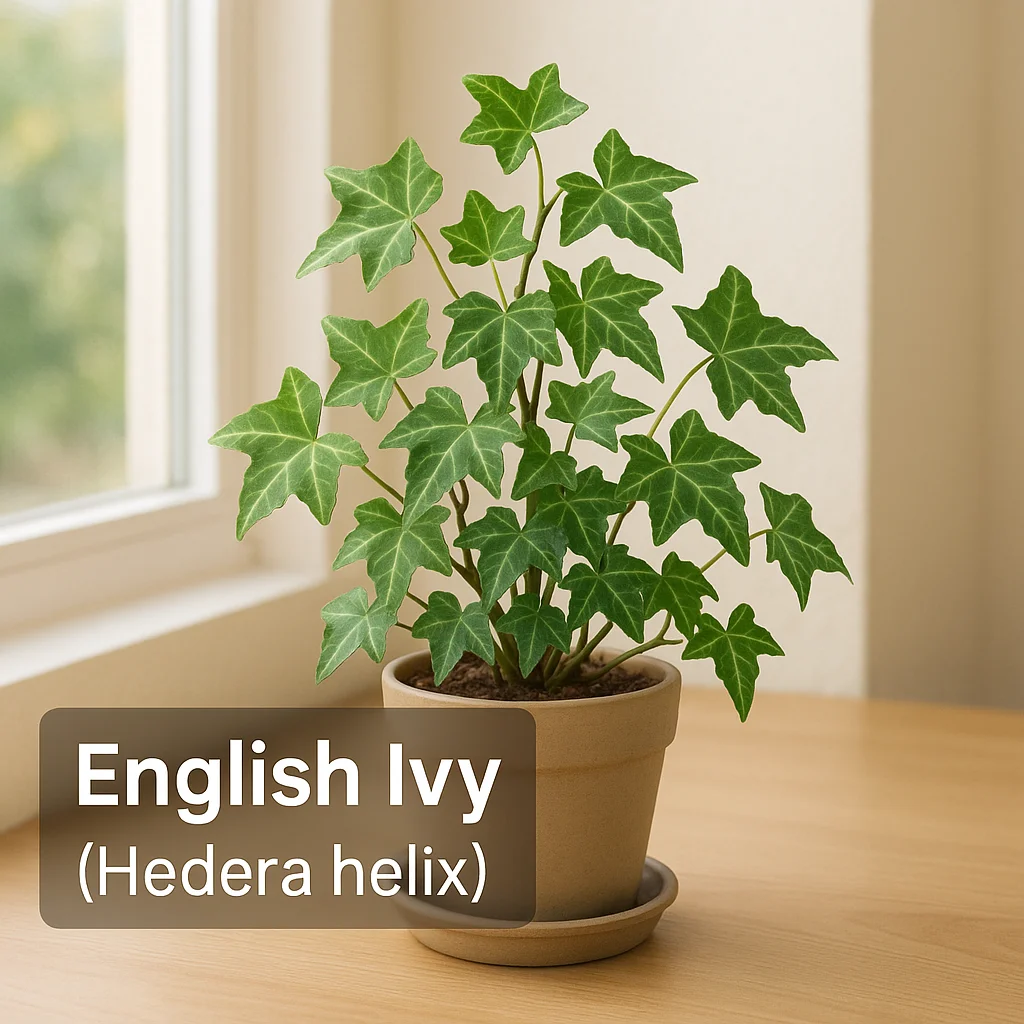
English Ivy is characterized by its distinctive lobed leaves that are typically dark green, sometimes with variegation such as green and white or yellow patterns. The leaves are leathery and glossy, arranged alternately on the vines. The plant's stems are woody and capable of climbing through adhesive rootlets. English Ivy is predominantly grown for its foliage, as it rarely blooms indoors.
Common look-alikes include other ivy species or heart-shaped leaf houseplants like Pothos, which can be differentiated by their smoother leaf texture and larger leaves without lobes.
- Top ID Tips:
- Lobed, glossy leaves
- Alternating leaf arrangement on stem
- Woody, climbing vines
- Variegated forms available
- Typically evergreen
- Often confused with Pothos but differs in leaf texture
- Rootlets visible on stems for climbing
- May show tiny flower clusters if stress-induced conditions occur
🌍 Origin & Natural Habitat
Native to Europe and parts of Western Asia, English Ivy typically grows in wooded areas, hedgerows, and cliffs. It thrives in the forest understory where it climbs trees or covers ground expanses. This habitat gives it a preference for cooler temperatures and the ability to thrive in lower light conditions, making it adaptable to indoor environments with similar indirect lighting. Understanding its natural preference for cool, shady spots helps indoor growers manage light and humidity effectively.
☀️ Light Requirements
English Ivy prefers bright indirect light but is tolerant of lower light levels, making it suitable for many indoor locations. Placing it near an east or north-facing window allows it to receive consistent, non-harsh light. Variegated forms may require more light to maintain their color patterns. Signs of inadequate lighting include leggy growth and pale leaves, while too much direct sun can scorch its foliage.
- Light Checklist:
- Best with bright indirect light
- East or north-facing windows optimal
- Variegated types need more light
- Avoid harsh, direct sunlight
- Leggy growth indicates low light
- Yellow or bleached leaves suggest excessive sun
- Adjust placement seasonally for best results
💧 Watering & Humidity
Water English Ivy moderately, allowing the top inch of soil to dry between waterings. The soak-and-drain method ensures the roots get enough moisture without becoming soggy. Overwatering can lead to root rot, so it's essential to adjust the frequency based on pot size and indoor climate. English Ivy enjoys higher humidity, achievable through gentle misting or a pebble tray. Signs of overwatering include yellowing leaves, while dry brown tips indicate underwatering or low humidity.
- Watering Tips:
- Water when top inch of soil is dry
- Use soak-and-drain method
- Avoid consistently soggy soil
- Mist occasionally to increase humidity
- Yellow leaves signify overwatering
- Brown tips suggest dry conditions or chlorine sensitivity
- Adjust timing with seasonal changes
🐛 Soil, Pot & Repotting
English Ivy prefers a well-draining, rich potting mix. A standard houseplant soil with added perlite or sand works well. Choose pots with drainage holes to prevent waterlogging. Repotting is usually necessary every 2-3 years or when roots are visibly outgrowing the pot, indicated by slowed growth or water passing through immediately. When repotting, gently tease roots and upgrade to a slightly larger pot.
- Repotting Checklist:
- Use well-draining soil with perlite
- Ensure pot has drainage holes
- Repot every 2-3 years or when roots bound
- Gently loosen root ball when repotting
- Avoid pots too large to reduce overwatering risk
- Be vigilant of water running straight through soil
🌡️ Temperature, Airflow & Seasonal Care
English Ivy thrives in temperatures between 50-70°F (10-21°C). It doesn't appreciate sudden temperature changes or exposure to drafts from vents and doors, which can lead to shock and leaf drop. During cooler months, it's normal for growth to slow, requiring less frequent watering. If grown outside, ensure it's protected from frost.
- Seasonal Notes:
- Prefers 50-70°F (10-21°C) range
- Avoid drafts and sudden temperature shifts
- Reduce watering in winter
- Protect outdoor plants from frost
- Common to experience slower growth in cooler months
🌸 Flowers, Fruit & Growth Cycle
Although primarily grown for its foliage, English Ivy may produce small, inconspicuous greenish-yellow flowers when conditions are favorable, often in older outside plants. These can develop into black berries, although this is rare indoors. Ivy's growth involves extending vines and producing new leaves from nodes, which may spread horizontally or climb. Regular pruning can help manage its size and encourage fuller growth.
🧬 Propagation & Reproduction
Propagation of English Ivy is straightforward using stem cuttings. Cut a healthy vine into 4-6 inch segments with several leaves, and place in water or directly in soil after removing the lower leaves. Roots typically form within a few weeks in proper conditions. Division of mature Clumps or layering smaller pots can also prove effective for propagation.
- Propagation Tips:
- Use stem cuttings for easy propagation
- Place cuttings in water or soil
- Make sure cutting has multiple leaves
- Roots form within weeks
- Division can help rejuvenate older plants
🌿 Common Problems, Pests & Prevention
Common issues for English Ivy include yellow leaves from overwatering, brown tips from underwatering or low humidity, and leggy growth from inadequate light. Pests like spider mites, mealybugs, and scale may also affect the plant. Routine checks, stable environment, and cleaning foliage can prevent infestations. Ensure consistent care with proper light, water, and airflow to minimize issues.
- Prevention Basics:
- Monitor watering to avoid root rot
- Keep leaves clean to deter pests
- Provide consistent light levels
- Inspect regularly for pests
- Stable humidity levels help prevent browning
- Address leggy growth with better light placement
🐾 Pet & Home Safety Notes
English Ivy contains compounds that may be irritating to pets if ingested, causing symptoms like drooling or vomiting. Keep it out of reach or use barriers, particularly if pets show curiosity in plants. If ingestion is suspected, contact a professional or local poison control resources for guidance. Though generally safe to touch, some individuals may experience mild skin irritation from sap.
🏡 Styling Ideas & Best Room Placement
English Ivy finds its place in various home settings, from living rooms to offices, where it can trail gracefully from hanging baskets or climb moss poles for a structured effect. Its adaptability to different light levels makes it suitable for bedrooms or bathrooms with natural light. Pair it with ferns for a lush, verdant indoor garden look.
📌 Summary
- Distinct lobed, glossy leaves, with climbing ability
- Native to Europe and adapted to indoor environments
- Prefers bright, indirect light and regular watering
- Well-draining rich soil and regular, careful repotting
- Optimal temperature range is 50-70°F (10-21°C)
- Propagation through stem cuttings is straightforward
- Monitor and adjust care to prevent common pests and diseases
- Potentially harmful to pets, so position strategically
- Versatile in styling, ideal for hanging baskets and poles