🌱 Bamboo Palm (Chamaedorea seifrizii)
🧾 Quick Facts
The Bamboo Palm, also known as Chamaedorea seifrizii, is a popular indoor plant cherished for its lush, feathery foliage and ease of care. It's a go-to choice for plant lovers looking to add a tropical touch to their homes without demanding extensive maintenance.
- Common Names: Bamboo Palm, Reed Palm
- Scientific Name: Chamaedorea seifrizii
- Plant Type: Palm
- Growth Habit: Upright
- Typical Indoor Size: 4-7 feet in height, 2-4 feet in spread
- Growth Speed: Moderate
- Lifespan: Can live many years with proper care
- Origin: Mexico, Central America; tropical and subtropical climates
- Light Preference: Medium to bright indirect light
- Water Needs: Moderate; allow topsoil to dry slightly between waterings
- Temperature & Humidity Preference: Likes warmth and high humidity
- Pet Safety: Generally considered pet-friendly
- Difficulty: Easy
🔍 Identification & Look-Alikes
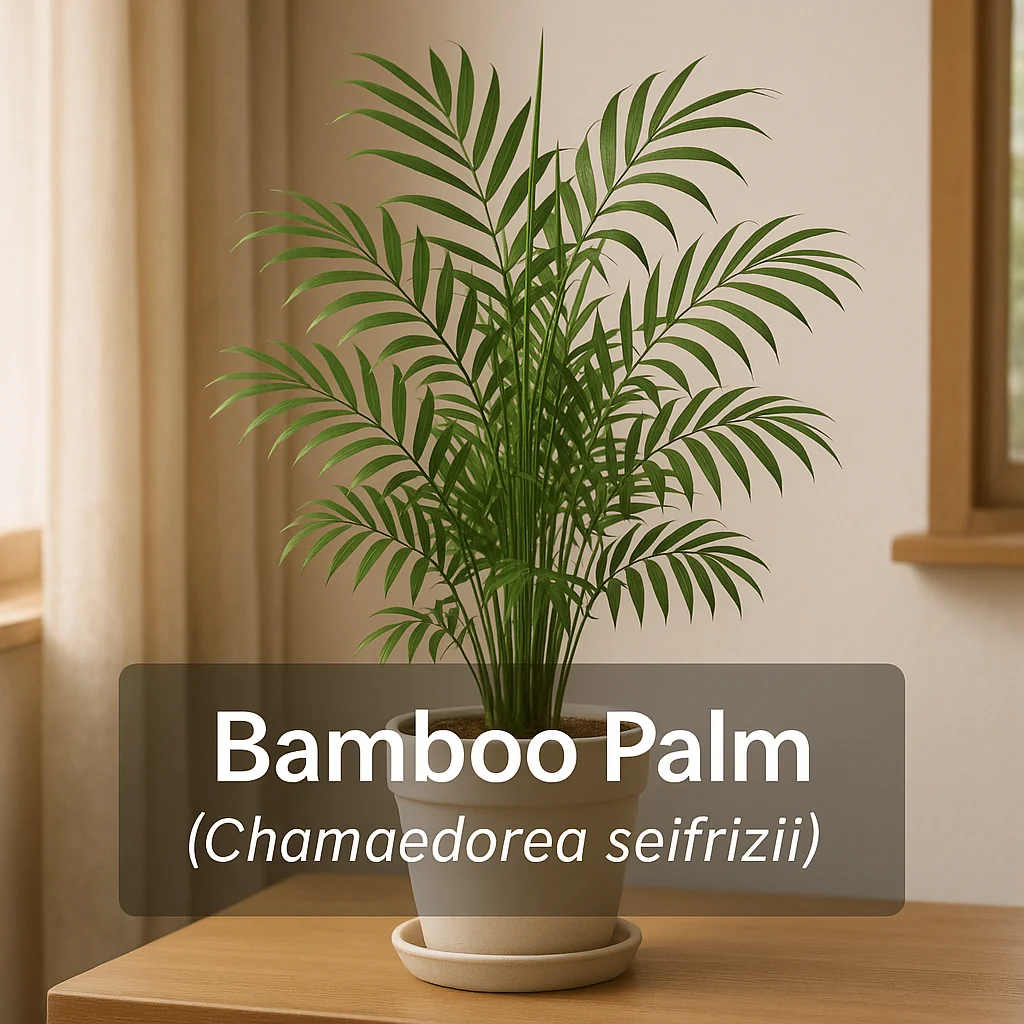
The Bamboo Palm is easily recognized by its slender, green canes resembling bamboo stalks and its graceful, arching fronds composed of narrowly lance-shaped leaflets. It typically has a bright green color, though lower light conditions may cause the leaves to darken. This plant is mostly grown for its attractive foliage, as it rarely flowers indoors.
Common look-alikes include the Areca Palm and the Parlour Palm. However, the Bamboo Palm features distinct clustering stems that mimic bamboo, which helps differentiate it from others.
- Slender, bamboo-like canes
- Feathery fronds with multiple leaflets
- Bright green coloration
- Minimal blooming indoors
- Clustered growth habit
- Leaves arch gracefully from central stems
- Similar to Areca Palm but has thinner stalks
- Parlour Palm look-alike with denser, bushier fronds
🌍 Origin & Natural Habitat
Native to the rainforests of Mexico and Central America, the Bamboo Palm thrives in tropical and subtropical environments. Found in the understory of forests, it enjoys filtered sunlight, high humidity, and warm temperatures. Understanding its natural habitat suggests that the Bamboo Palm prefers stable, warm indoor conditions and indirect light, mimicking the dappled forest canopy light.
☀️ Light Requirements
For optimal growth, place Bamboo Palm in bright, indirect light. East or north-facing windows are ideal, providing gentle morning or evening light. It can tolerate lower light levels, but growth may slow, and leaves may become sparse. Conversely, too much direct sunlight can lead to leaf scorch or yellowing.
Bright indirect light means the plant is near a window but shielded by curtains or a few feet away from direct rays. Direct exposure can be too harsh, especially in hotter climates, so manage light exposure to keep the foliage vibrant and healthy.
- Best placement: east or north-facing window
- Avoid direct midday sun
- Adjust placement if leaves pale or yellow
- Low light reduces growth and leaf size
- Monitor light exposure over seasons
- Balance light with artificial grow lights if needed
💧 Watering & Humidity
Bamboo Palms prefer a balanced watering routine, allowing the top inch of soil to dry out between waterings. During the growing season (spring and summer), water more frequently, roughly once weekly. In fall and winter, reduce watering to every 10-14 days as growth slows.
Humidity is key to a thriving Bamboo Palm. Aim to maintain moderate to high humidity levels, using a pebble tray or humidifier if necessary. Inadequate humidity may lead to browning leaf tips.
- Allow topsoil to dry slightly before watering
- Adjust frequency based on season and environment
- High humidity yields lush foliage
- Signs of overwatering: yellowing leaves and root rot
- Signs of underwatering: dry, crispy leaf edges
- Resolve low humidity with pebble trays or humidifiers
🐛 Soil, Pot & Repotting
Choose a well-draining potting mix, such as one formulated for palms or one part peat, one part pine bark, and one part perlite. Ensure the pot has proper drainage to prevent waterlogging, which can harm roots.
Repot every 2-3 years or when the plant shows signs of becoming rootbound, such as slowed growth or difficulty holding water. Gently move to a pot one size larger to promote healthy root development.
- Select a peat-based potting mix for palms
- Ensure pots have drainage holes
- Repot when roots encircle inside of pot
- Choose slightly larger pot during repotting
- Spring is best season for repotting
- Refresh topsoil annually to boost nutrients
🌡️ Temperature, Airflow & Seasonal Care
Bamboo Palms enjoy temperatures between 65°F and 85°F. Avoid exposure to cold drafts or sudden temperature changes to keep the plant stable. While they are relatively hardy, rapid fluctuations or very low temperatures can stress the plant.
During winter, light levels decrease, prompting the Bamboo Palm to enter a slower growth phase. Adjust watering and light exposure accordingly, keeping airflow steady but not directly on the plant to prevent shock or dehydration.
- Keep temperatures moderate year-round
- Avoid placing near AC or heat vents
- Provide steady airflow without cold drafts
- Adjust care routine seasonally
- Expect slower growth during winter months
🌸 Flowers, Fruit & Growth Cycle
While Bamboo Palms rarely flower indoors, they can produce small yellow inflorescences if conditions are ideal, typically during the growing season. However, they are primarily grown for their decorative foliage, as blooms and cultivars are generally not key attractions.
The growth pattern involves producing new canes that branch out from the base. Prune gently to maintain shape and remove dead fronds. Regular cleaning of the leaves ensures they remain dust-free and contributes to optimal photosynthesis.
🧬 Propagation & Reproduction
Propagation of Bamboo Palms is best achieved through division during repotting, separating clumps carefully while ensuring each divided section has a healthy root system. Growing from seeds is possible but challenging due to long germination times and specific requirements.
While propagation is not complex, patience is necessary as growth can be slow. Root divisions should remain well-watered and placed in a warm, humid environment to encourage rapid establishment.
- Best propagated through division
- Divide during spring or scheduled repotting
- Ensure each division has adequate roots
- Keep newly potted divisions watered
- Use a propagation-friendly soil mix
🌿 Common Problems, Pests & Prevention
Bamboo Palms can face issues such as yellow leaves, browning tips, and leggy growth due to improper care or environmental stressors. Yellow leaves often signify overwatering, while brown tips may indicate low humidity.
Pests like spider mites, mealybugs, and scale can occasionally appear. Monitoring and maintaining cleanliness, along with stable conditions, can keep these pests at bay.
- Prevent overwatering by checking soil moisture
- Maintain high humidity to prevent browning tips
- Clean leaves regularly to deter pests
- Isolate new plants to avoid introducing pests
- Prune dead fronds to promote air circulation
- Monitor for pests and act swiftly if discovered
🐾 Pet & Home Safety Notes
Bamboo Palms are generally considered non-toxic to pets and children, making them a safer choice for households with animals or young ones. However, it's always a good idea to place plants out of reach to prevent any inadvertent ingestion that could lead to gastrointestinal discomfort. If ingestion is suspected, contact a professional or local poison control resources for guidance.
🏡 Styling Ideas & Best Room Placement
With its elegant form and lush foliage, the Bamboo Palm complements a variety of home styles. It thrives in bathrooms or kitchens where humidity levels are higher and can also enhance living rooms or office spaces. Place alongside other tropical plants for a cohesive display or use as a standalone feature in a roomy pot. Bamboo Palms can also be effectively balanced in decor with the broader-leaf Monstera or the vertical Snake Plant.
📌 Summary
- Recognizable by bamboo-like canes and feathery fronds
- Originates from Central America's tropical forests
- Prefers medium to bright indirect light
- Requires moderate watering and enjoys high humidity
- Plant in well-draining, peat-based soil; repot every 2-3 years
- Thrives at 65°F-85°F; avoid sudden temperature changes
- Propagation through division is effective
- Monitor for pests like spider mites and mealybugs
- Pet-friendly choice for plant-friendly homes
- Elegant addition to bathrooms, kitchens, or living areas