🌱 Aloe vera
🧾 Quick Facts
Aloe vera is a popular succulent often found in homes due to its easy care and distinctive appearance. Known for its medicinal-looking appeal with thick, fleshy leaves, Aloe vera thrives under a range of indoor conditions. It's a forgiving plant that can tolerate occasional neglect, making it ideal for both beginner and experienced plant enthusiasts.
- Common Names: Aloe vera, Aloe plant, Medicinal aloe
- Scientific Name: Aloe vera
- Plant Type: Succulent
- Growth Habit: Rosette
- Typical Indoor Size: 1 to 2 feet in height and spread
- Growth Speed: Moderate
- Lifespan: Can live many years with care
- Origin: Arabian Peninsula; naturalized in subtropical and tropical regions
- Light Preference: Bright indirect light; tolerates some direct sun
- Water Needs: Low; prefers to dry out between waterings
- Temperature & Humidity Preference: Prefers warm, dry conditions
- Pet Safety: May be irritating/toxic to pets
- Difficulty: Easy
🔍 Identification & Look-Alikes
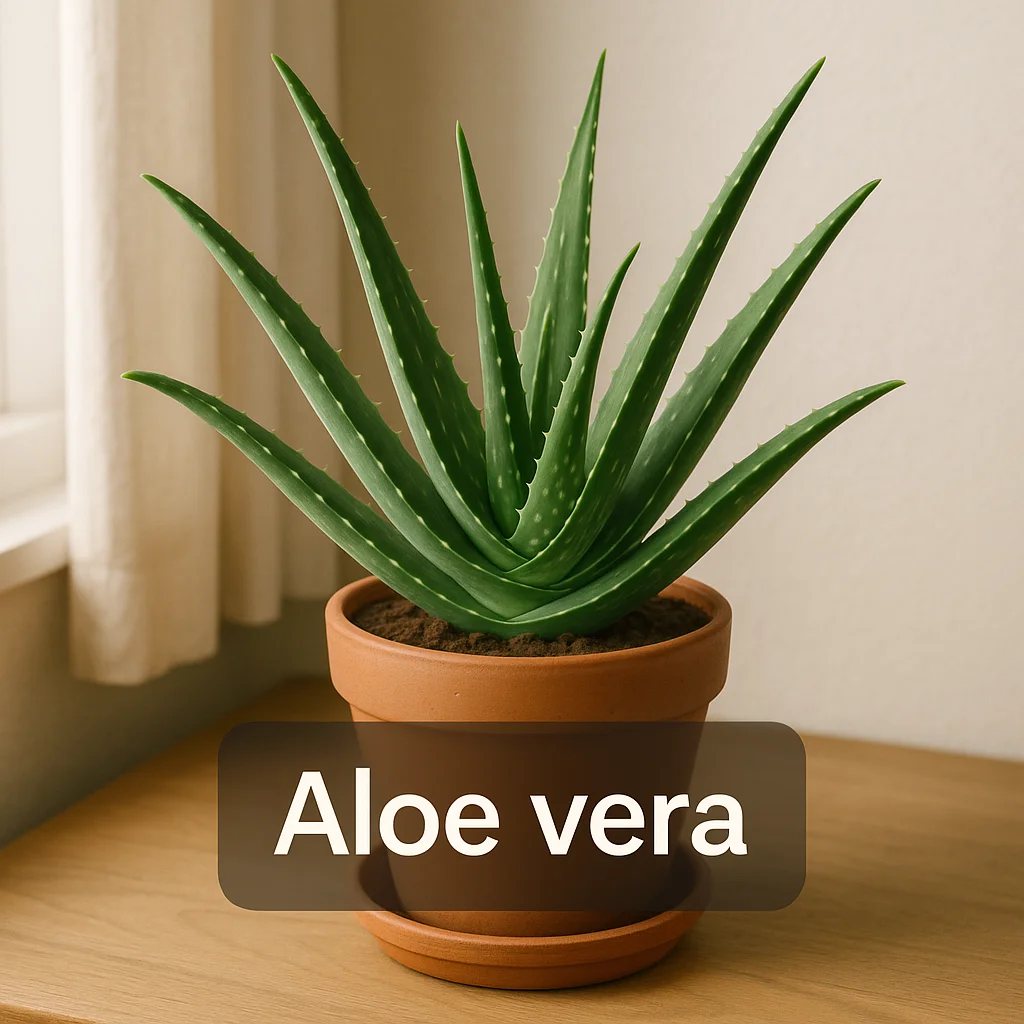
Aloe vera is easily recognized by its fleshy, pale green leaves that often have a serrated edge. The leaves are arranged in a rosette pattern and are covered with small, white dots or spots. Leaves can become more vivid green with exposure to bright light. Aloe vera typically doesn't bloom indoors but, if conditions are right, it can produce tall stalks with tubular, yellow-orange flowers.
Similar looking species such as Agave have more fibrous leaves and different leaf arrangement. Gasteria and Haworthia may have similar markings but differ noticeably in size and form.
- Rosette pattern of leaves
- Thick, fleshy, pale green leaves
- Small white spots on leaves
- Serrated leaf edges
- Possible yellow-orange tubular flowers
- More vivid color in brighter light
- Common look-alikes: Agave, Gasteria, Haworthia
🌍 Origin & Natural Habitat
Native to the Arabian Peninsula, Aloe vera has become naturalized in various tropical and subtropical regions around the world, including parts of Africa, Asia, Europe, and the Americas. In the wild, Aloe vera grows in dry, rocky environments with plenty of sunlight and minimal water, attributes that cater to the plant's ability to store water in its fleshy leaves.
Understanding its natural habitat helps indoor growers mimic these conditions, promoting healthier growth by providing bright light, well-draining soil, and infrequent watering to prevent root rot.
☀️ Light Requirements
Aloe vera thrives in bright, indirect sunlight. Placing it near a south or west-facing window is ideal as it enjoys some direct morning or evening sun. While it can tolerate more subdued lighting, its growth may slow down, and the plant might become leggier.
Be cautious of too much direct afternoon sun, which can cause sunburn. If the plant looks pale or stunted, it likely needs more light; conversely, a reddish hue or scorched look indicates too much sun.
- Best near south or west-facing window
- Bright, indirect light is ideal
- Avoid harsh afternoon sun
- Signs of low light: leggy growth
- Signs of excessive sun: reddish leaves, sunburn
- Rotate plant occasionally for even light exposure
💧 Watering & Humidity
Aloe vera has low water needs, preferring the soil to dry out completely between waterings. Employ a soak-and-drain method, thoroughly watering and then allowing the excess to drain away fully. Pot size, light exposure, and season can affect water rhythm; ensure soil feels dry an inch or two down before the next watering.
This succulent doesn't require high humidity and does well in typical household conditions. Overwatering can be a problem, leading to root rot, while underwatering may cause shriveled leaves.
- Allow soil to dry out completely
- Use soak-and-drain method
- Water less in winter or low-light conditions
- Watch for yellowing (overwatered) leaves
- Watch for shriveling (underwatered) leaves
- Average household humidity is suitable
🐛 Soil, Pot & Repotting
Aloe vera prefers a well-draining soil mix, such as those formulated for cacti and succulents. It's crucial to avoid soil that retains moisture for too long. Select pots with drainage holes to prevent water accumulation. Terracotta pots can help the soil dry more quickly.
Repotting is generally needed every 2-3 years or when the plant becomes rootbound. Move to a slightly larger pot, removing any dead roots and topping up with fresh potting mix.
- Use a cactus or succulent soil mix
- Choose pots with drainage holes
- Terracotta pots assist with moisture control
- Repot every 2-3 years or when rootbound
- Trim dead roots during repotting
🌡️ Temperature, Airflow & Seasonal Care
Aloe vera is comfortable in average household temperatures ranging from 60°F to 75°F (15°C to 24°C). It's important to protect the plant from cold drafts and temperatures below 50°F (10°C). During winter, growth slows, reducing the need for water.
Good airflow is beneficial to aloe plants, reducing excess humidity and promoting evaporation around leaf surfaces, which is ideal for preventing fungal issues.
- Maintain temperatures between 60°F to 75°F (15°C to 24°C)
- Avoid cold drafts and exposure below 50°F (10°C)
- Regular room airflow helps
- Reduce watering in winter
- Watch for temperature swings near windows
🌸 Flowers, Fruit & Growth Cycle
Aloe vera does not commonly flower indoors, but with adequate conditions, it may grow stalks of tubular, yellow or orange flowers. The main attraction remains its striking foliage and rosette form.
Growth appears mainly through offshoots or 'pups' rather than traditional stem extension, and pruning is minimal, focusing on removing dead or damaged leaves.
🧬 Propagation & Reproduction
Propagation of Aloe vera is commonly done using offsets or pups, which naturally grow at the base of mature plants. These pups can be gently removed and potted separately in well-draining soil to start new plants. Leaf cuttings are less successful due to the succulent nature of Aloe vera.
Propagation through seeds is possible but less common among home growers, requiring more time and attention to germinate successfully.
- Use offsets or pups for propagation
- Allow offsets to grow a few inches before separating
- Plant pups in their pots with suitable soil
- Leaf cuttings typically not common for aloe
- Seed propagation needs care and time
🌿 Common Problems, Pests & Prevention
Aloe vera can experience common plant issues such as yellowing leaves from overwatering, or brown leaf tips from underwatering or sunburn. Drooping leaves might suggest needing more sunlight, while leggy growth could indicate insufficient light.
Pests like spider mites, mealybugs, and scale can occasionally affect Aloe vera. Regularly clean leaves and offer stable care with good airflow to prevent infestations.
- Yellow leaves often indicate overwatering
- Brown tips can result from underwatering
- Drooping suggests insufficient light
- Regular inspection for pests
- Quarantine new plants
- Gently clean leaves to remove dust
🐾 Pet & Home Safety Notes
Aloe vera contains compounds that may be irritating or toxic to pets and people if ingested. Proper arrangement of the plant, such as placing it out of reach, is advised to prevent unnecessary contact or consumption by pets or children.
If ingestion is suspected, it's recommended to immediately contact a professional or local poison control resources for guidance.
🏡 Styling Ideas & Best Room Placement
Aloe vera is versatile in home decor and can be placed in bright spaces like kitchens, living rooms, or office desks. Its bold, structural appearance pairs well with similar low-maintenance plants like snake plants or cacti.
It thrives best in floor pots or spacious windowsills and should be positioned to avoid being overshadowed by large foliage plants.
📌 Summary
- Unique leaf rosette with pale, fleshy leaves
- Native to dry, sun-rich habitats
- Requires bright, indirect light; tolerant to some direct sun
- Prefers drying out between watering; low humidity needs
- Best in well-draining cactus/succulent mix; repot every 2-3 years
- Tolerates a range of household temperatures; prefers stable environments
- Propagates best from offsets
- May experience yellow leaves, brown tips, pest issues
- Easy care with occasional light adjustments and minimal watering
- May be irritating/toxic if ingested by pets or children; keep out of reach